A month in Malta was spent visiting different parts of the main island and staying in a farmhouse on Gozo for two weeks. We also enjoyed visits from Ita, Gwen and Cathryn.
St Paul’s Bay
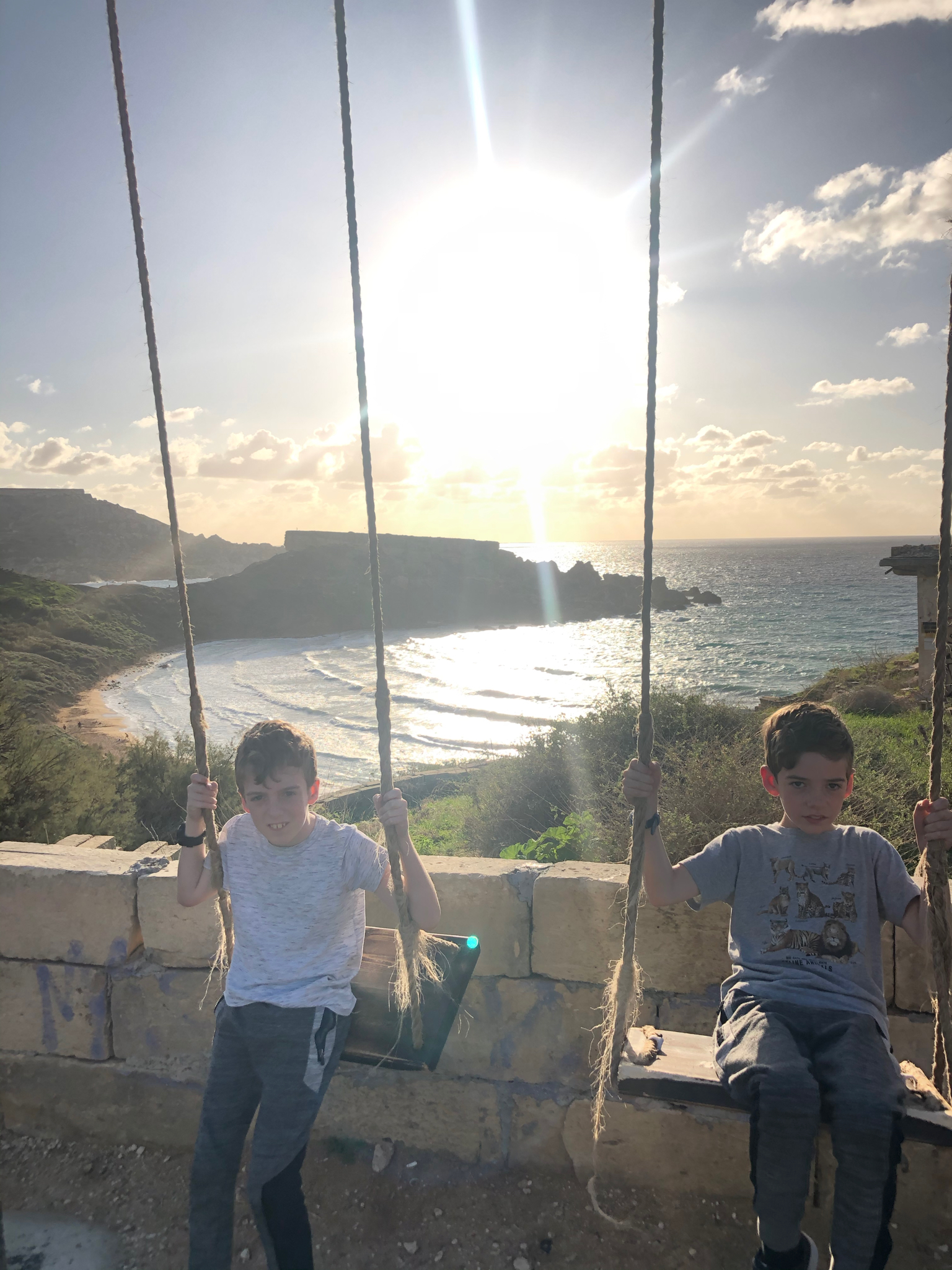
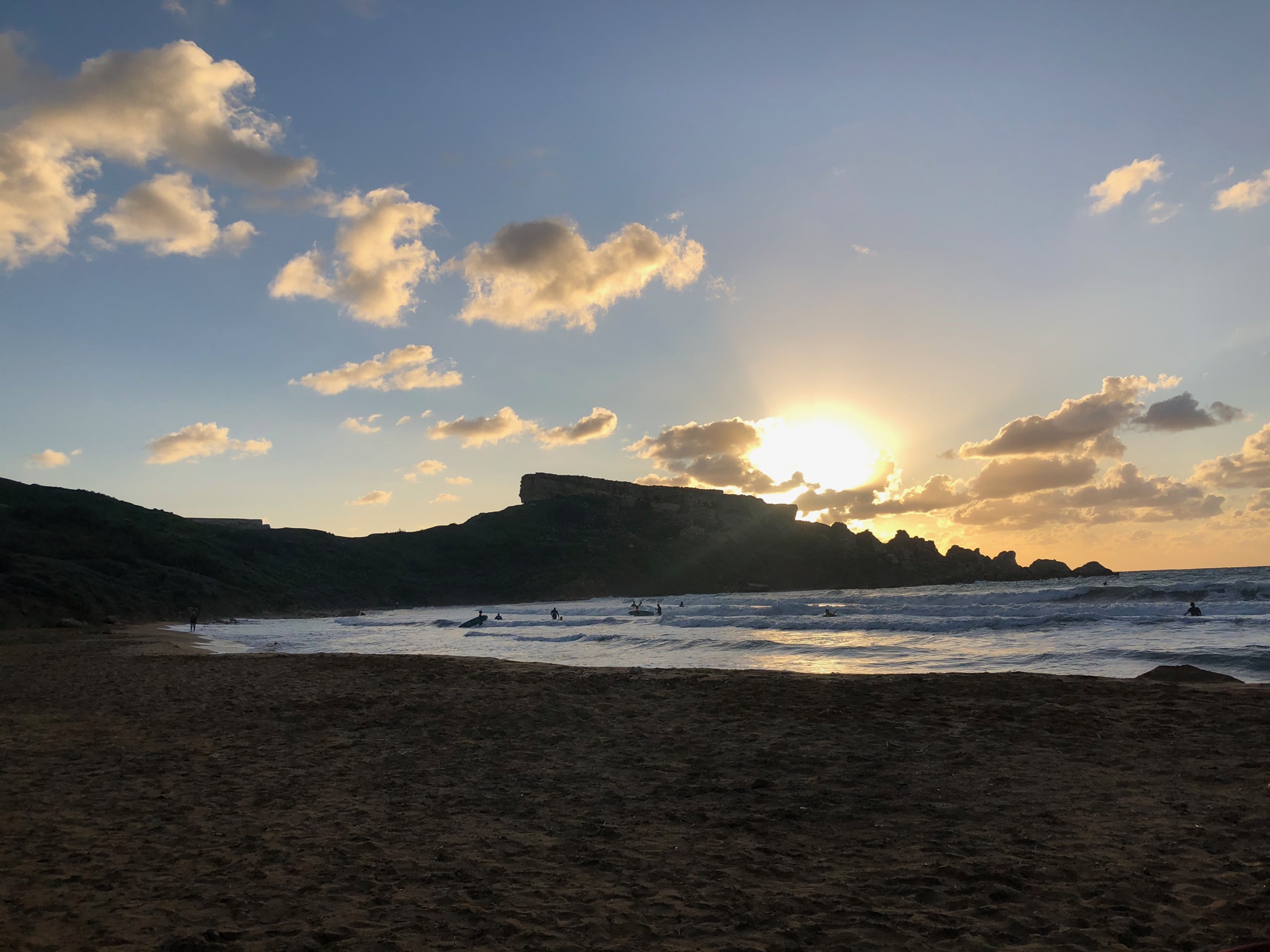
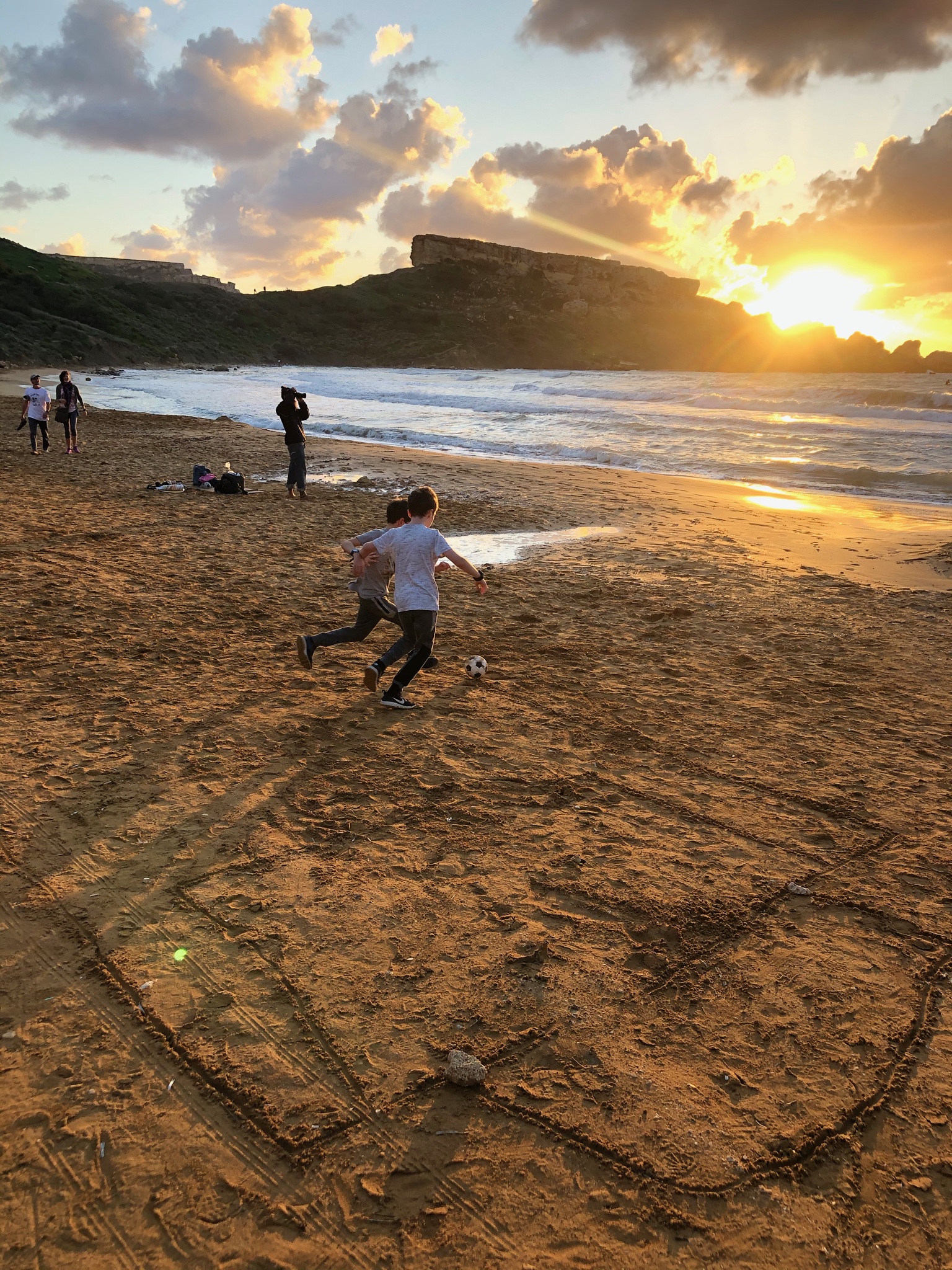
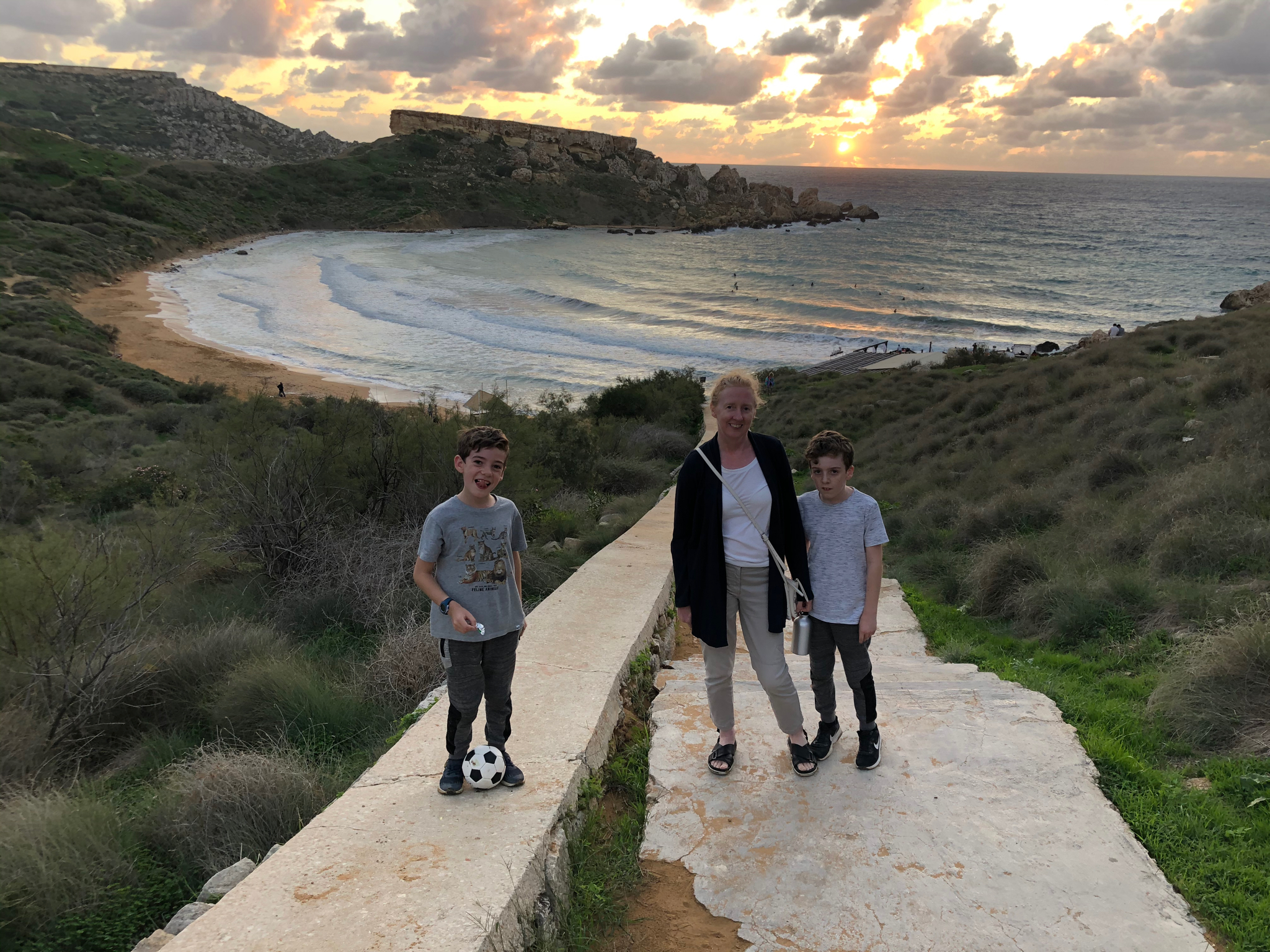
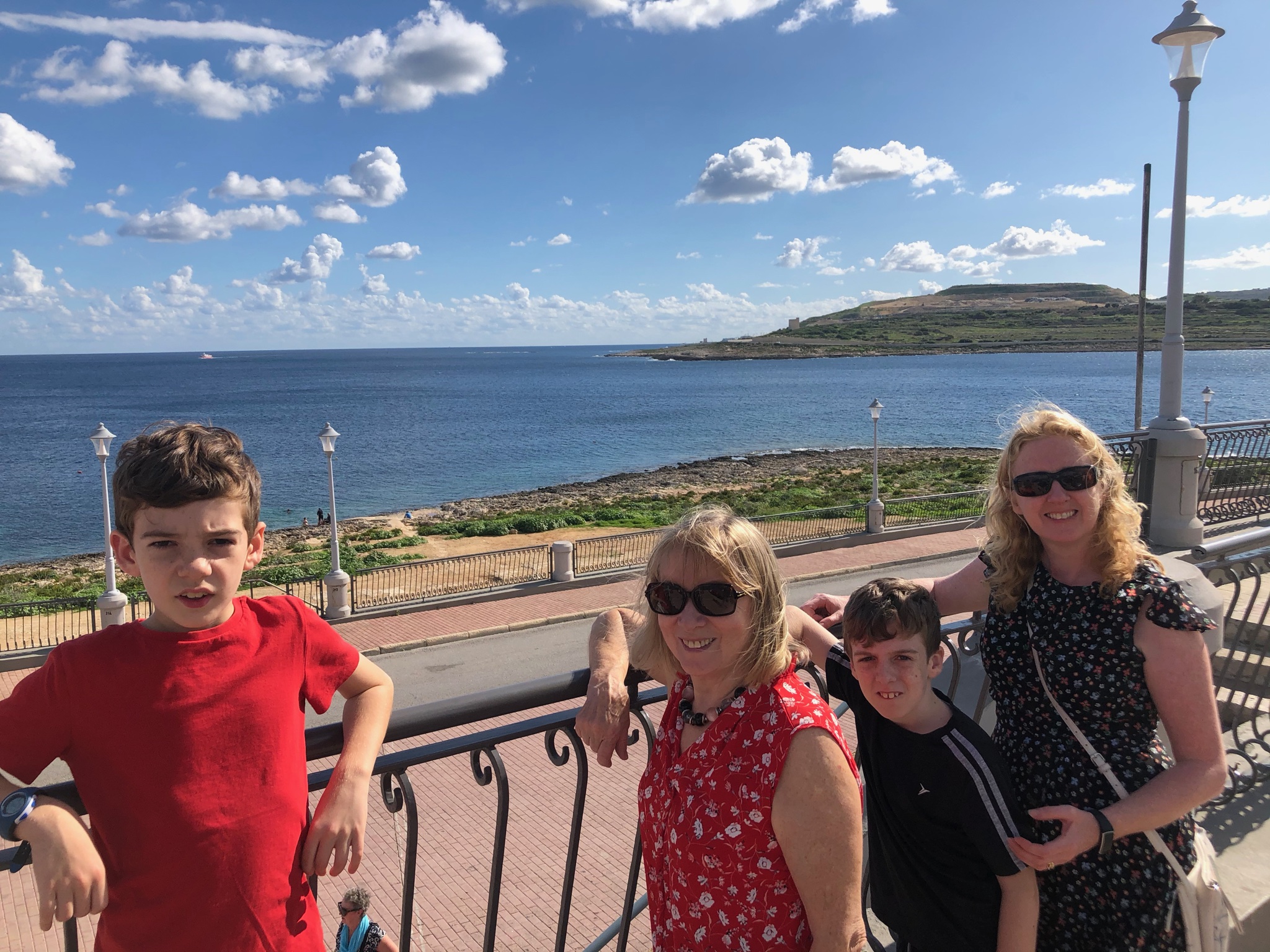
First stop in Malta was Park Lane Hotel in St Pauls Bay for five nights. We were initially very surprised by the number of English tourists there until we learned that a large expat community lives there. There were lots of restaurants and a nice boardwalk around the headland. Our hotel had a rooftop pool with views of the bay and the many cranes adding even more apartment blocks to the concrete village. We had RTÉ, the Irish TV channel, via the hotel cable TV. A nice novelty but it didn’t feel like we were in Malta! We spend a lovely evening on the nearby Miracle Beach, Gajhn Tuffieha. There were hikers on the hillside and surfers tackling the waves. The boys outlined a football pitch and had a great time playing while we walked the beach and watched the surfers and the sunset. This beautiful area was more what we expected from Malta.
Gozo
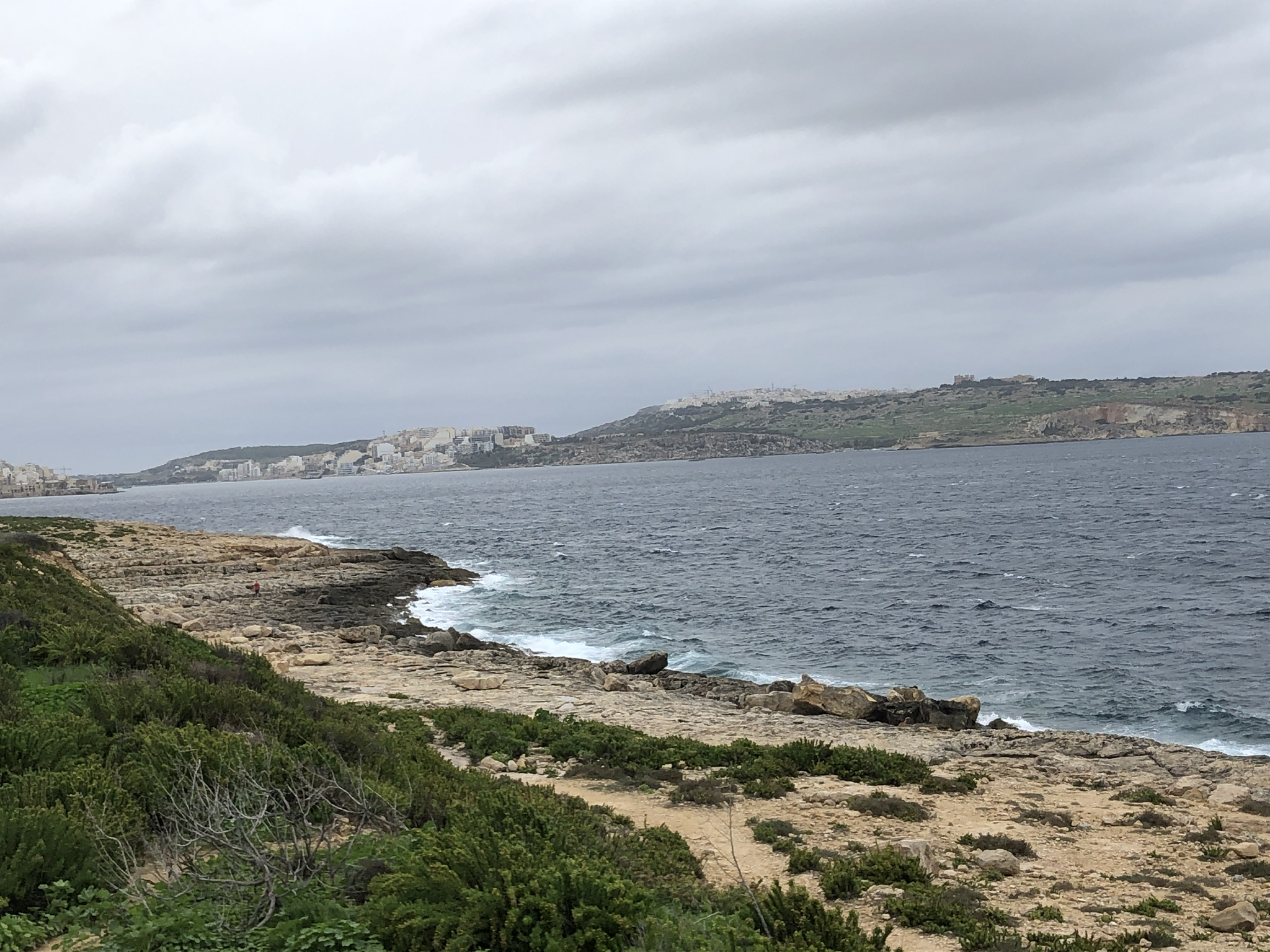
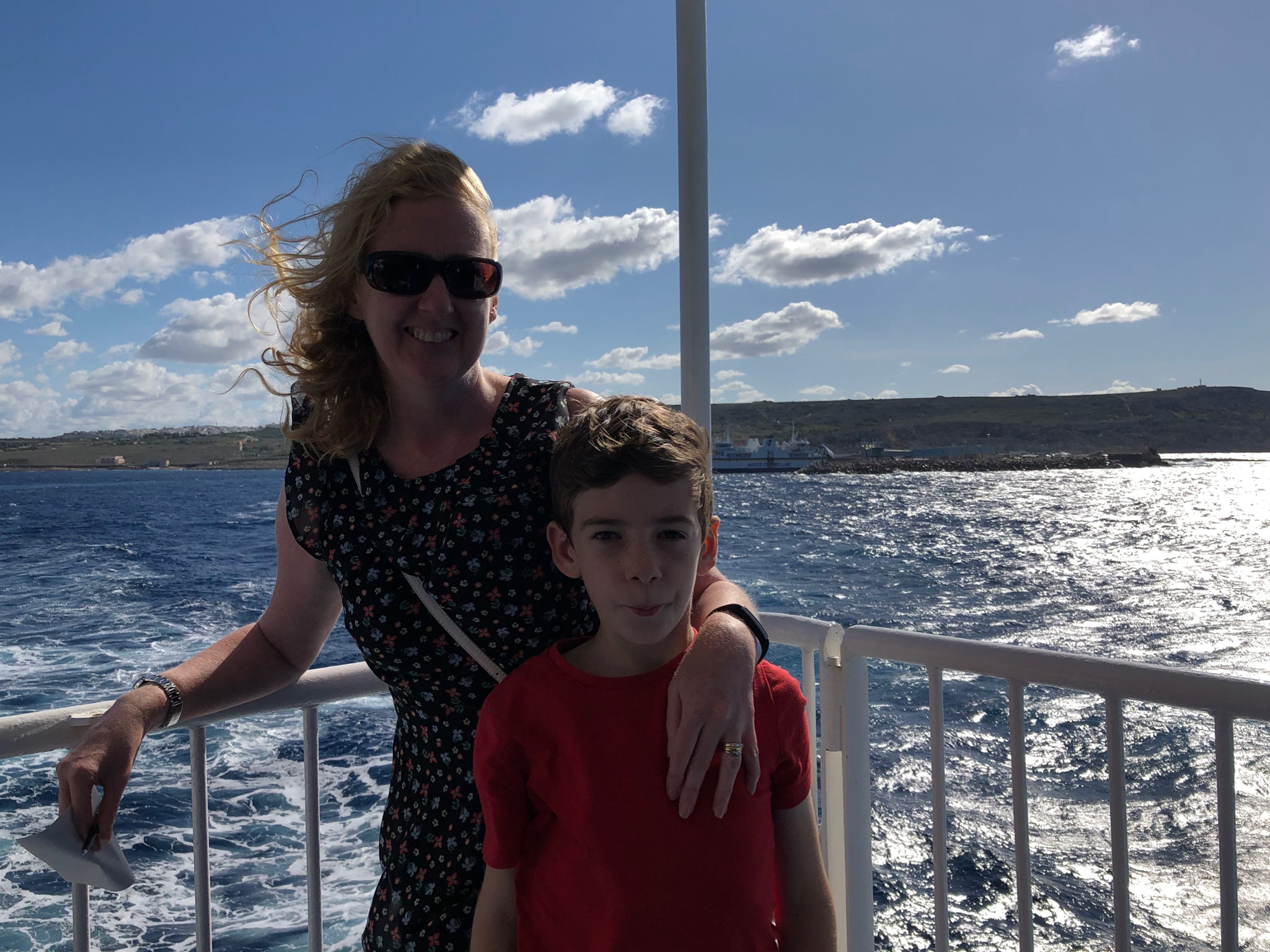
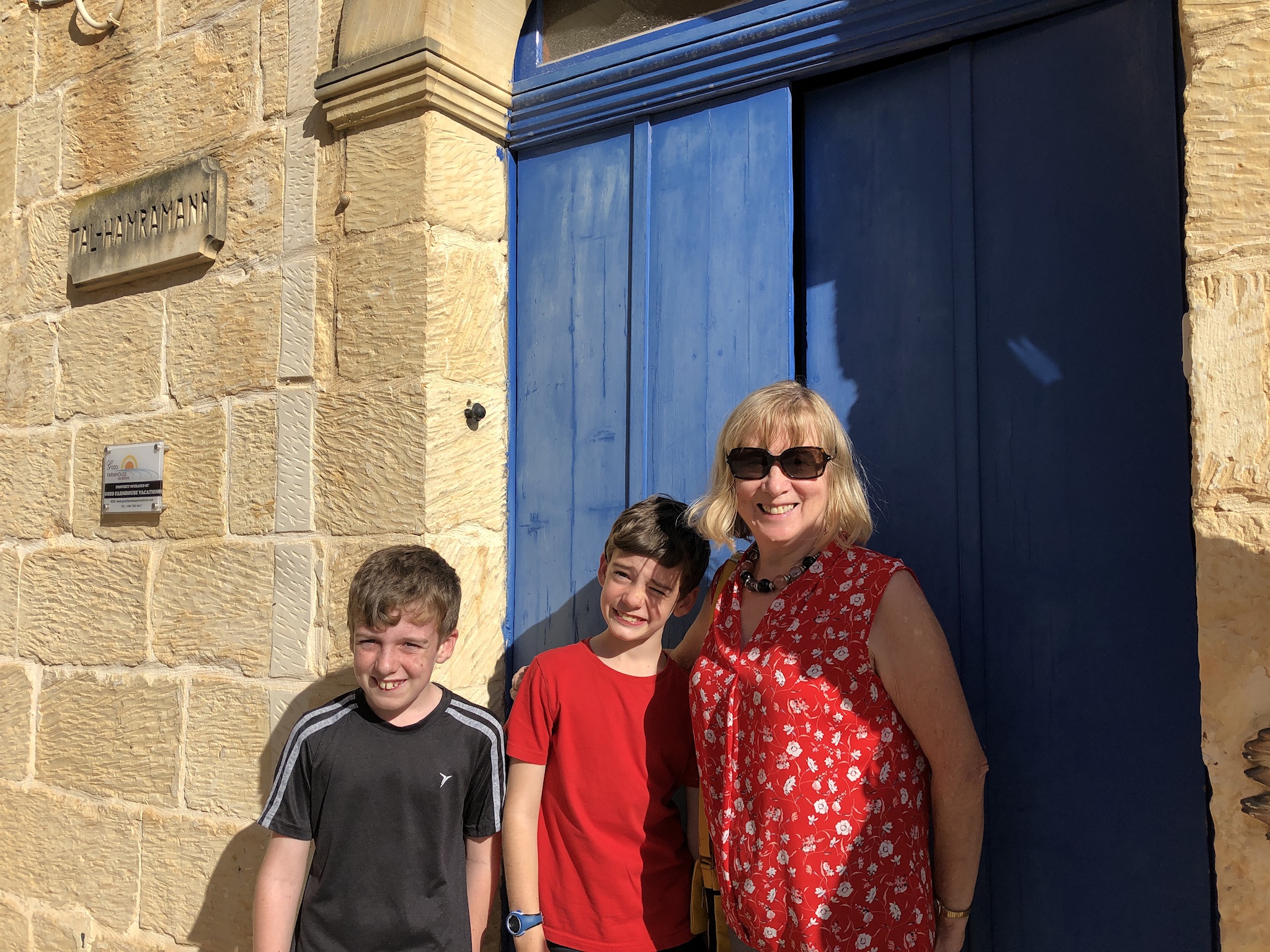
Ita arrived to join us for our last night in St Paul’s. We spent a lovely sunny morning walking around the headland. Then we caught a ferry from Mgarr Harbour to Gozo, the ferry took 20 minutes, the fare was to be paid on the return trip, there was only one way off the island. From the port we took a taxi to our farmhouse, home for the next two weeks, Tal Hamramann. A beautiful big four bedroomed house with a pool in Xaghra.
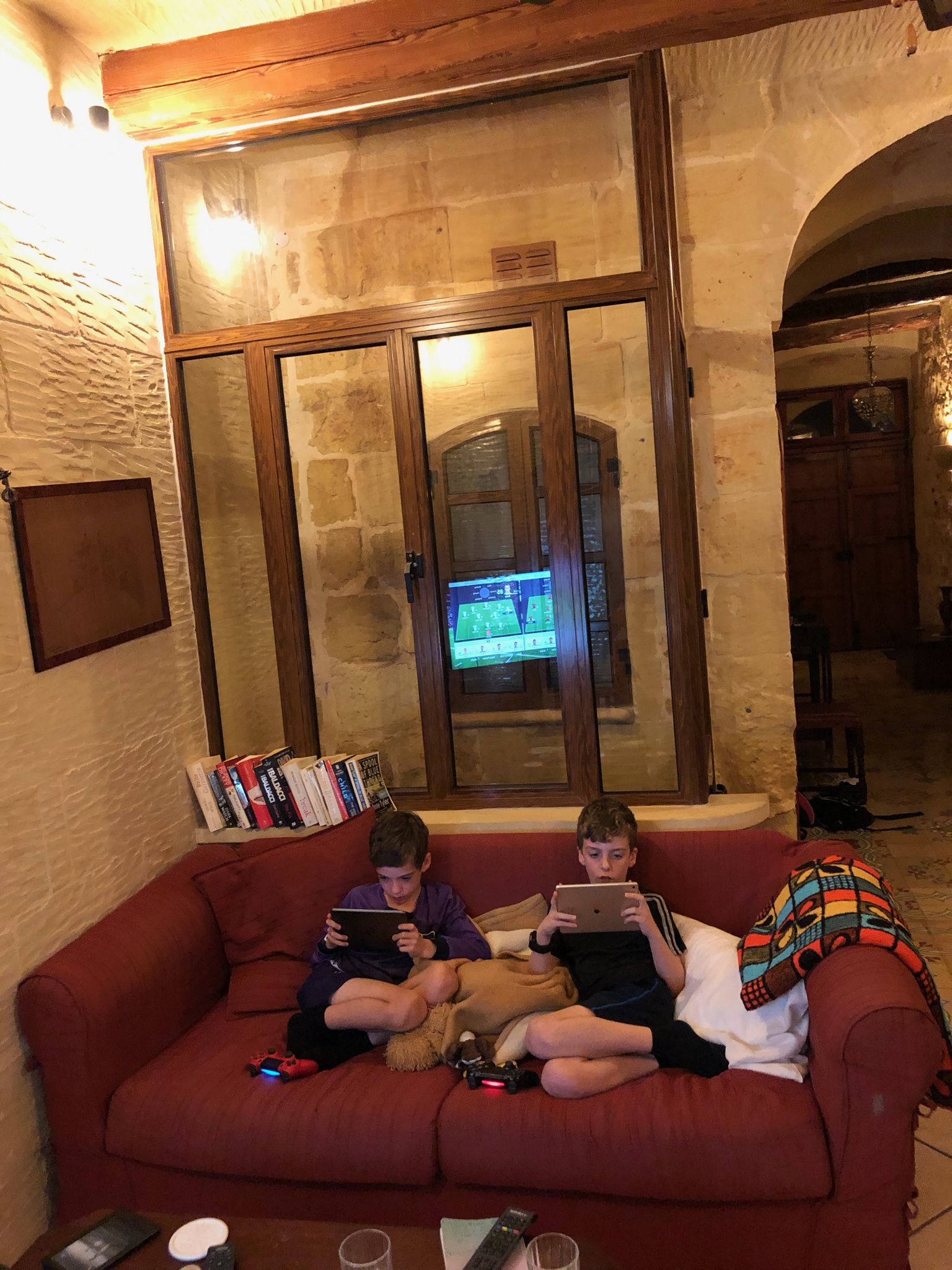
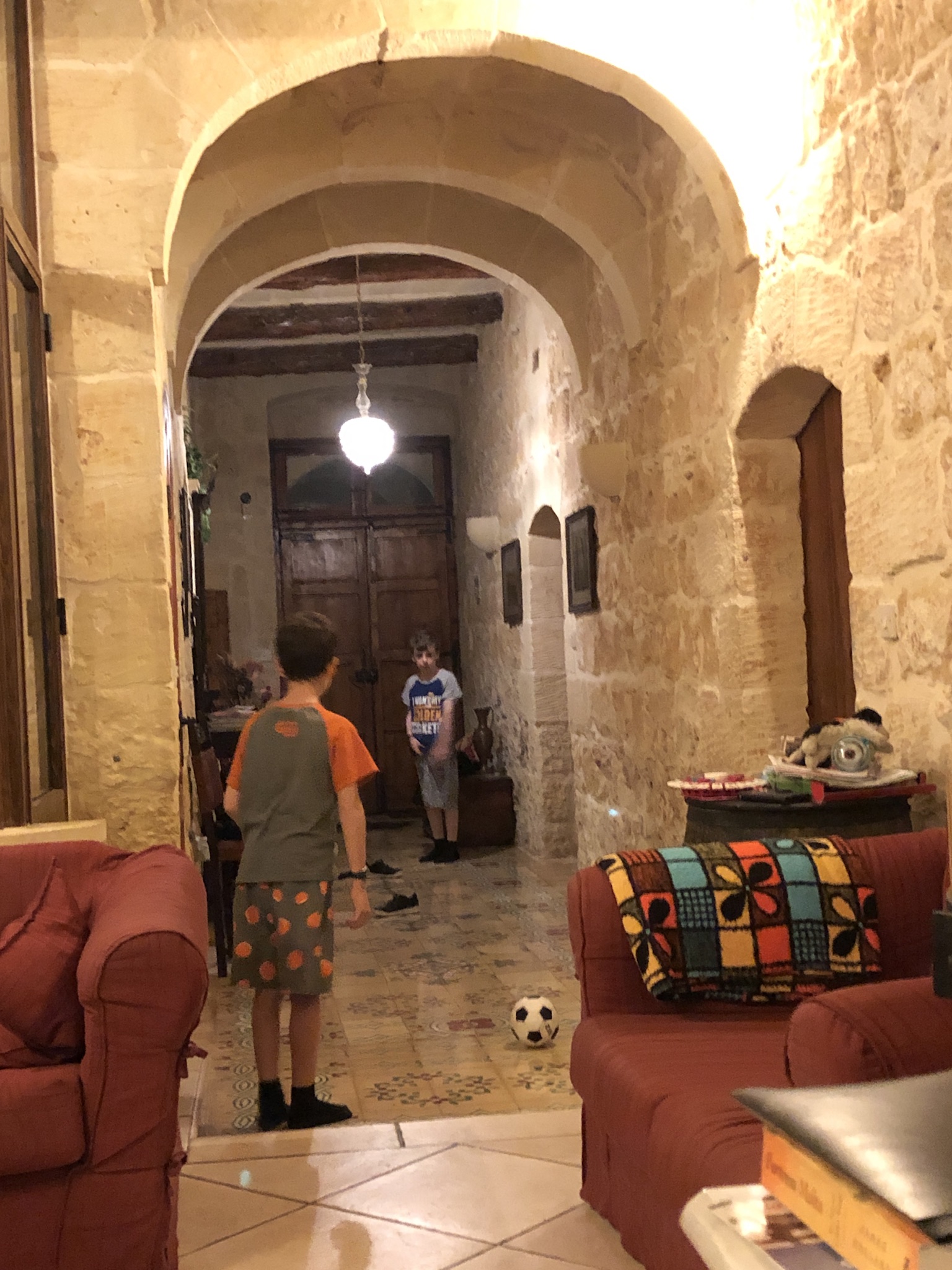
Indoor soccer 😳
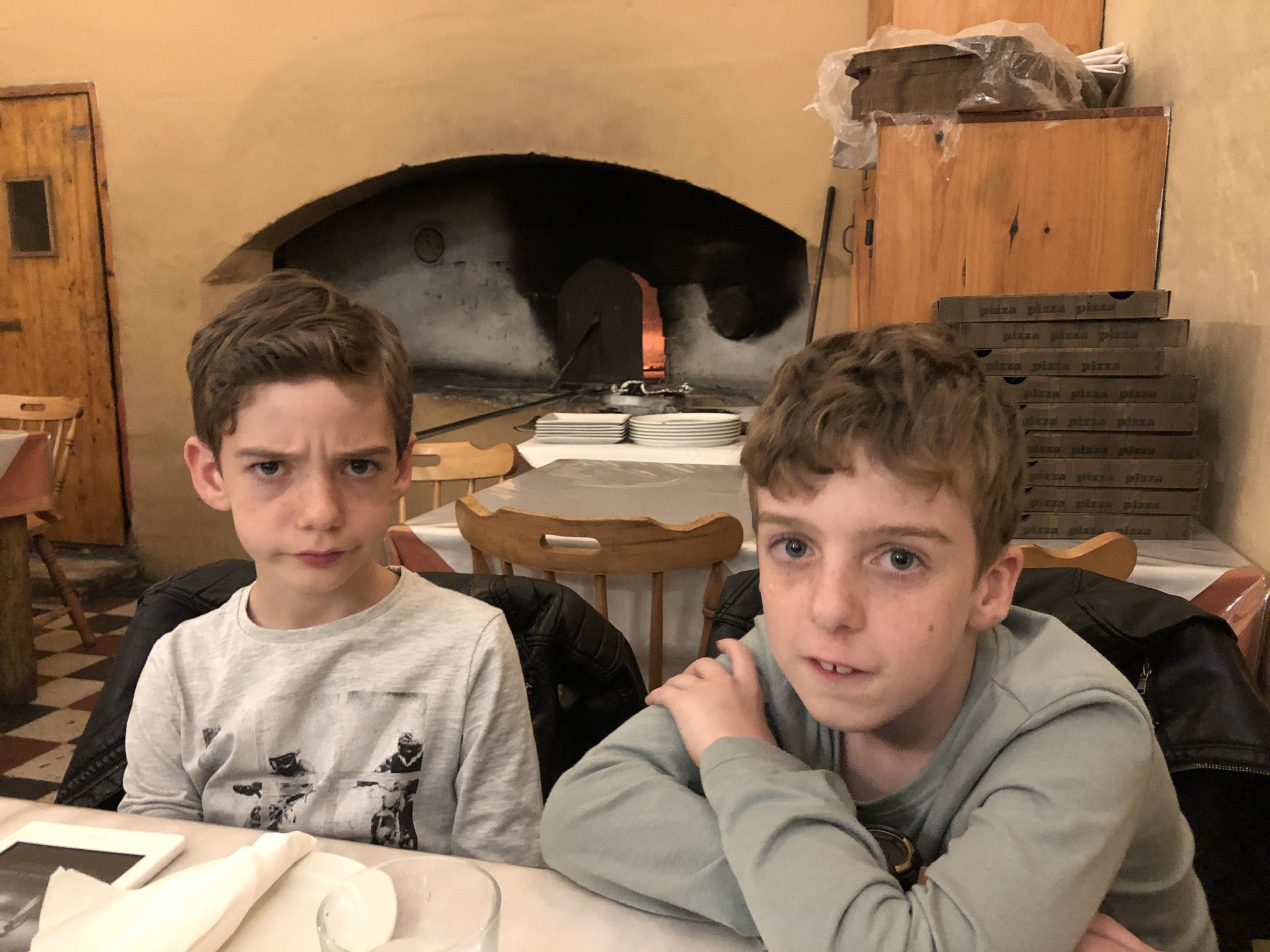
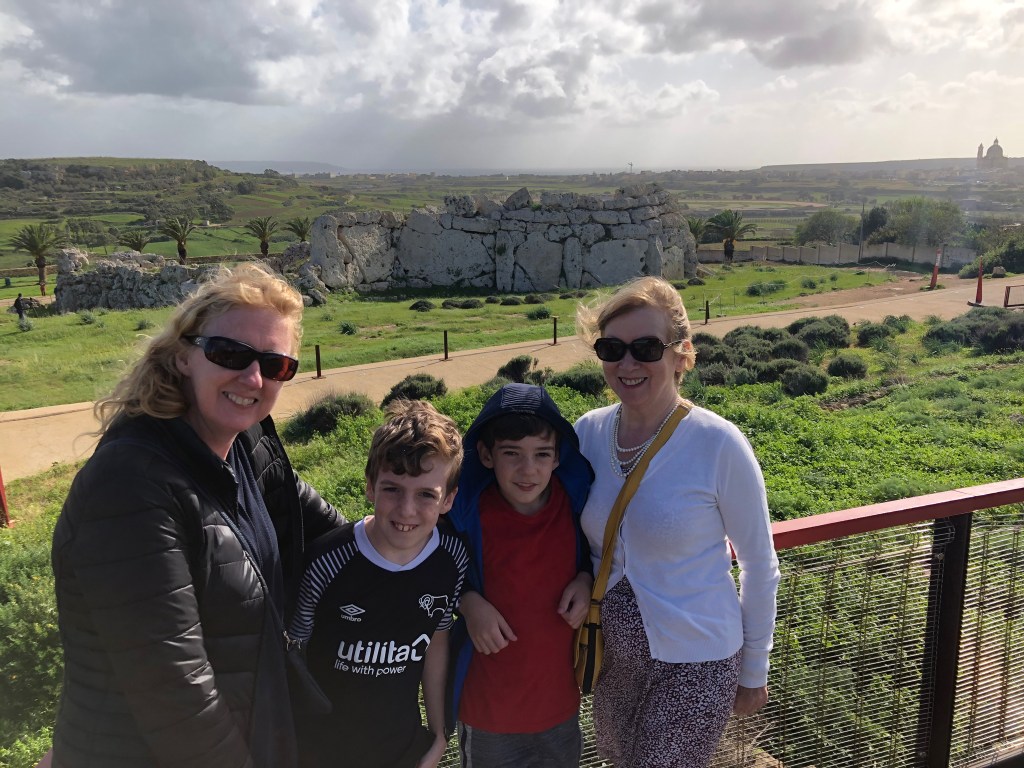
The village of Xaghra had a square with a big church, and a few pubs and cafes where we had a few evenings out. It was a small village which had one of the most visited tourists sites on the island, Gigantija. One of our favourite restaurants there was Al Furnar which had the oldest oven on the island which was continually working, they used it to bake bread, pizzas and meats.
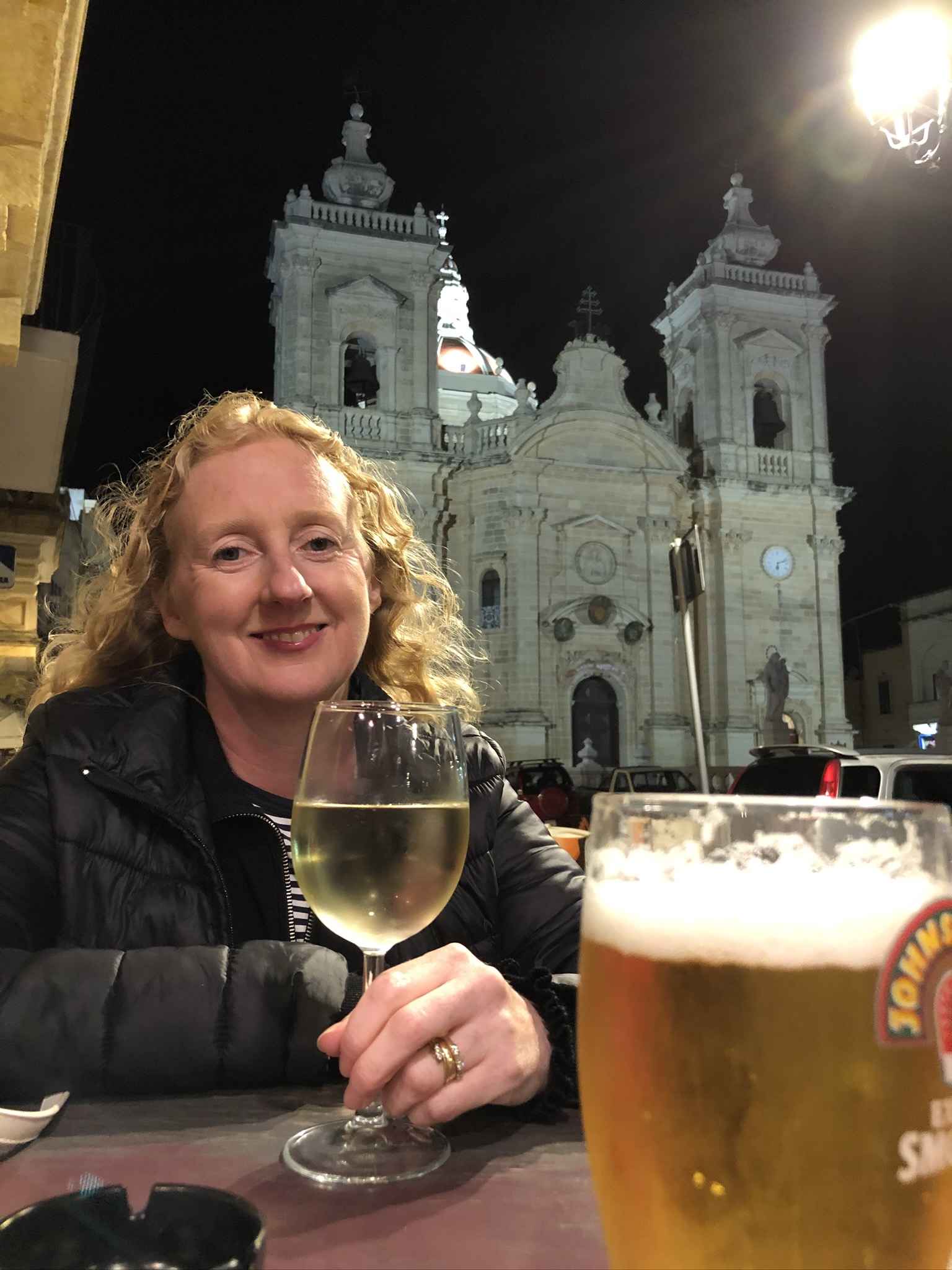
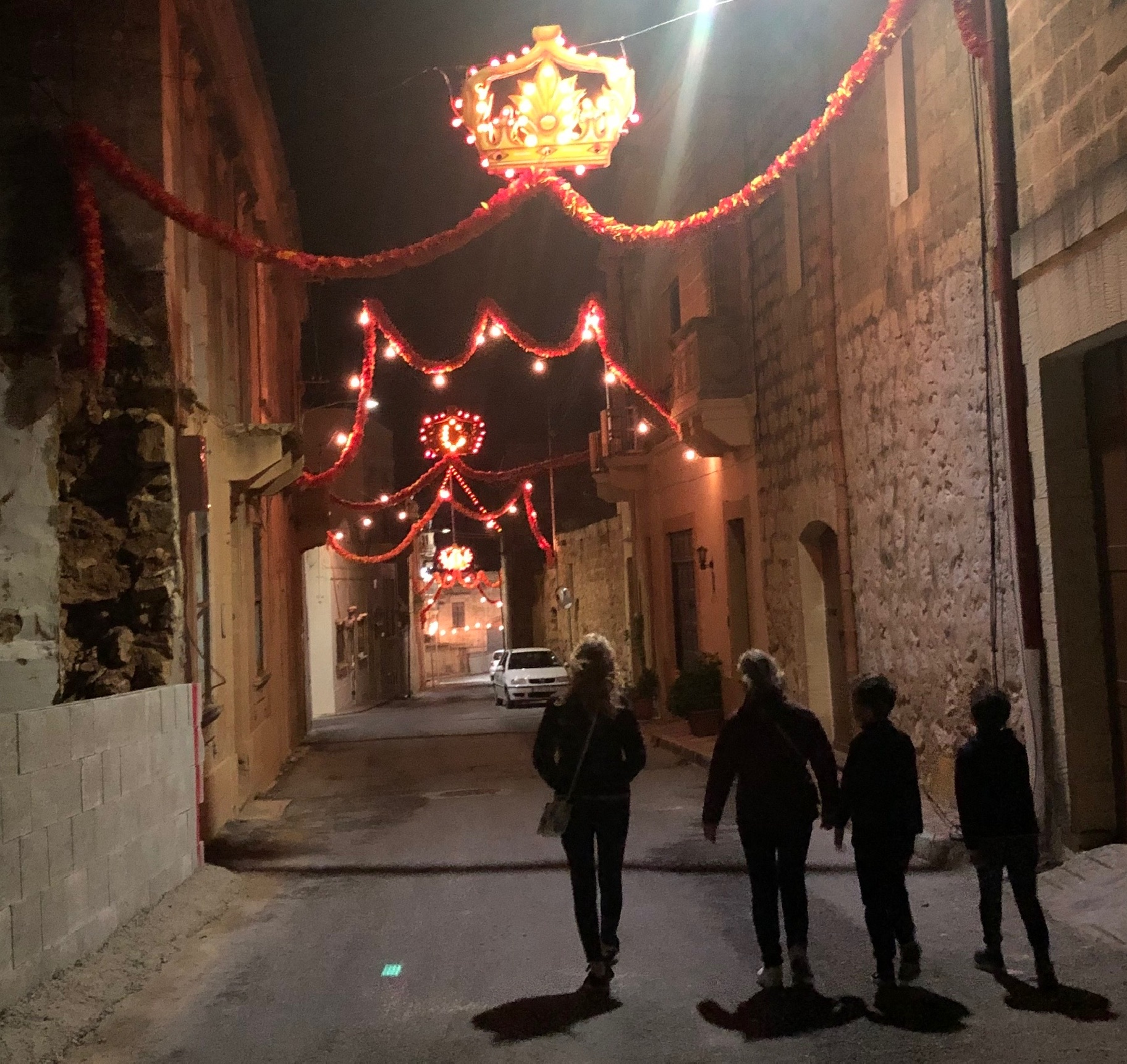
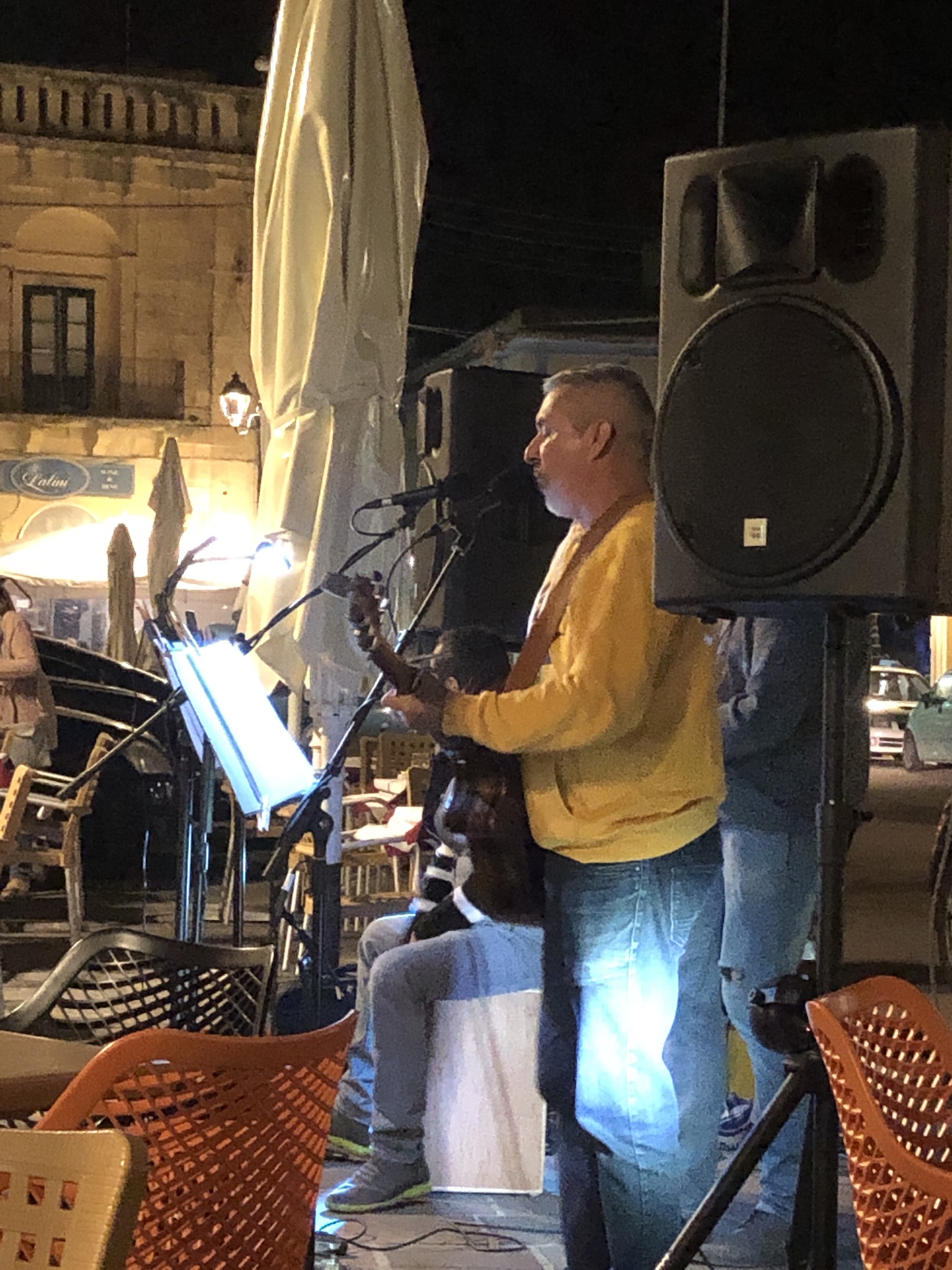
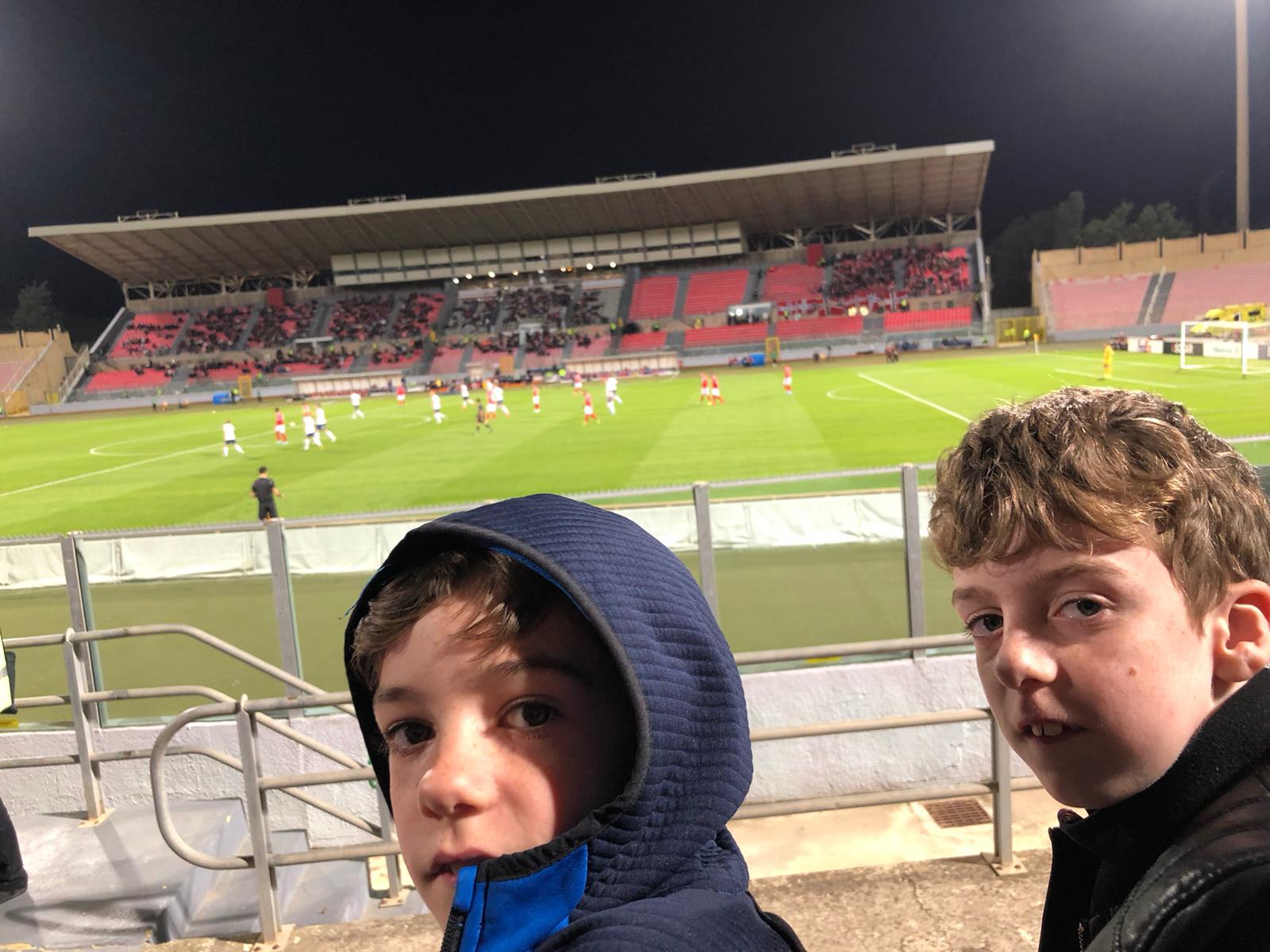
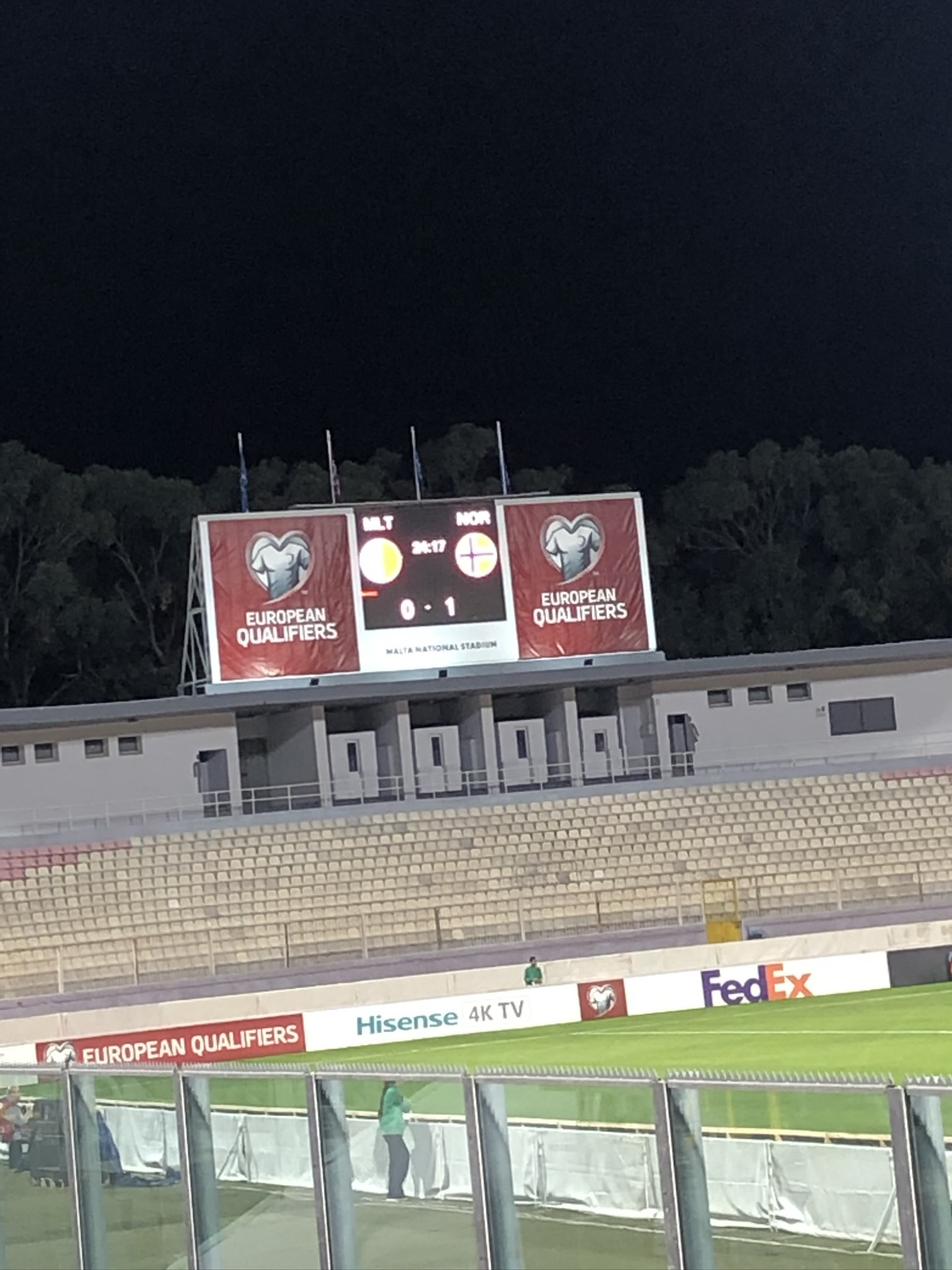
The boys took a quick trip back to mainland Malta for a night. They went to a European qualifier match where Norway beat Malta 2-1. And they returned on the ferry with Nana Gwen and Auntie Cathryn who came to visit for a week. While the boys were away Mum and I got to try out the spa at the lovely Hotel La Cenc, have a long cliff walk and enjoy a nice dinner in Latini restaurant in the square. Win-win!
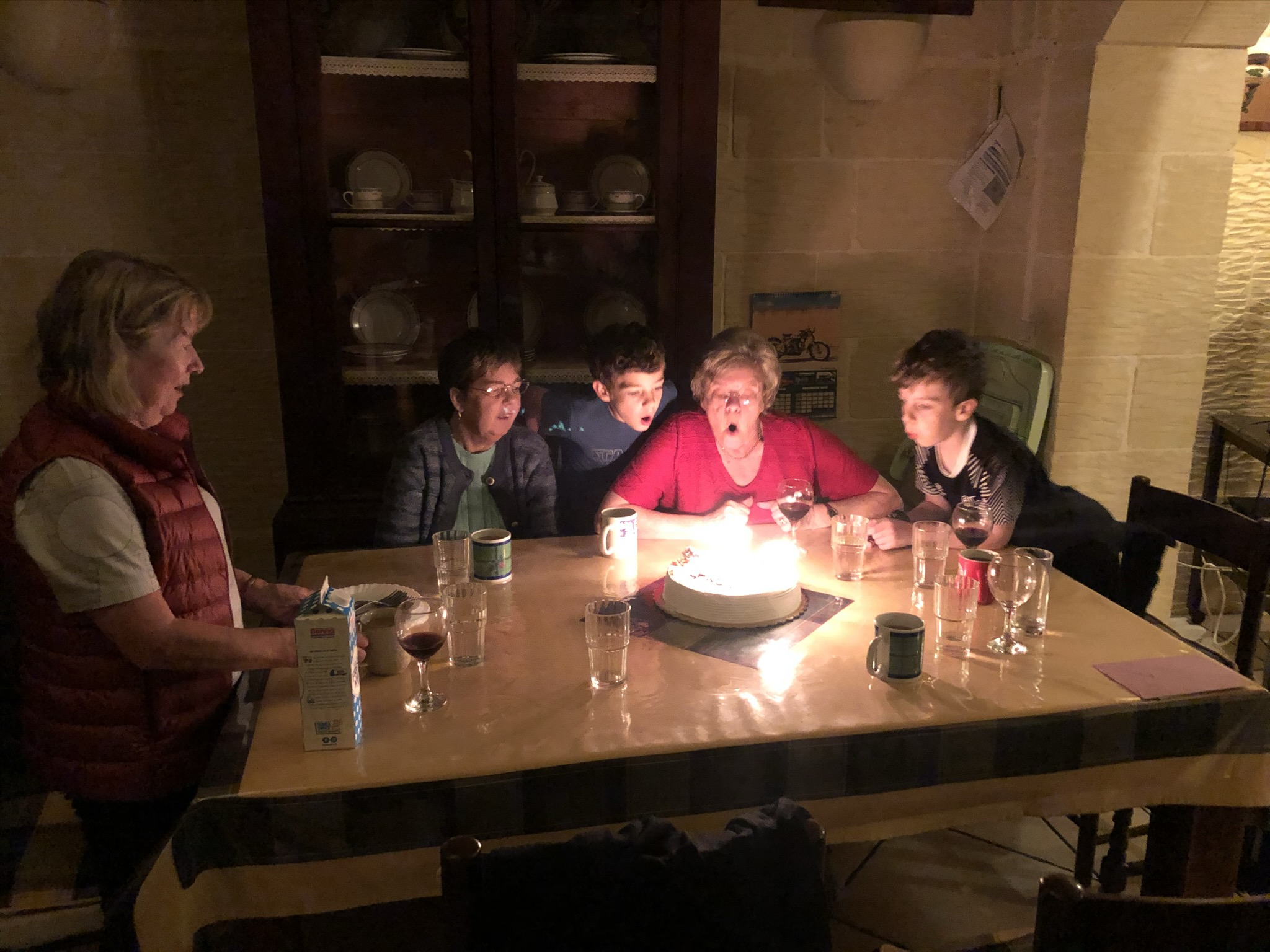
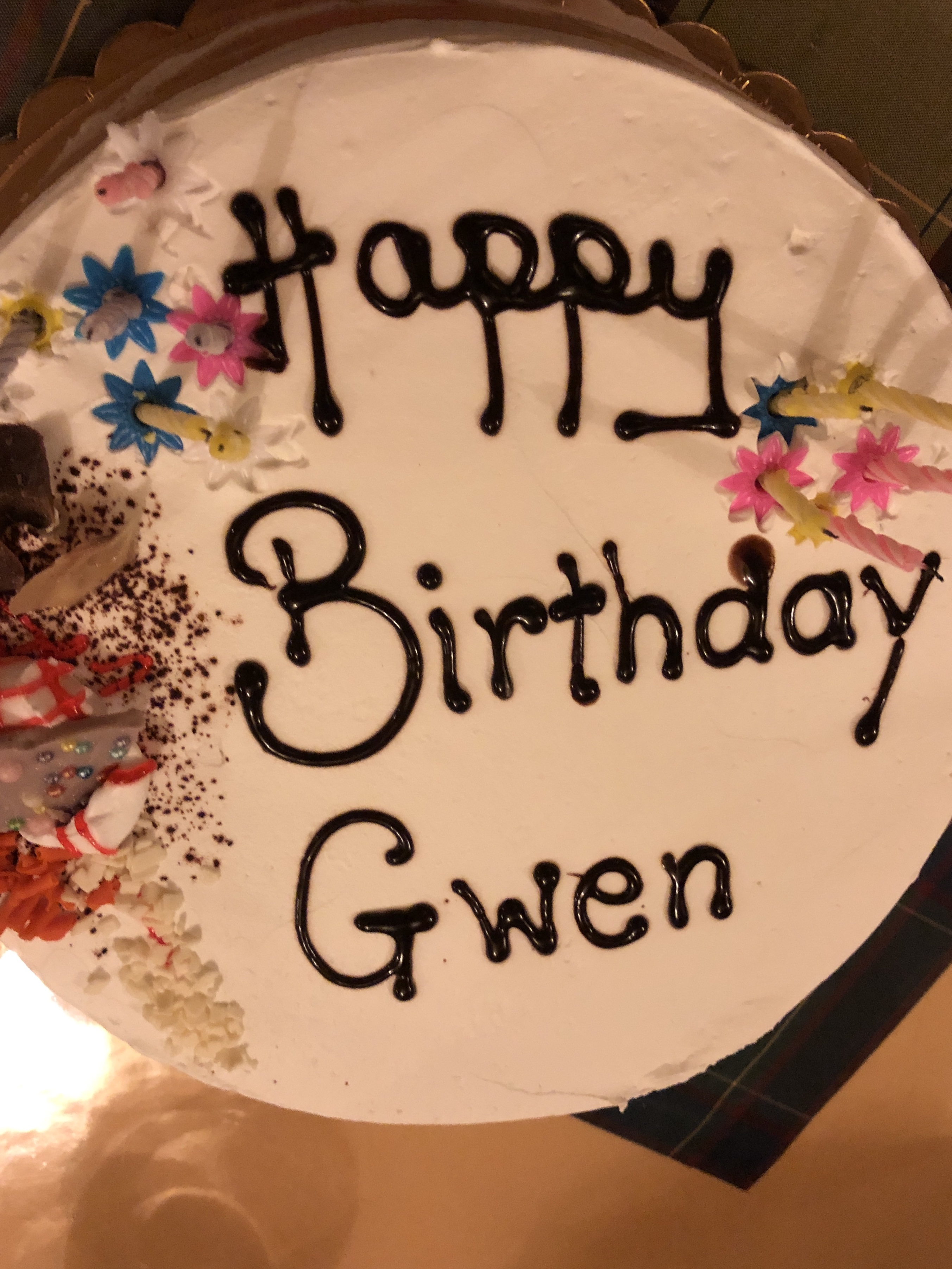
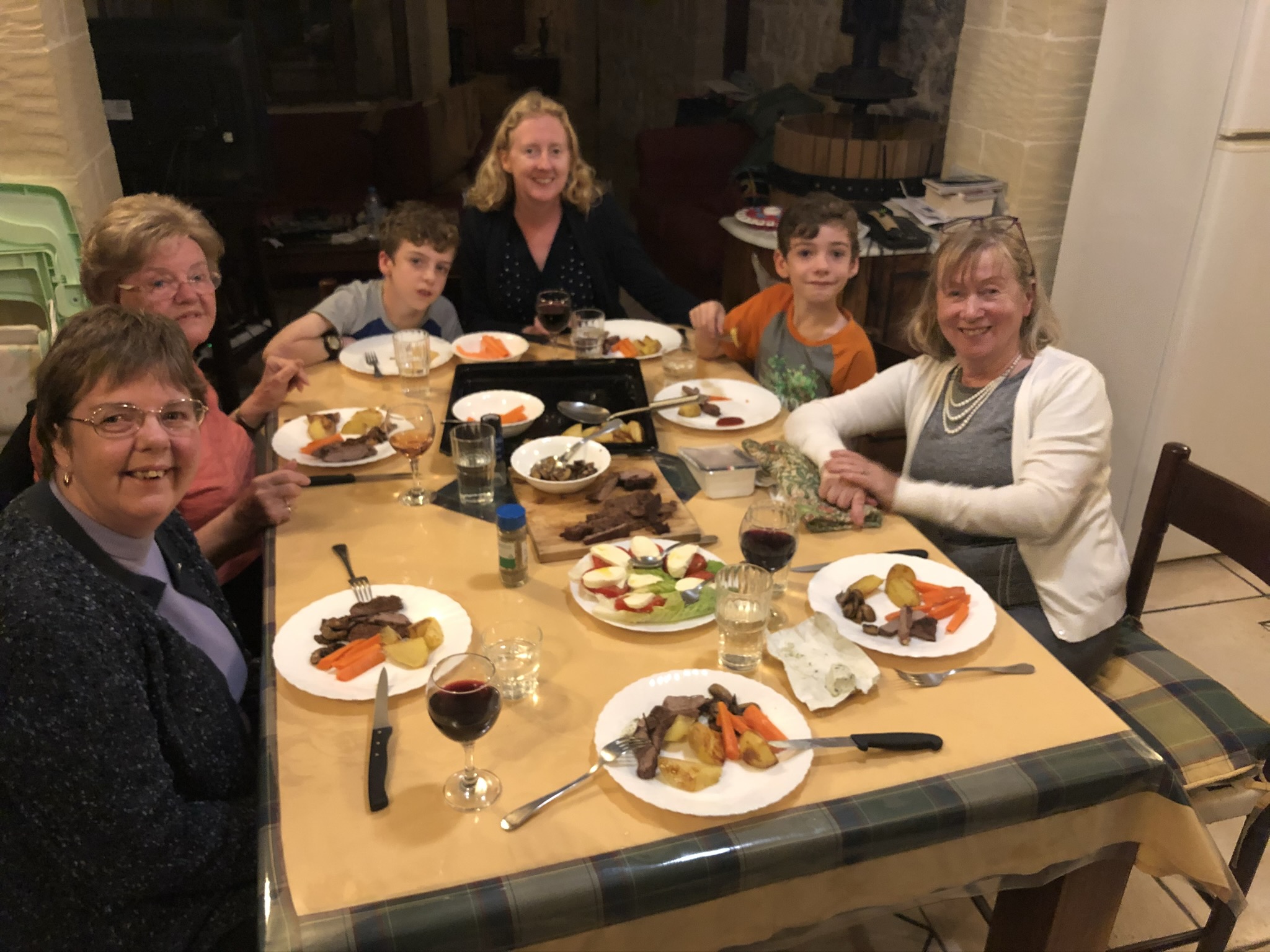
We had some nice dinners and Bar-B-Qs in the farmhouse. We even had a nice birthday party with a locally made cake for Gwen’s birthday.
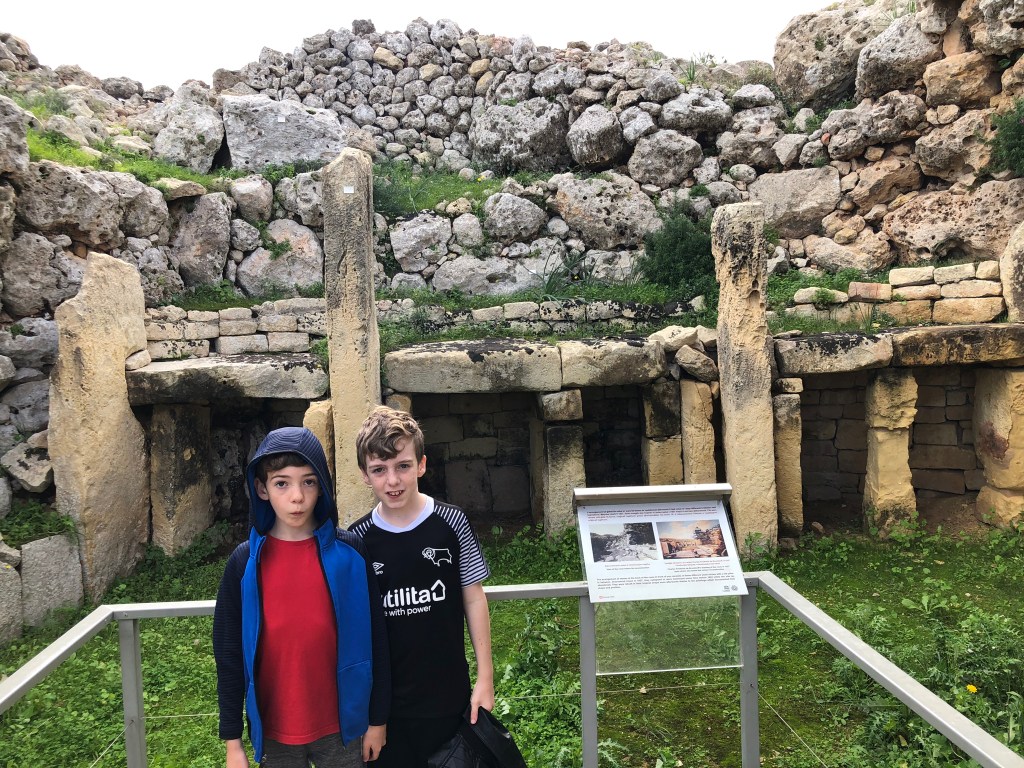
Gigantija temples, older than the pyramids of Egypt, a ceremonial fertility site built from local stone as a place of worship. A unesco heritage site since 1980.
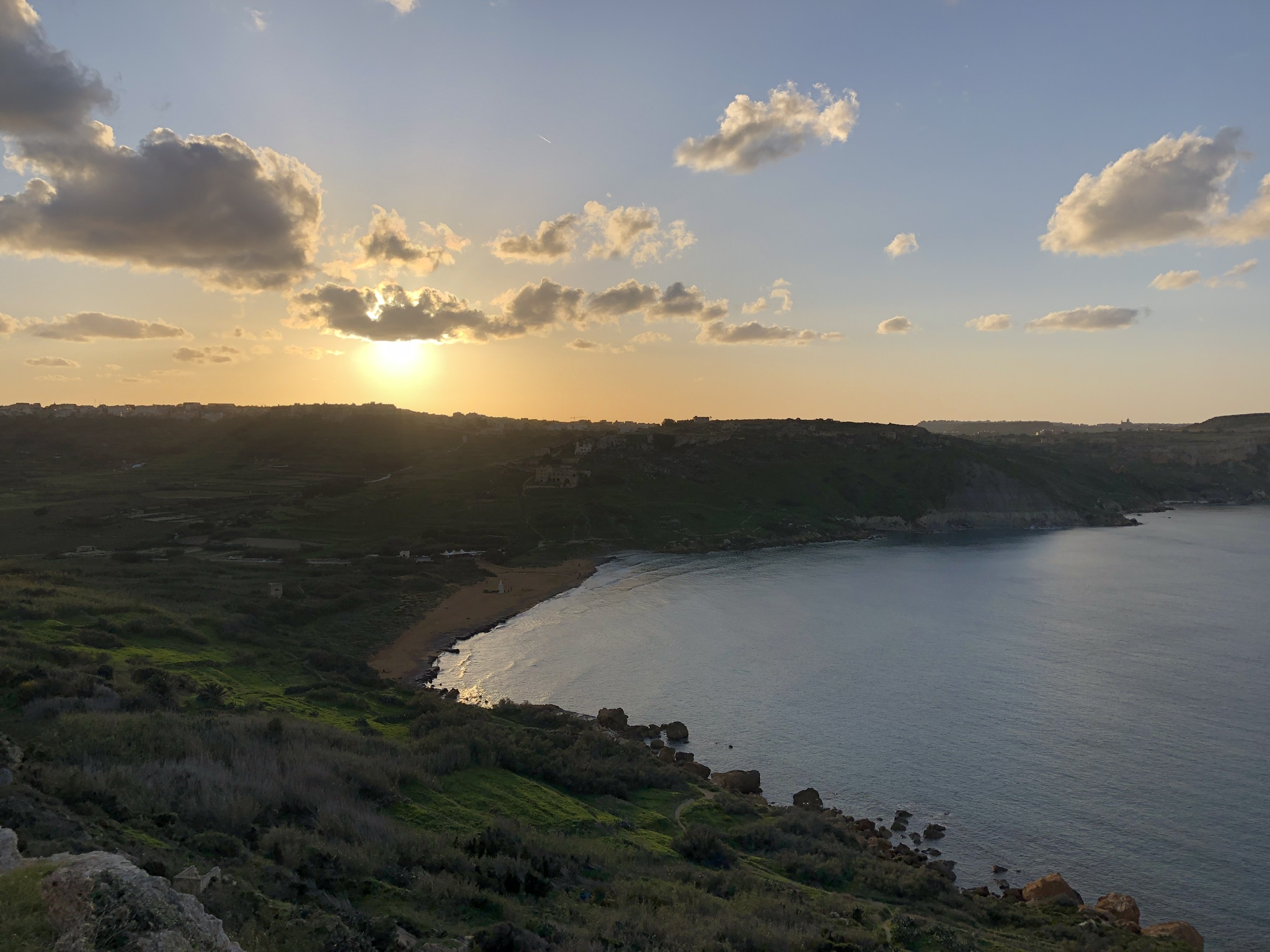
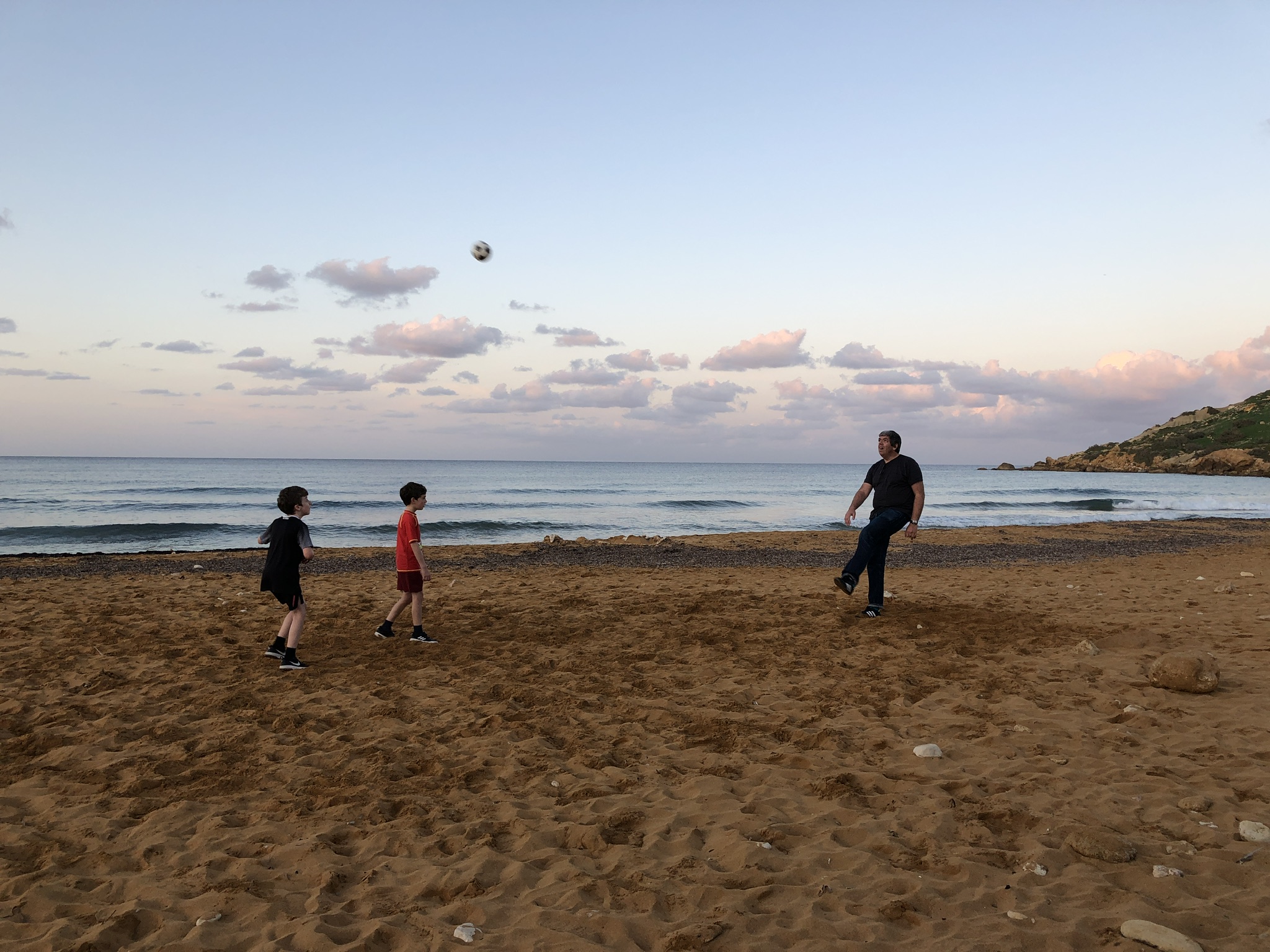
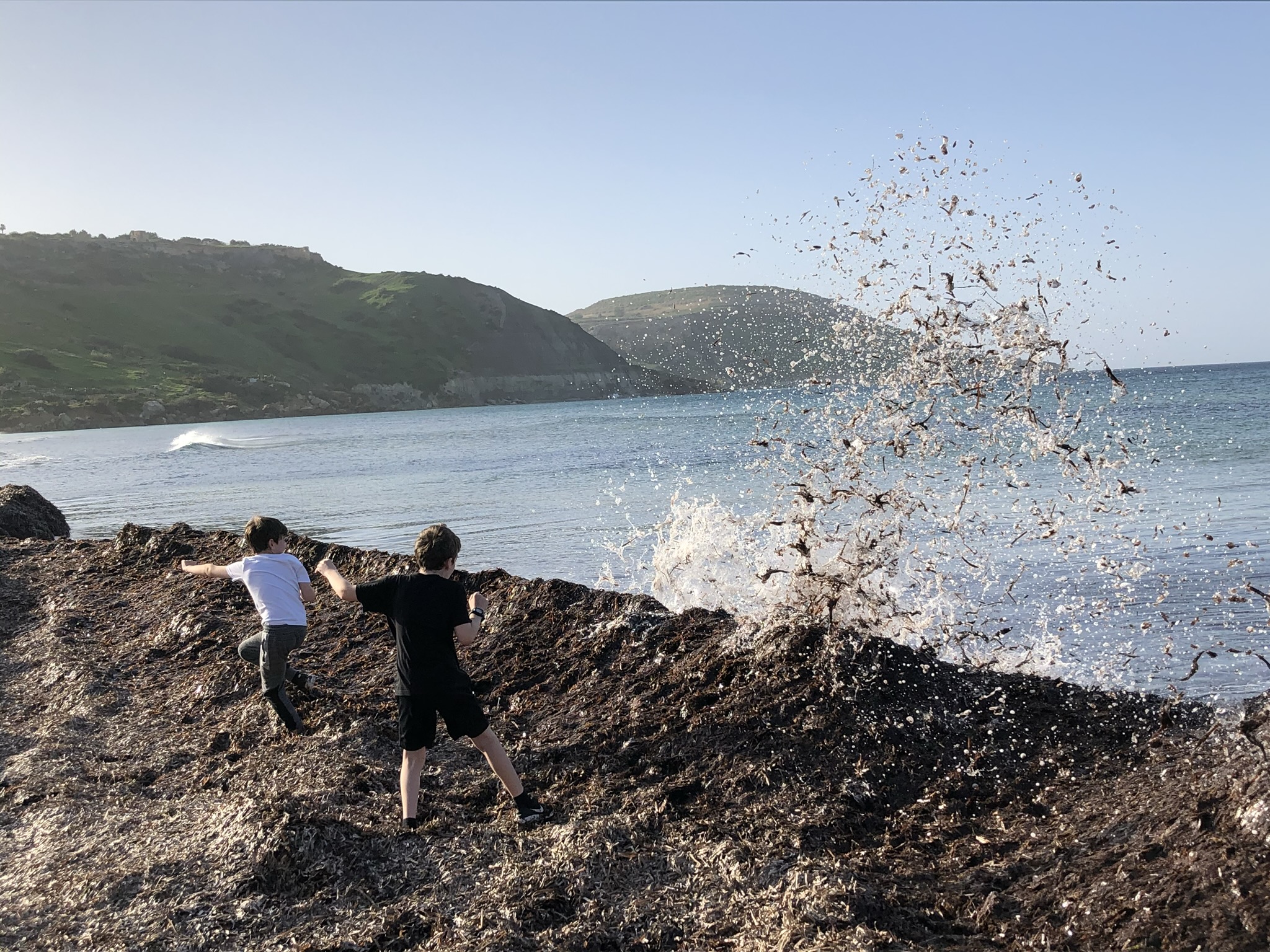
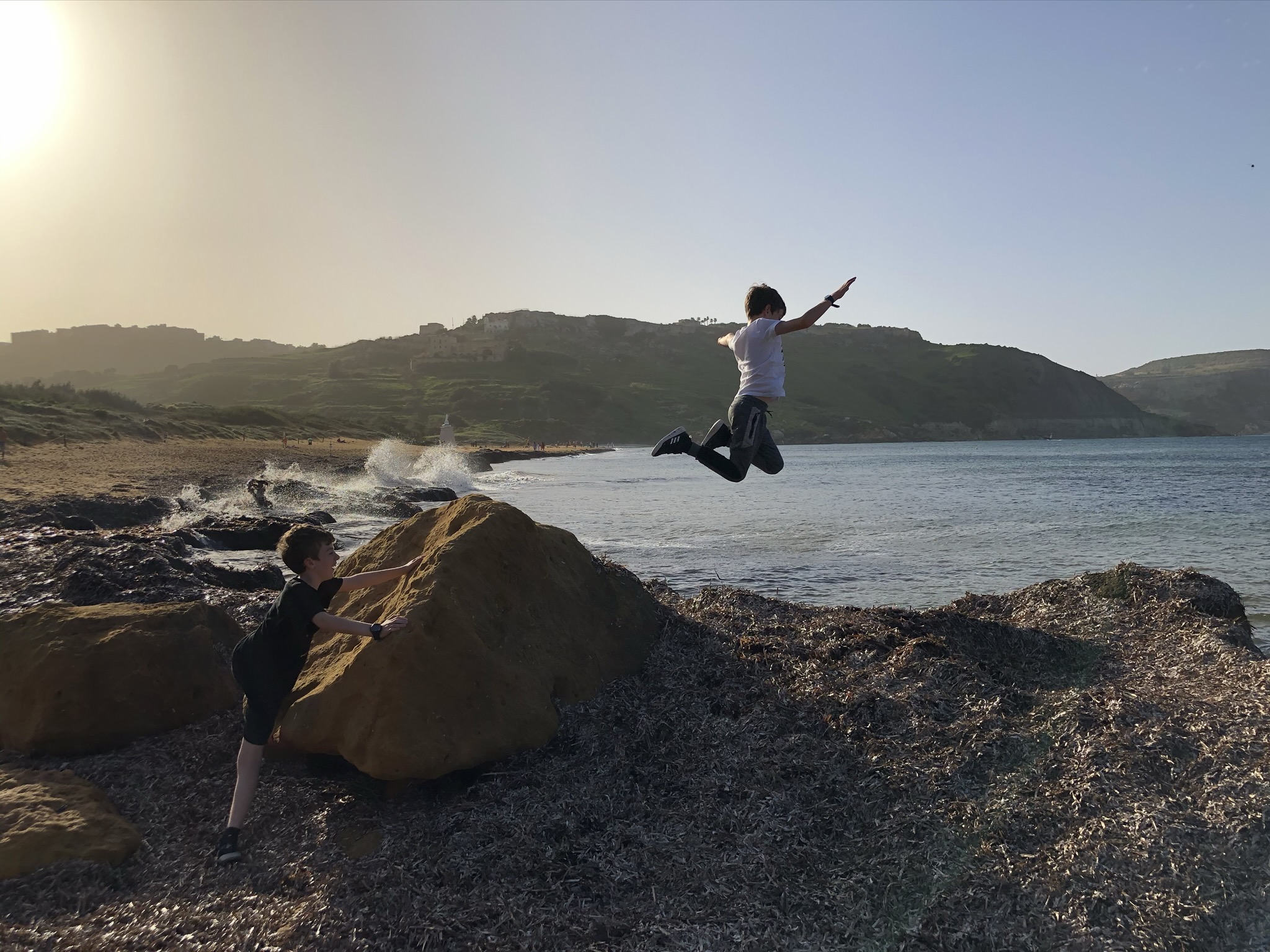
Ramla Bay the nearby beach was a good place to go for the boys to play football or to walk on the beach taking care to avoid the waves throwing up seaweed! One day we walked up the hillside to the cave at the top – Tal Mixta, it was a lovely walk and the views of the beach below were fantastic.
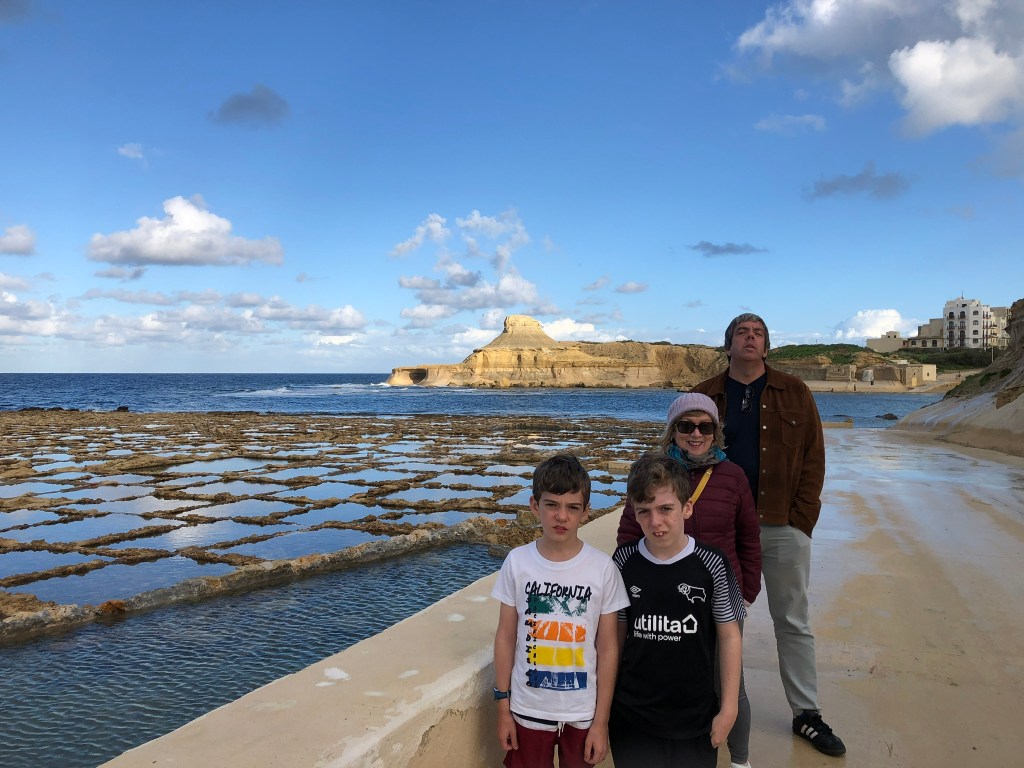
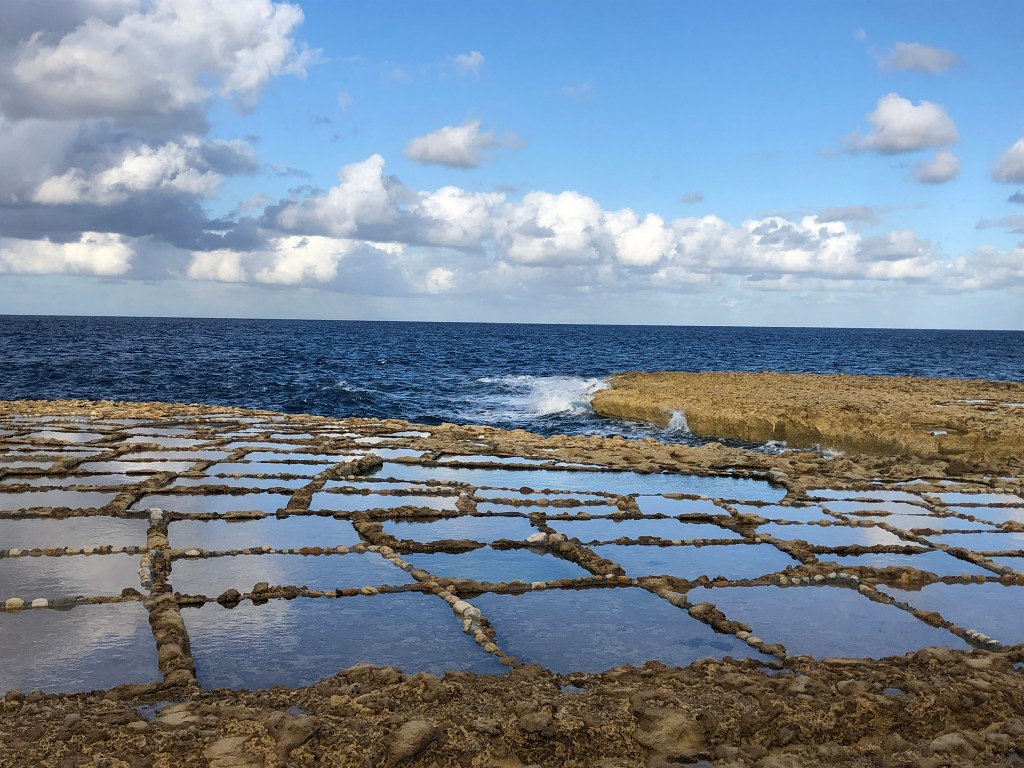
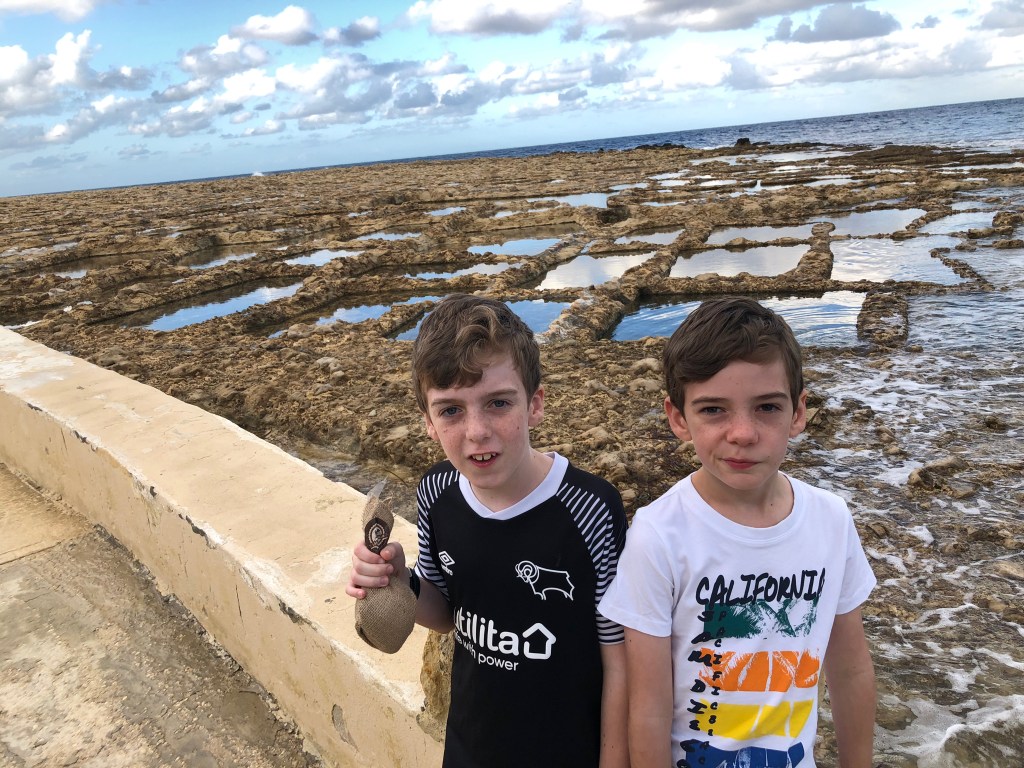
At several spots around the island we noticed concrete pools near the shore line and learned that they were used in salt production. The pools are filled with sea water and when the water evaporates the film of salt is harvested. From Marsalforn we walked along the shore past the salt pans. A woman selling salt explained the process to us and in exchange we purchased some to try at home,
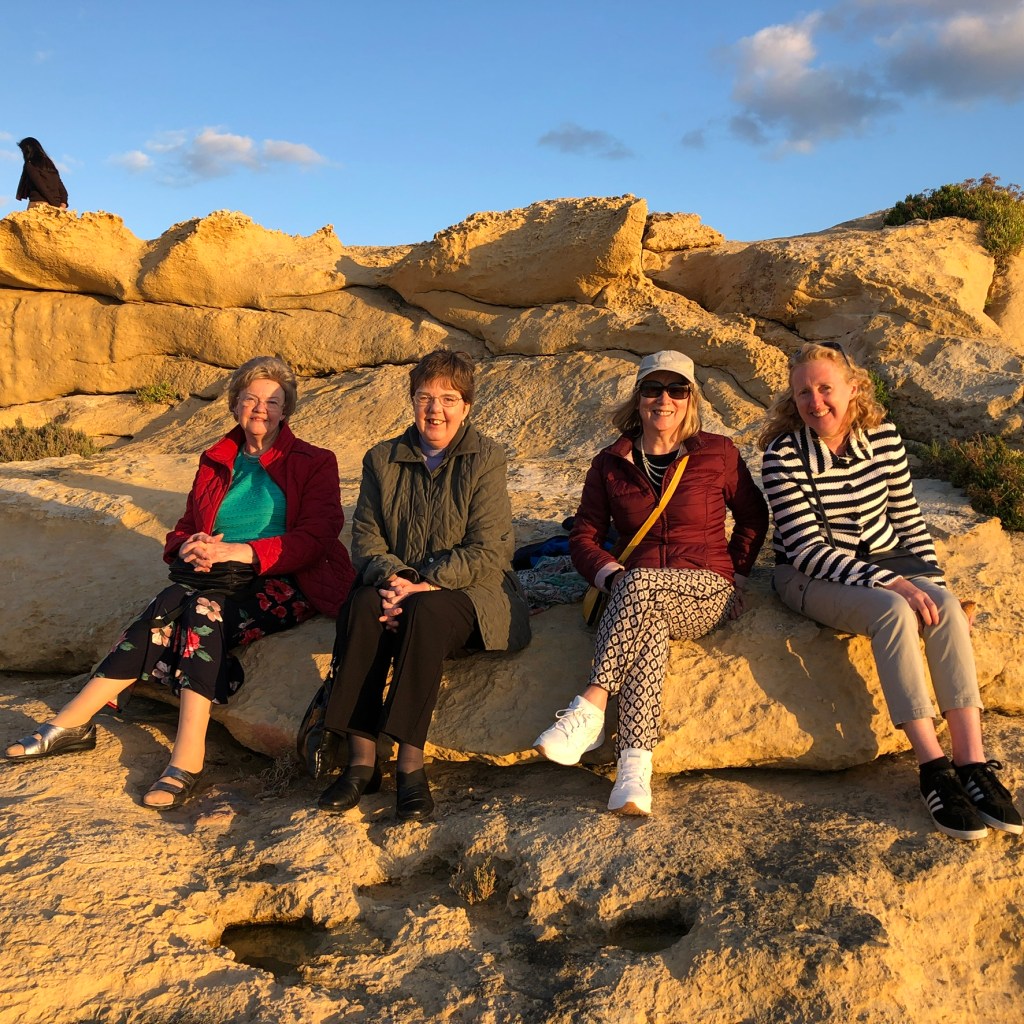
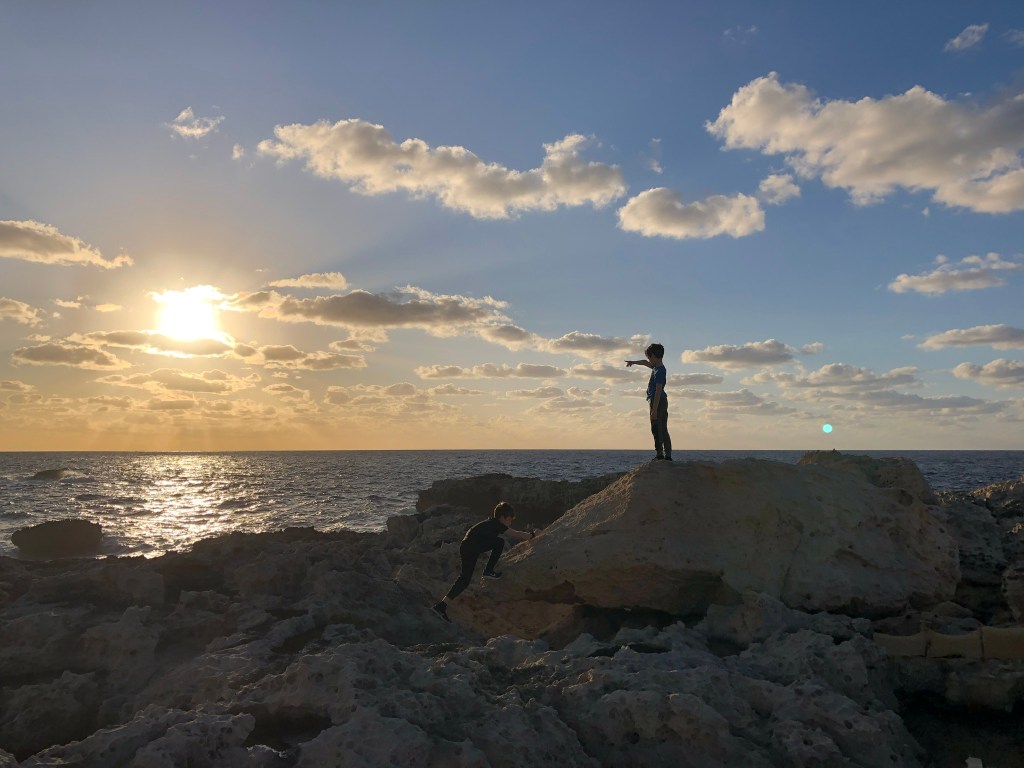
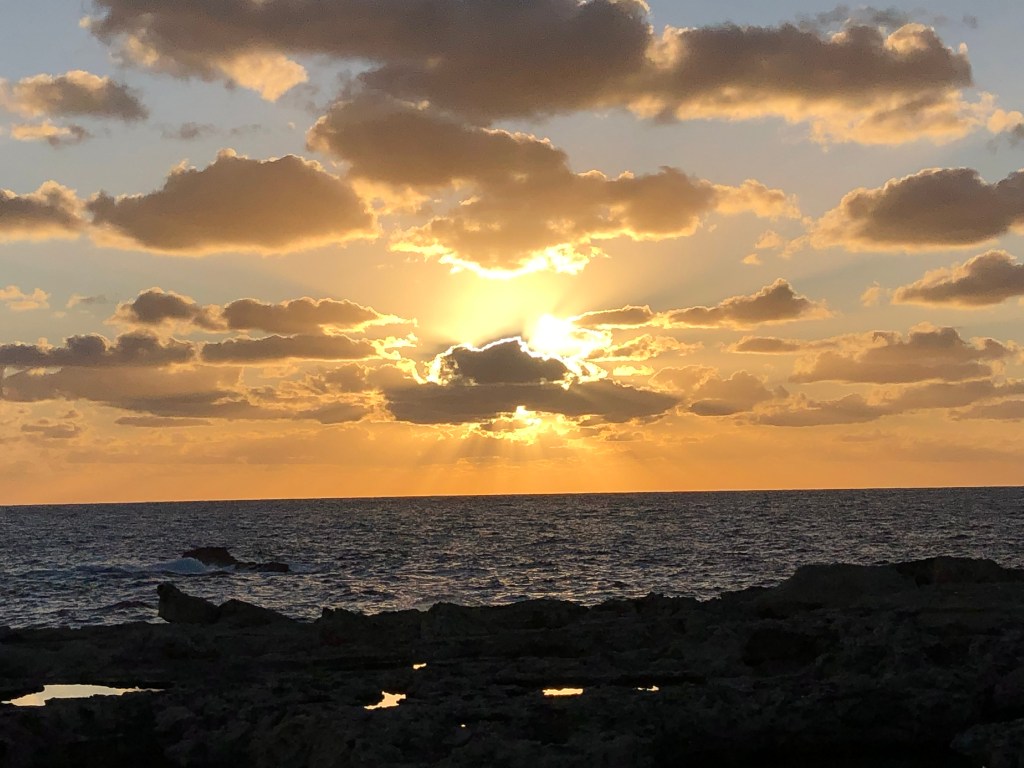
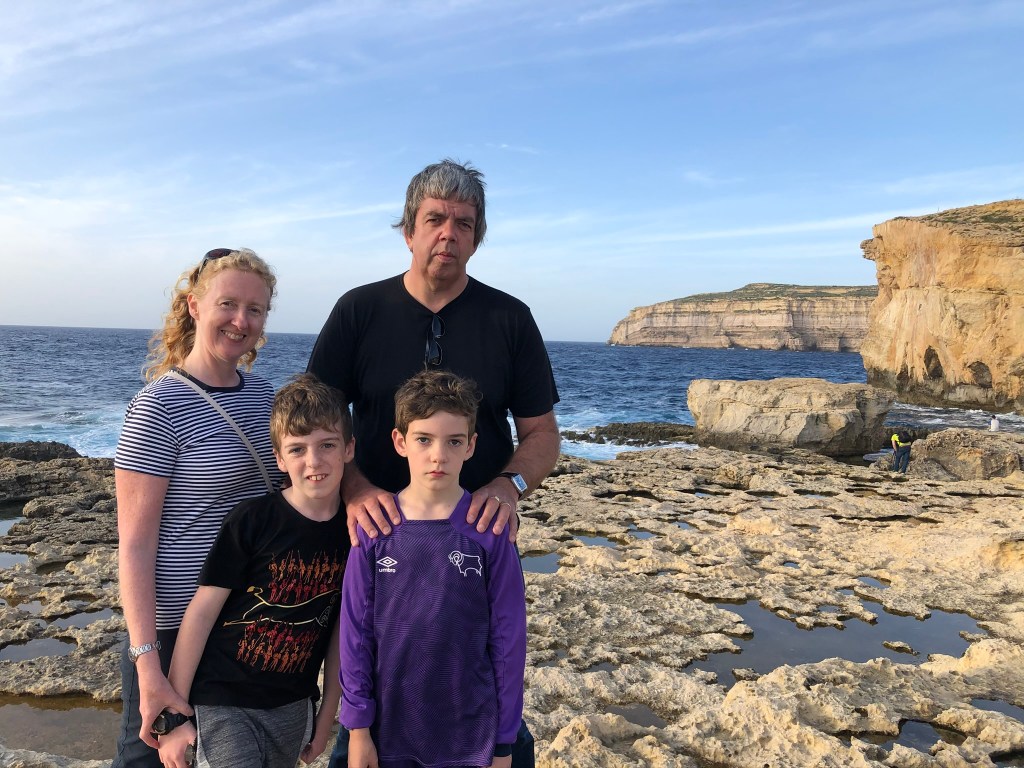
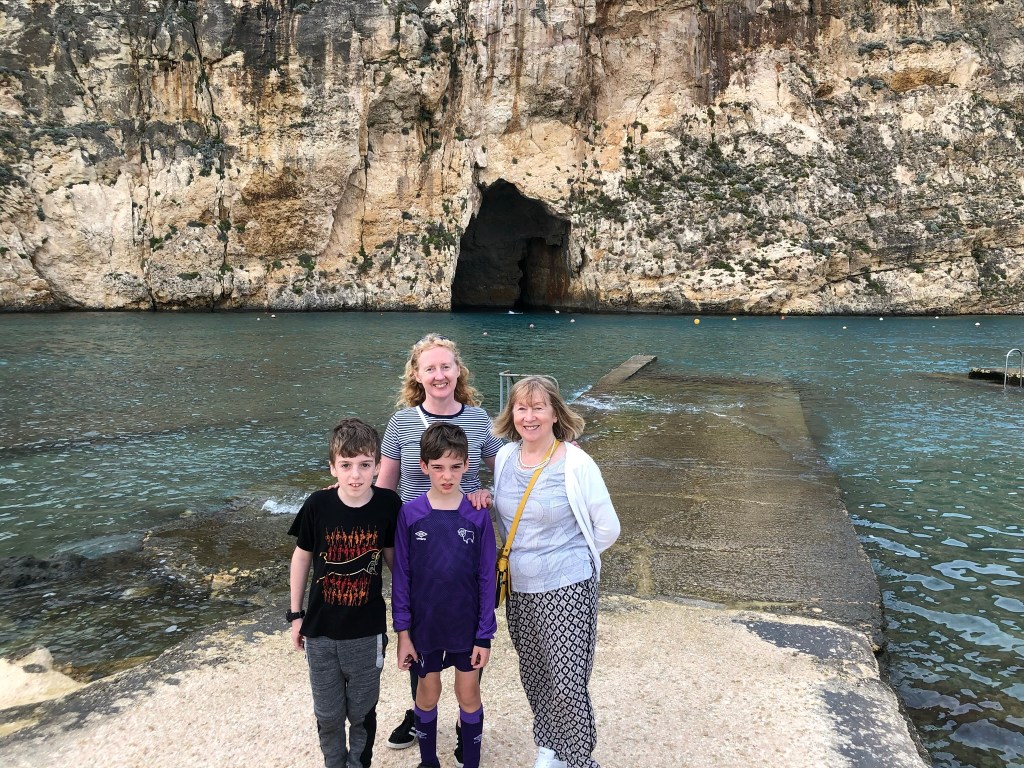
Dwerja was a popular spot for tourists to visit. Scenes from Game of Thrones were filmed there. The focal point of the island, the Azure Window, prominent on postcards and guide books was also a big tourist draw. Unfortunately the window collapsed in a storm in 2017 and the ledge and stack fell into the sea. The area is still nice to visit, a beautiful, rocky terrain fun for climbing and exploring. We visited again with Gwen and Cathryn when they came to visit and enjoyed the sunset.
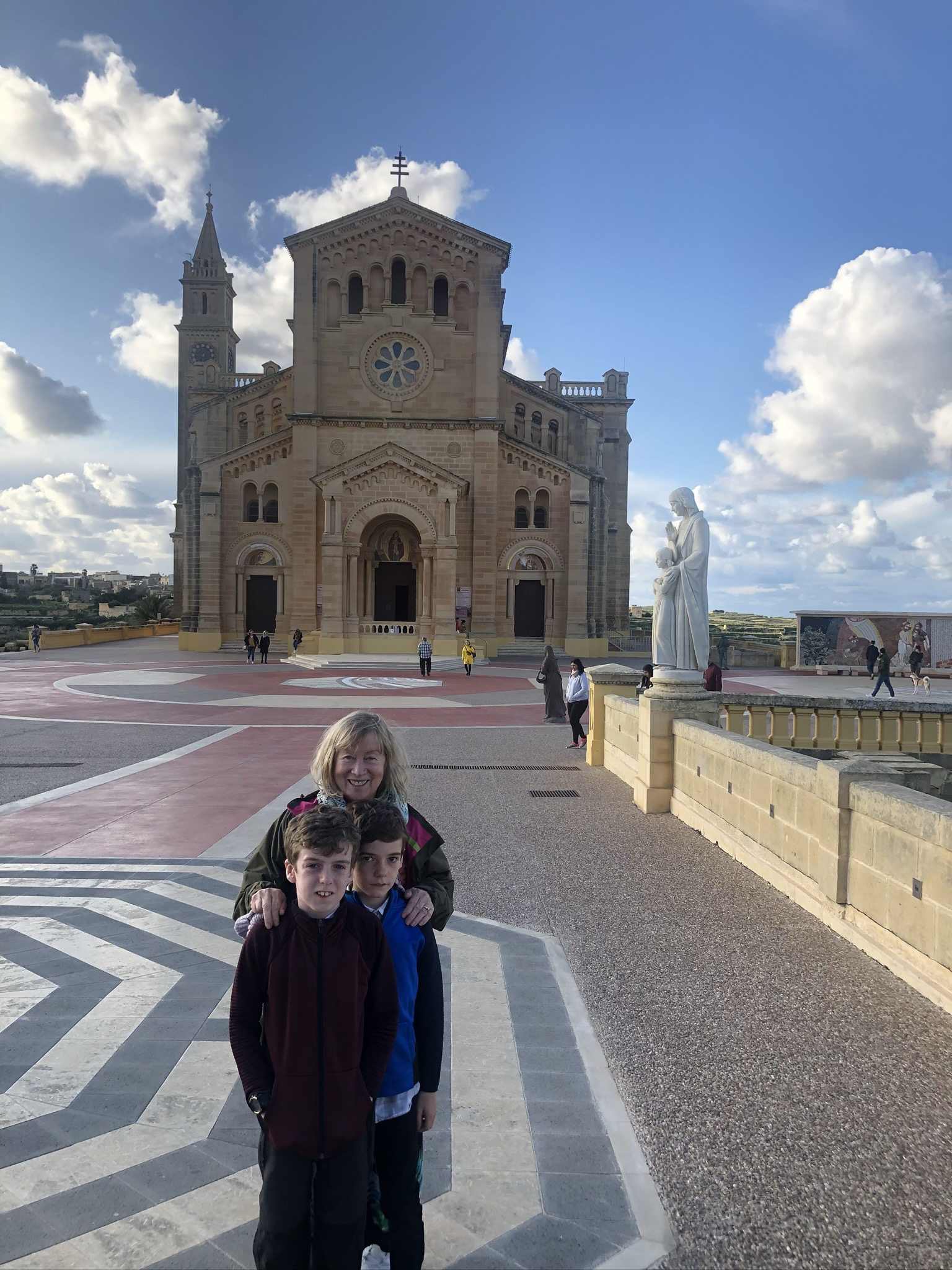
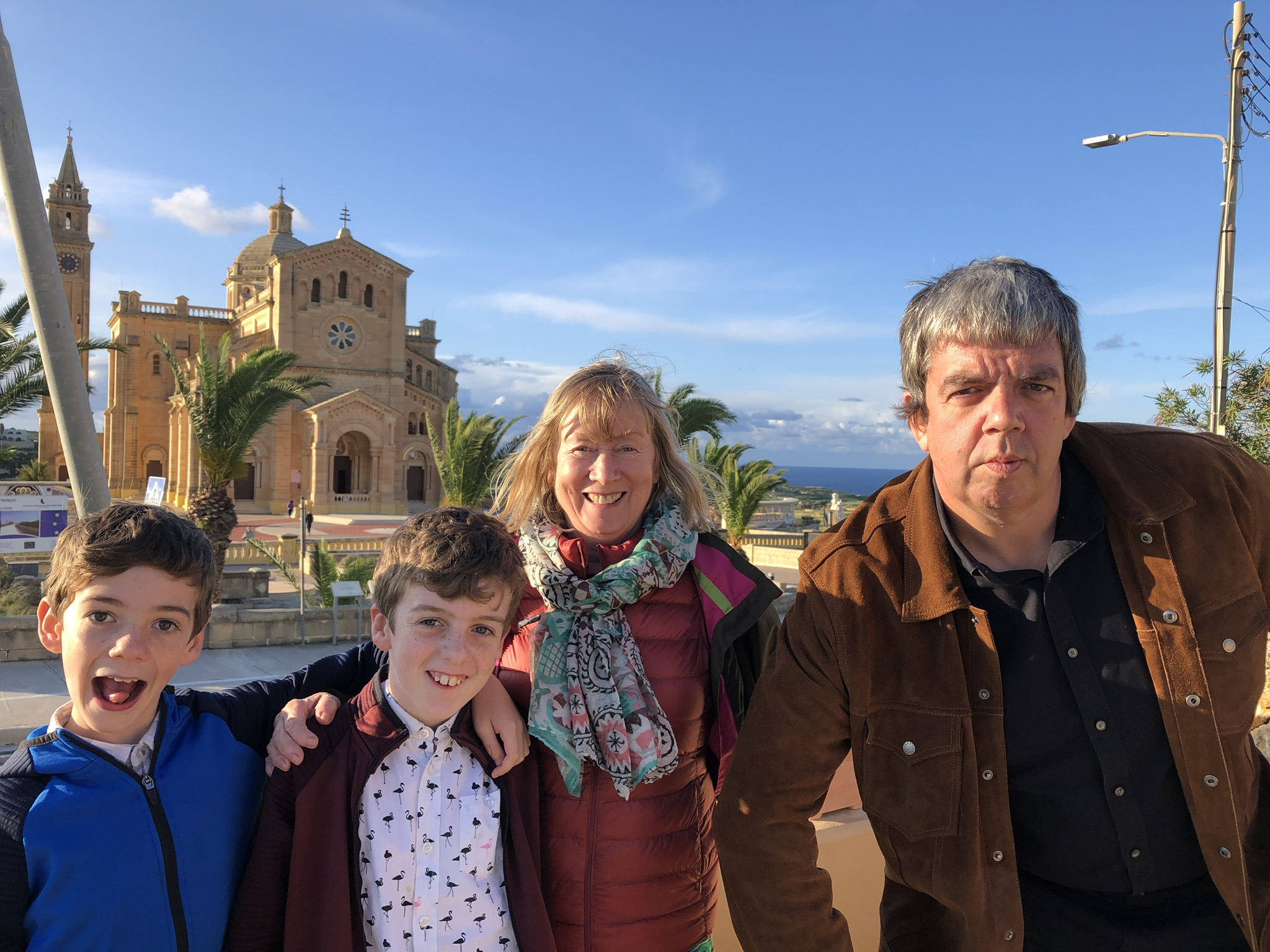
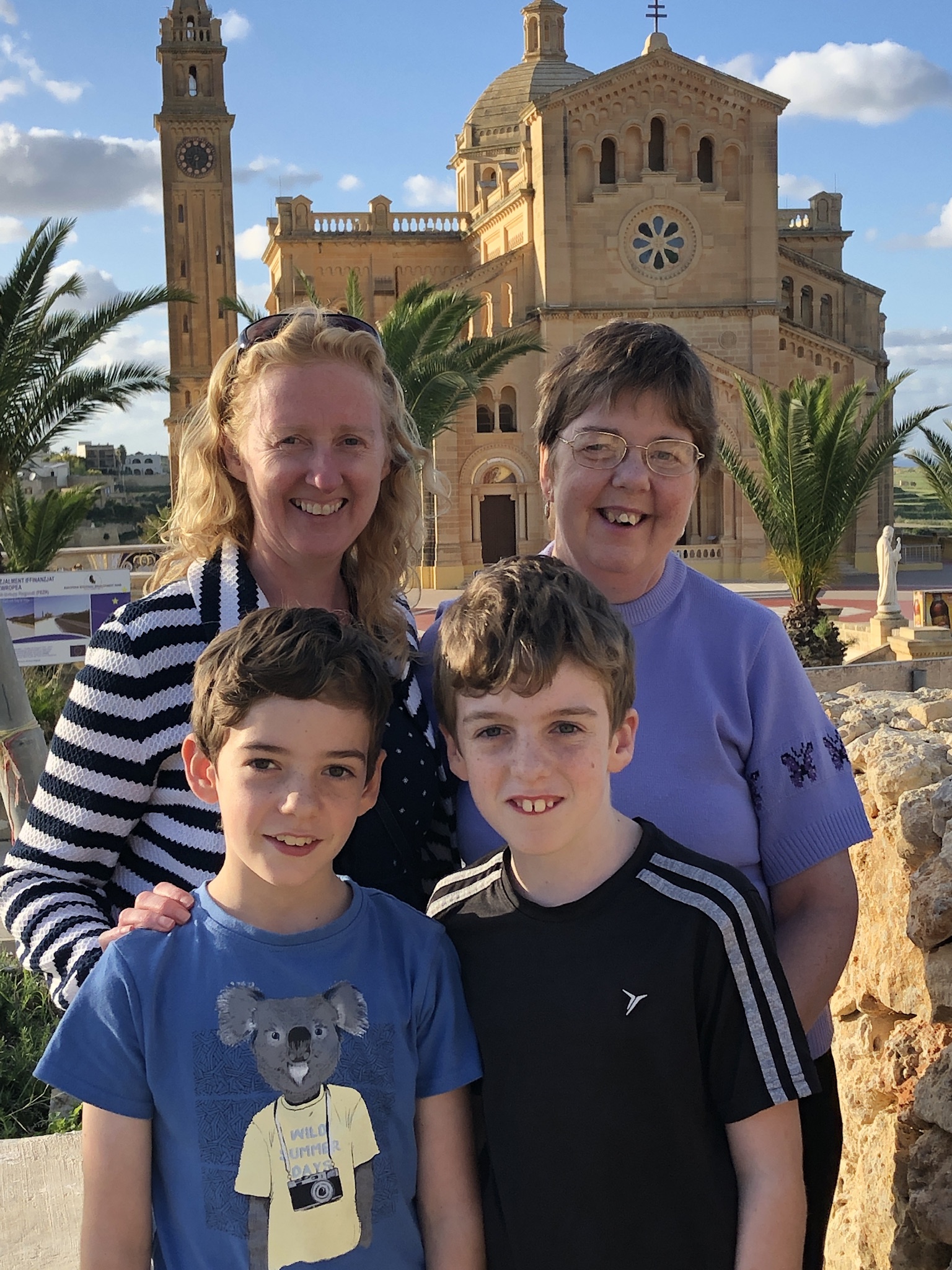
The church of Tá Pinu was a special spot. Two popes have visited and the church is a place of devotion where people come to pray for healing. There was a collection of crutches, bike helmets and baby clothes left by people who had been healed. It was nice to visit the hillside church again with Gwen and Cathryn.
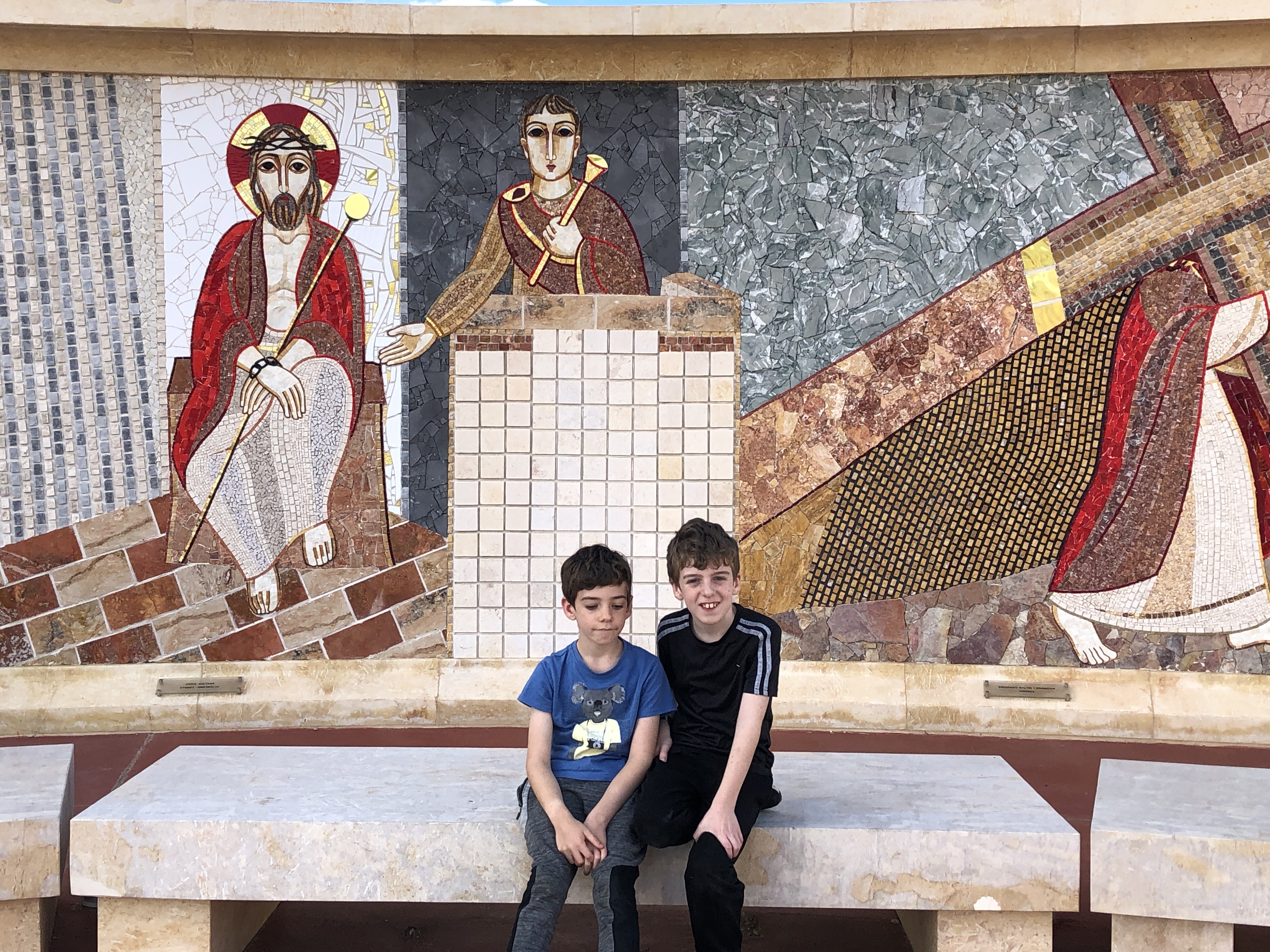
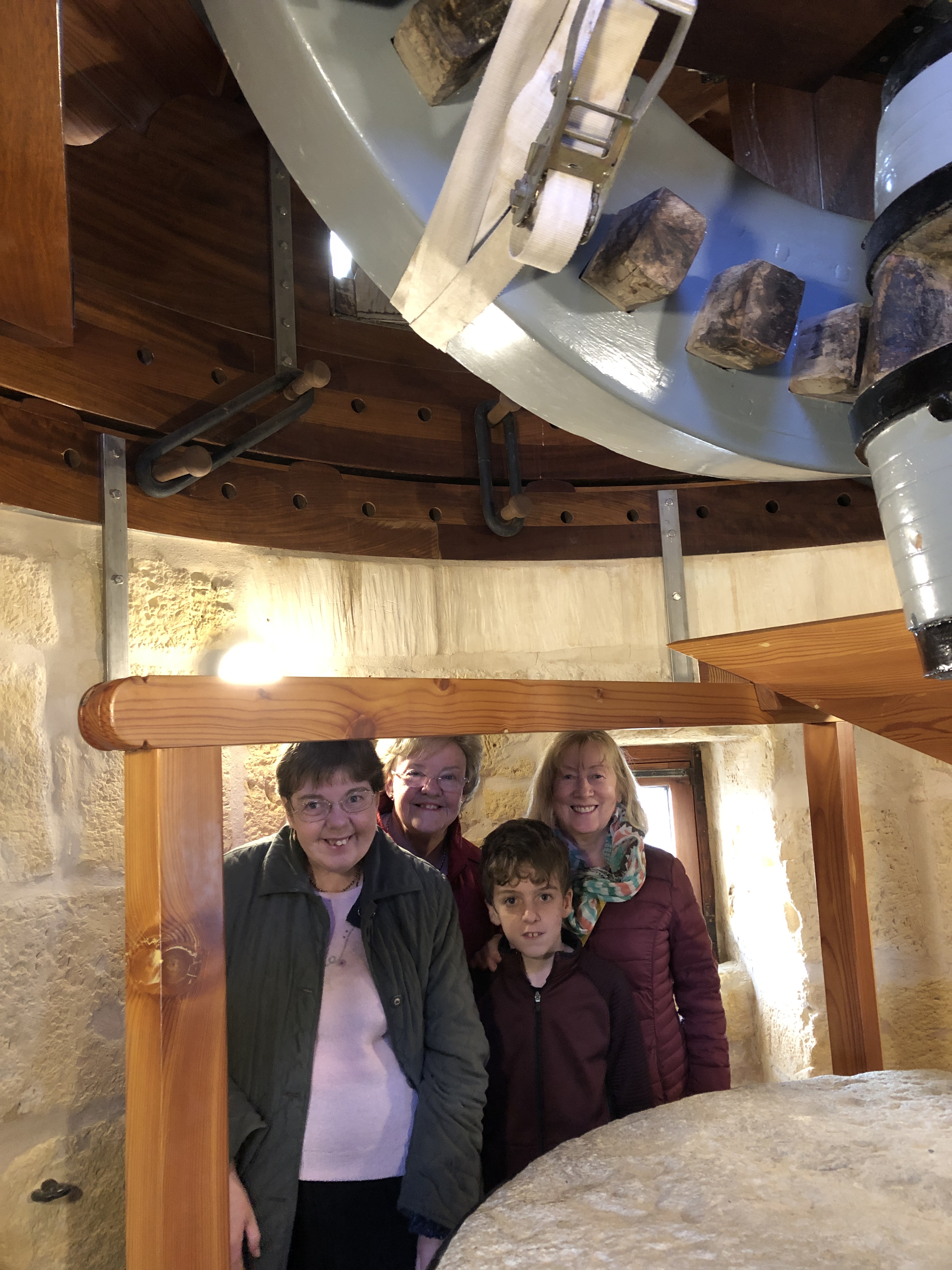
Ta Kola Windmill in Gozo was called after the last miller who worked there. It was built in 1725 and still stands intact and in working order. The windmill was used to grind grain into flour for the villagers. The ground floor houses the workshop and some old farm tools and had information boards on the farming traditions in Malta. Upstairs there were rooms where the miller and his family lived and worked. Up the top of a winding staircase was the windmill mechanism.


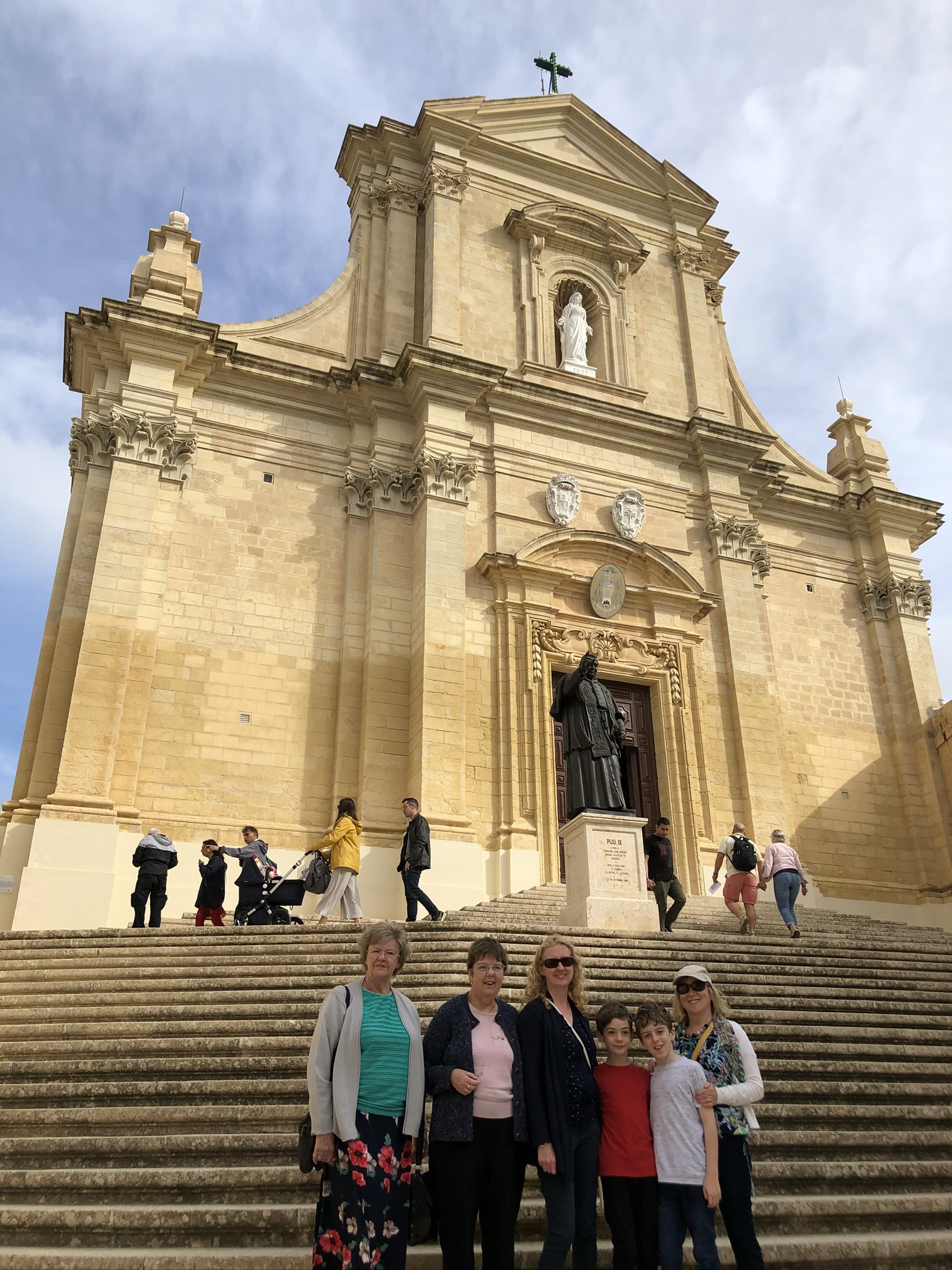
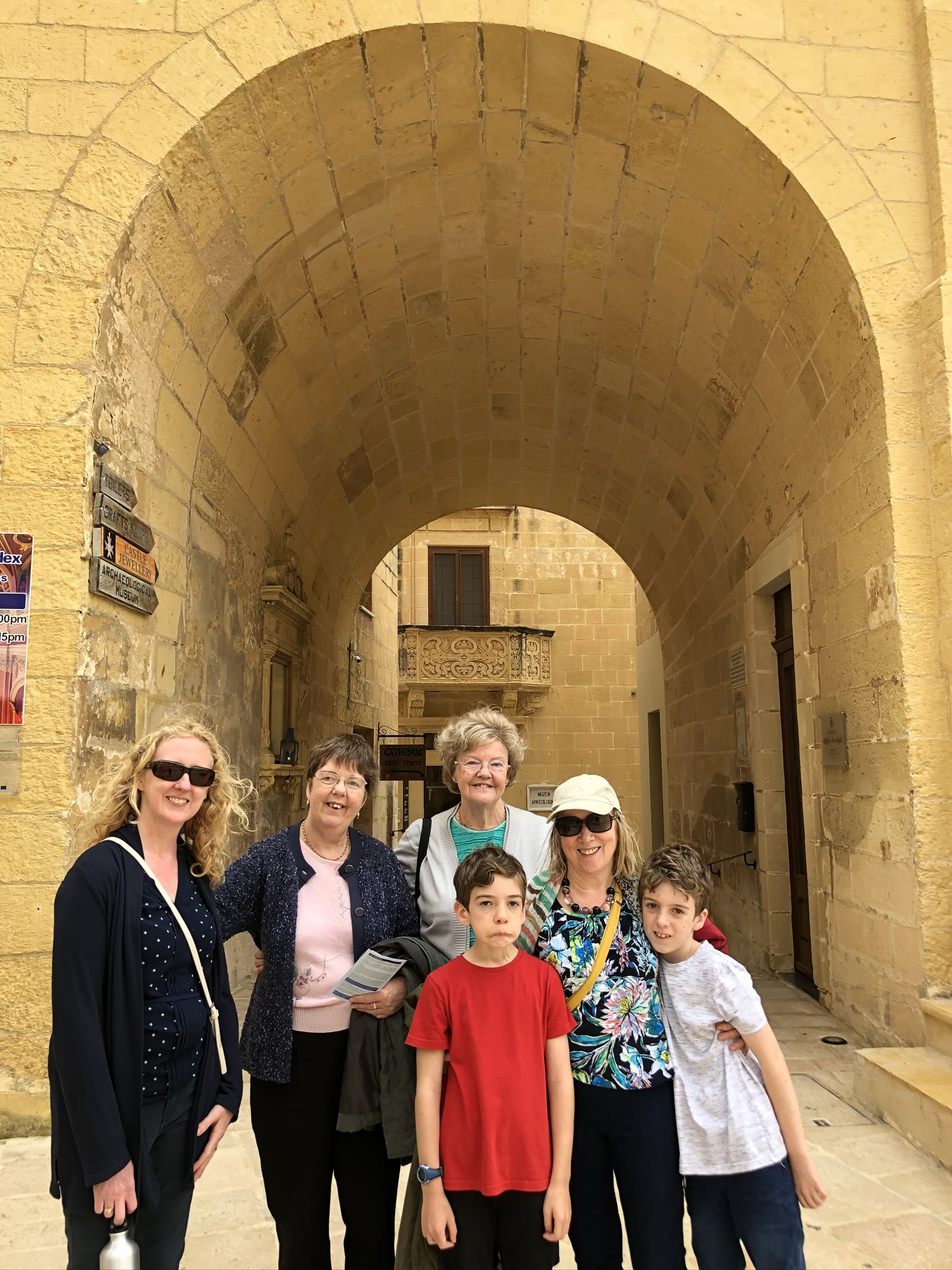
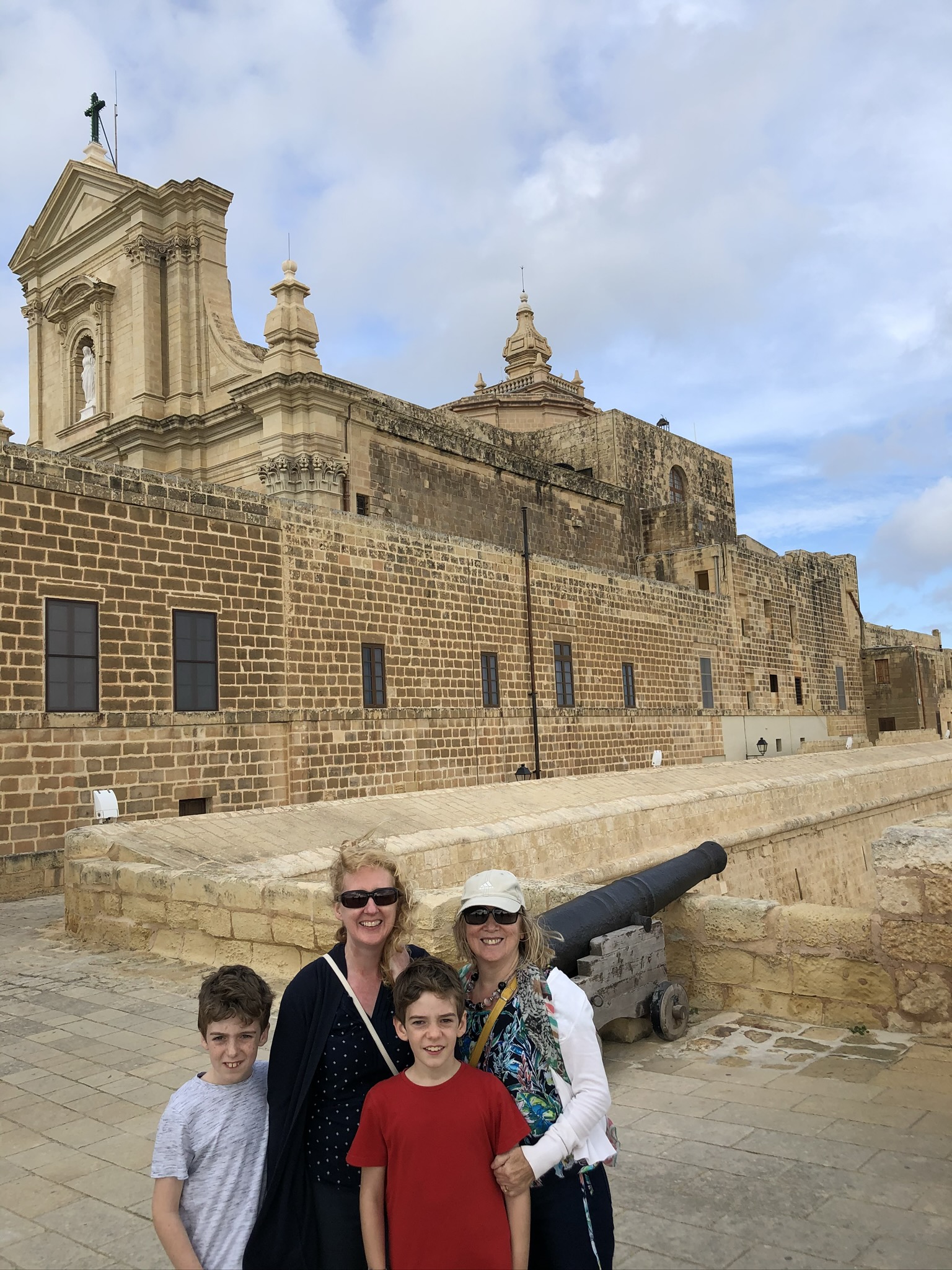
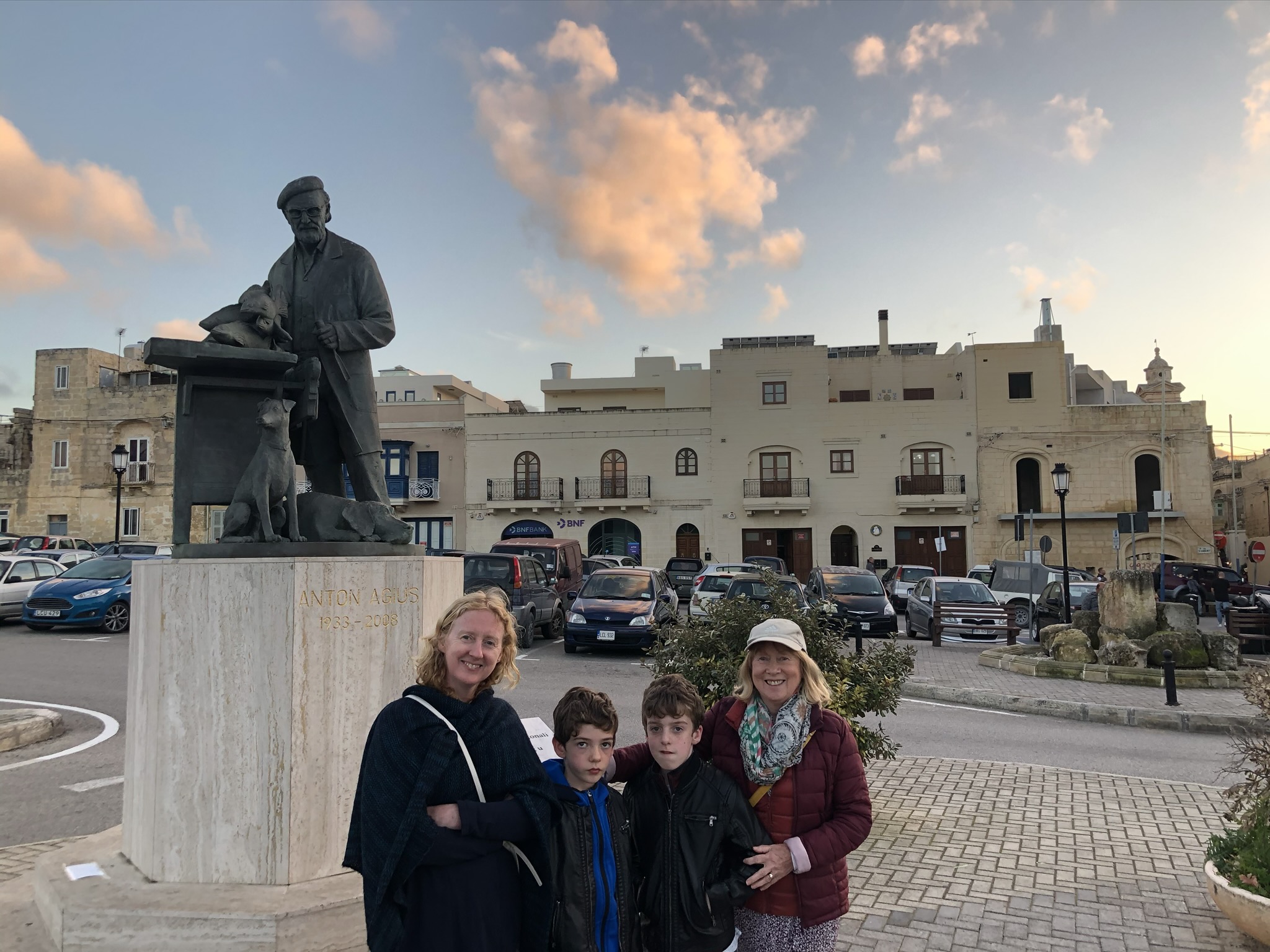
A short drive from the farmhouse was Victoria, formerly Rabat, capital city of Gozo. We passed through it on most of our drives. We went to visit the Citadel, the ancient fortified city. It stands out as Gozo’s major landmark, a beacon on the hilltop. We walked along the ramparts and through the winding streets around the Cathedral. We followed up with a great lunch in Tá Ricardu, one of the best meals of our stay. A nice way to finish up our time in Gozo.
Valetta
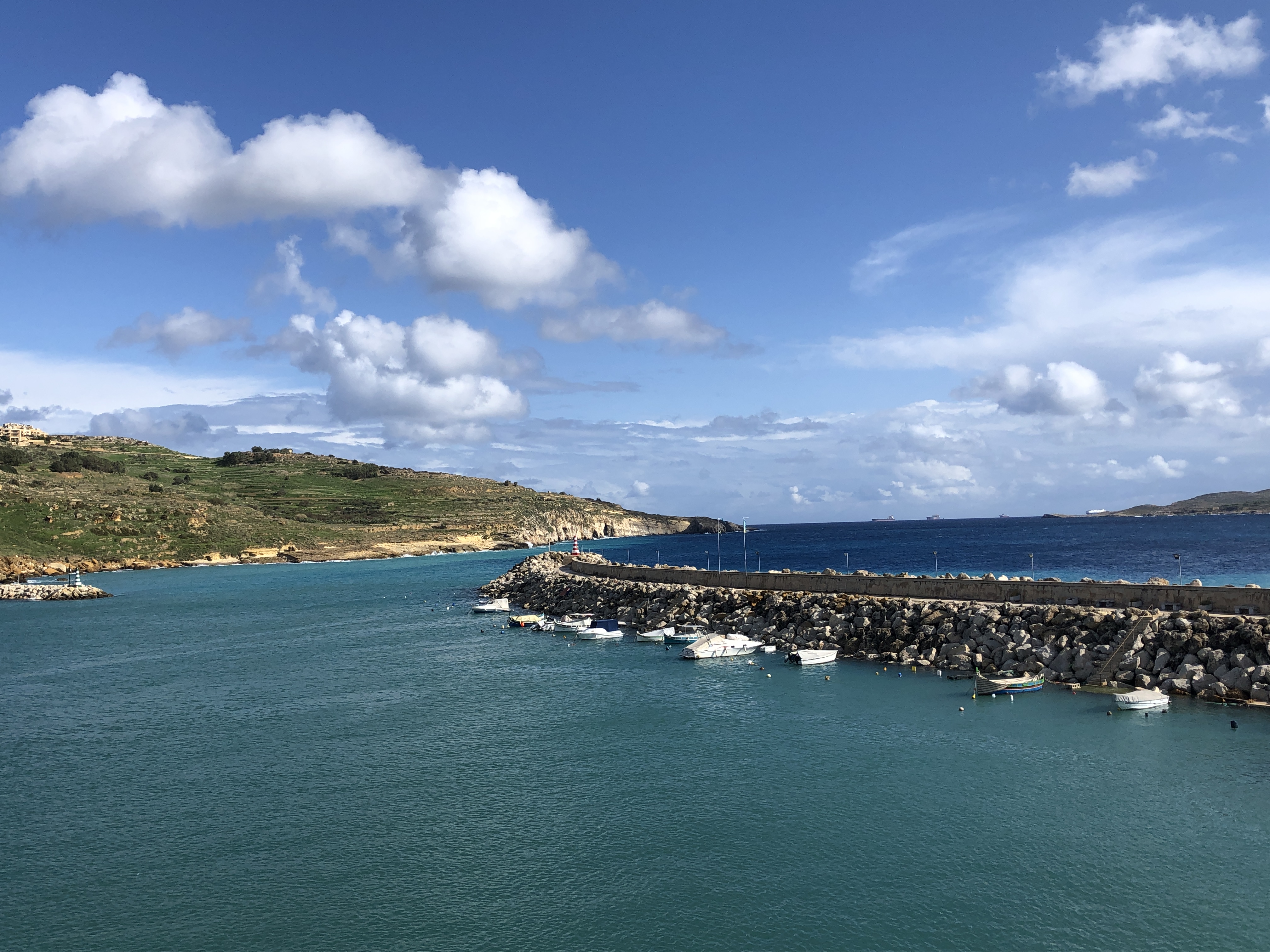
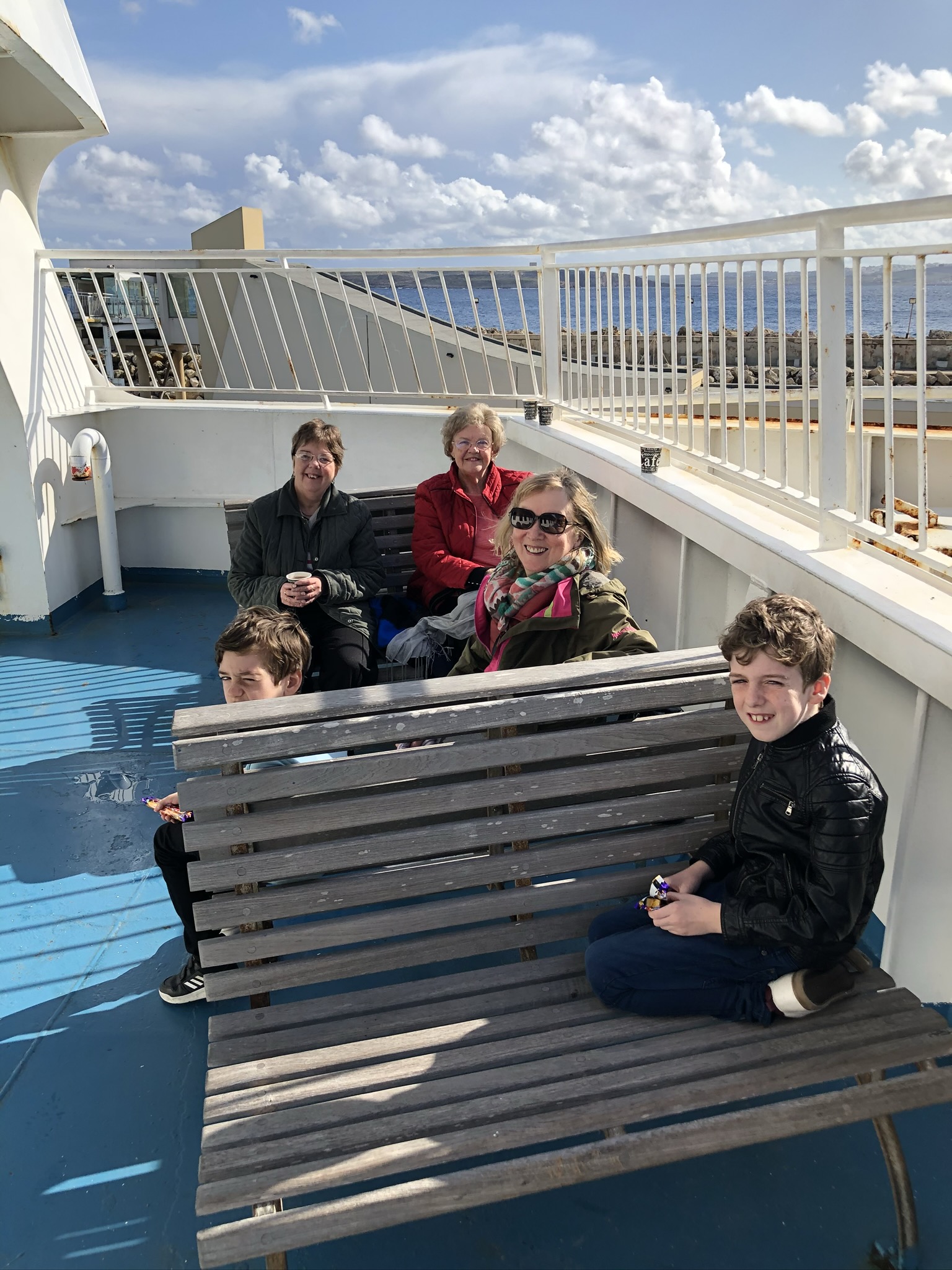
Almost three weeks after arriving in Gozo it was time to leave. We returned the rent a car which involved leaving it parked on the street with the key hidden under the mat. We took a taxi back to Mgarr Harbour and caught the ferry back to mainland Malta. The crossing took about twenty minutes and was a bit rocky due to an approaching storm causing huge waves to roll by. This time we paid the return fare which amounted to less than €5 each.
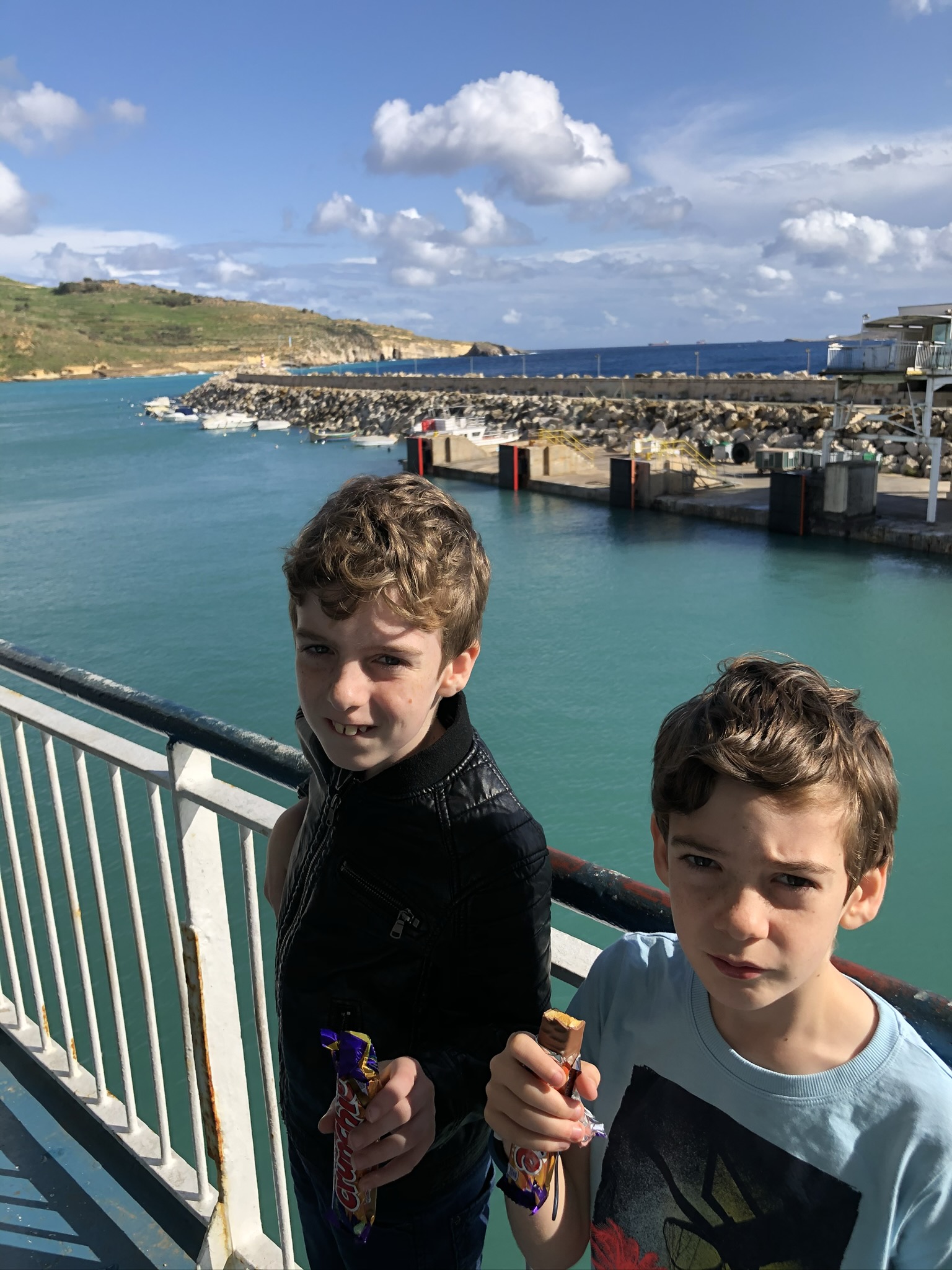
We were in luck as there was a taxi at the port big enough to carry the seven of us to Valetta. The Osborne Hotel was located on a narrow side street near the centre of town. We checked in and received lots of advice from the very helpful concierge. Each time we passed by the front desk he mentioned booking a tour! First stop was lunch in the nearby Pizza Hut. Then we went for a walk to explore Valetta.
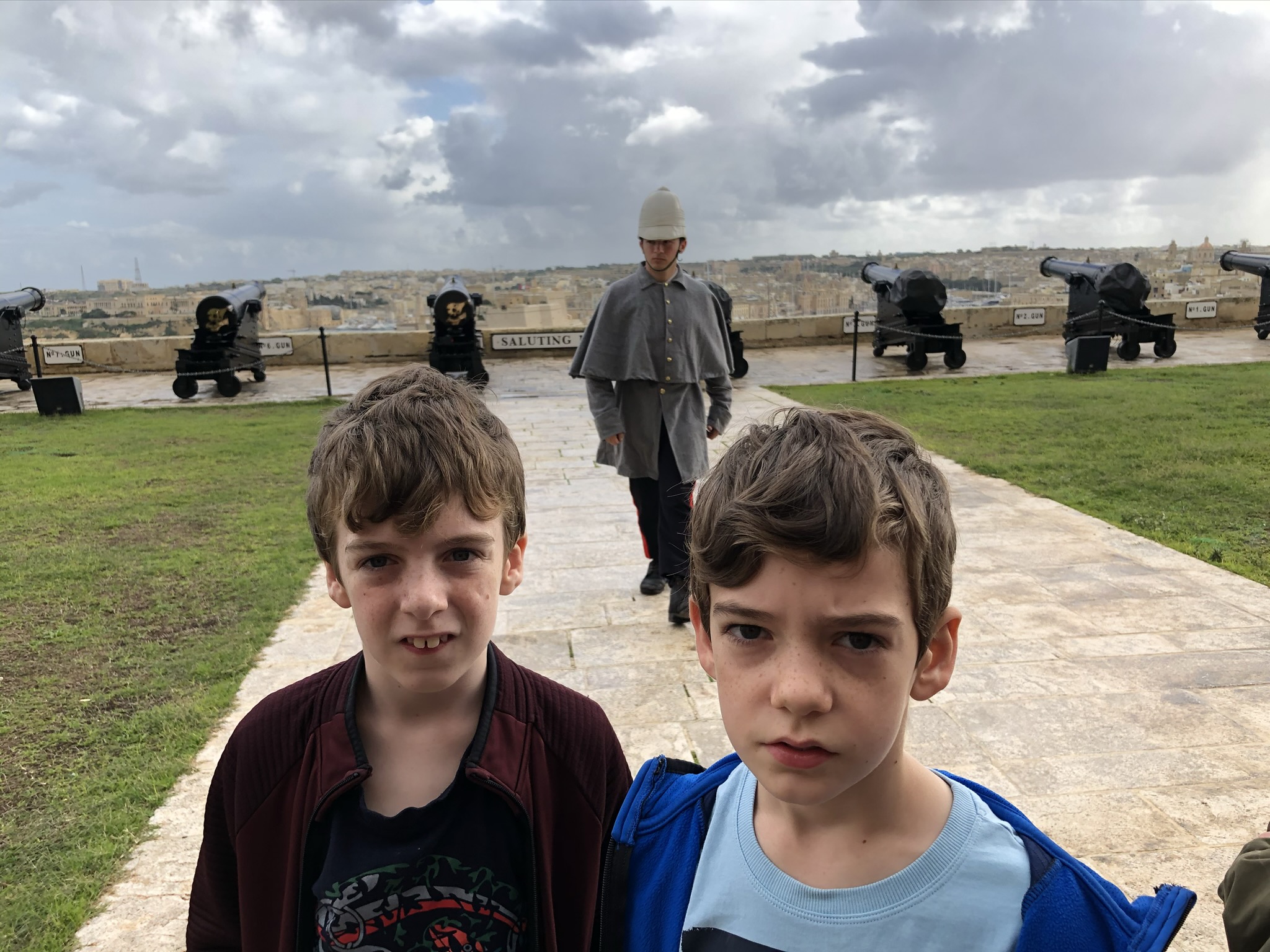
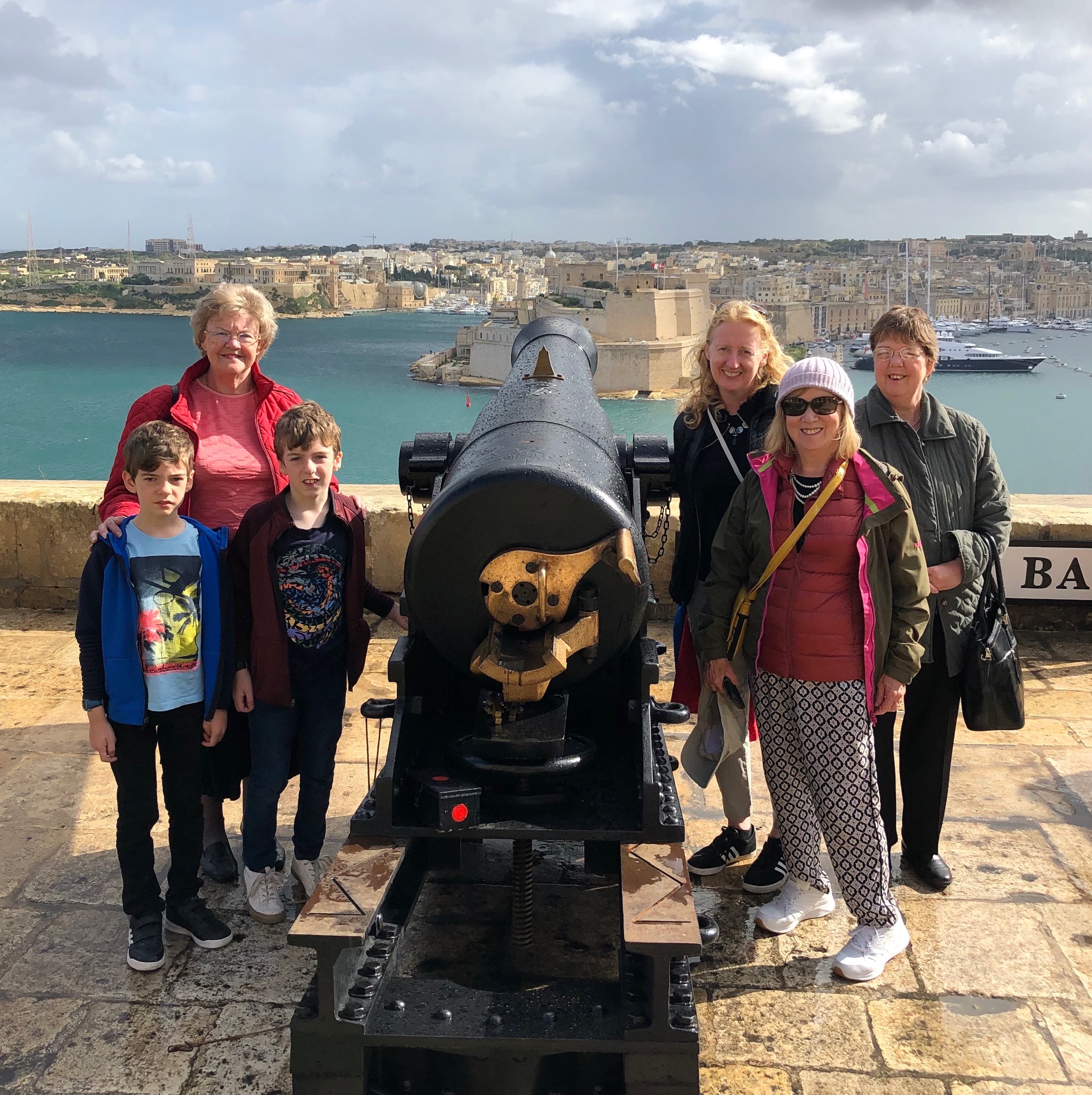
The Upper Barrakka Gardens with magnificent views over Grand Harbour was a good spot for a photo. We looked down at the cannons in the lower gardens and planned to return at noon the next day for the firing of the guns at the Saluting Battery. Our day finished up with a lovely dinner in a local restaurant, recommended by our helpful concierge, and a drink in the hotel bar.
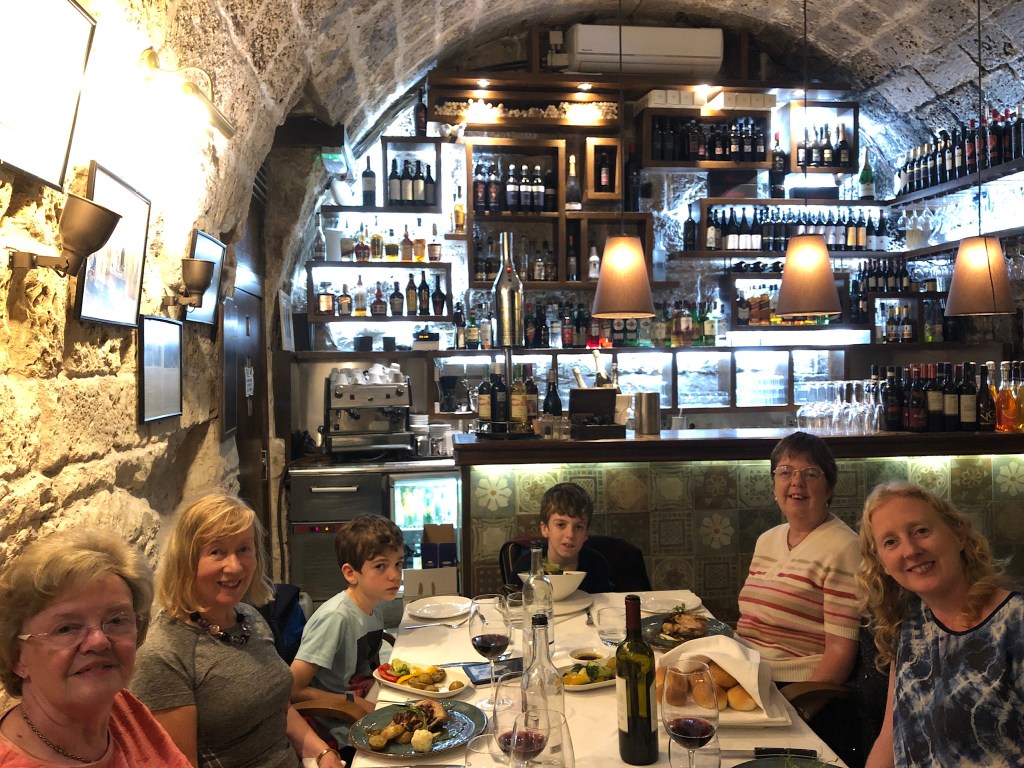
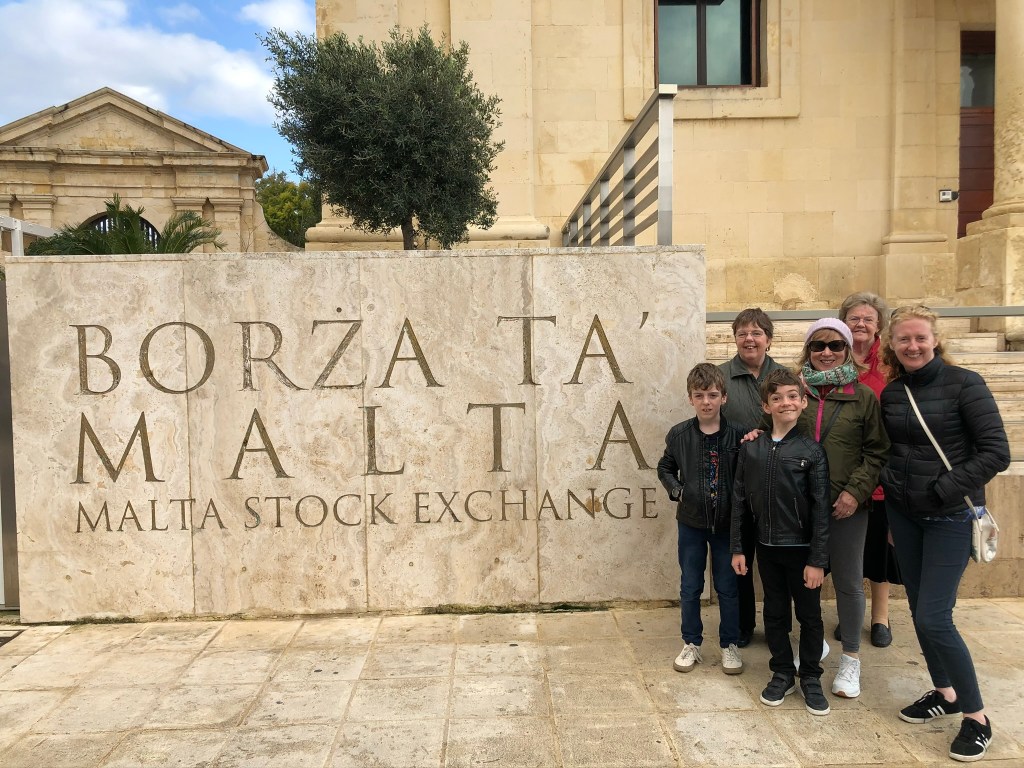
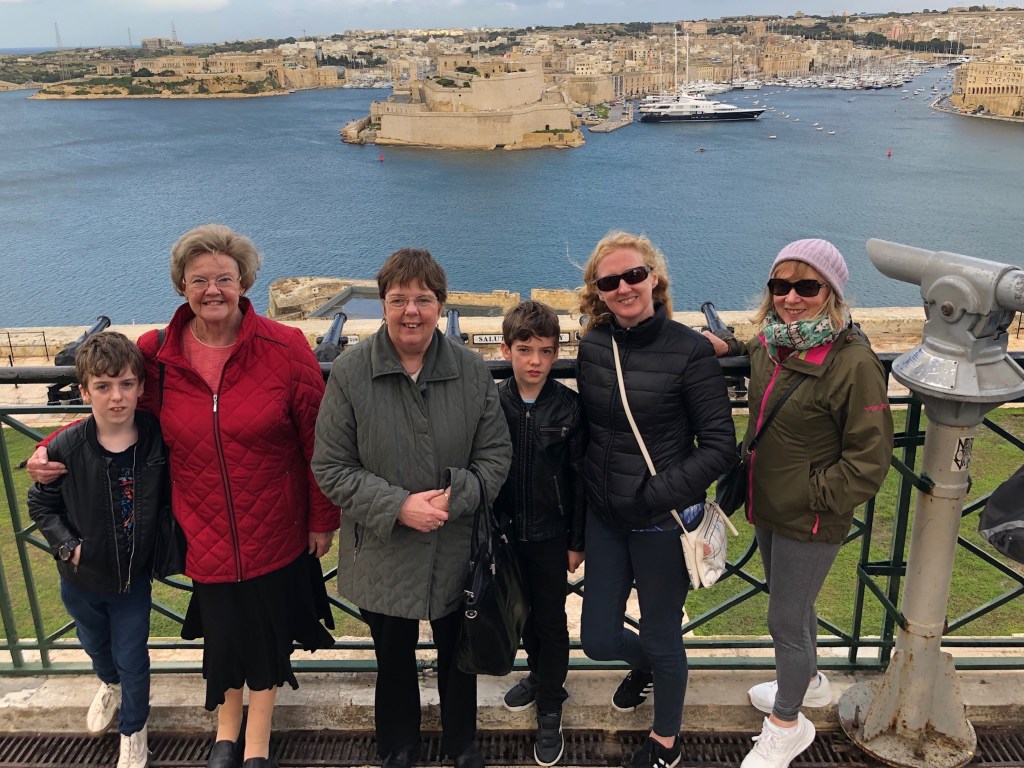
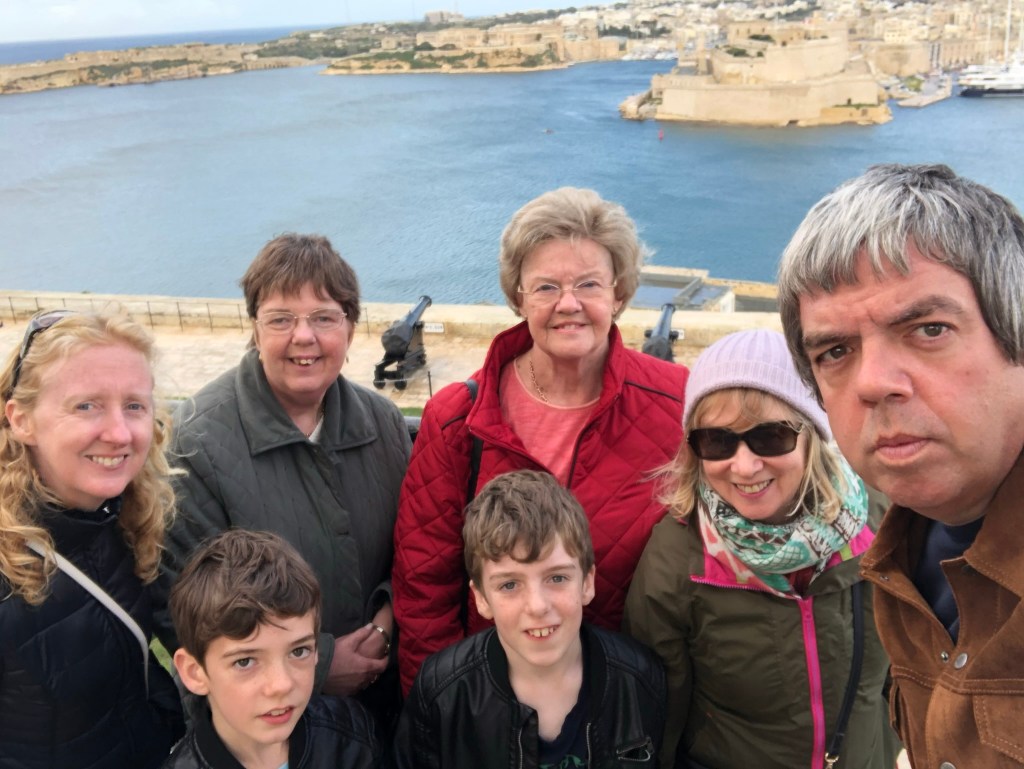
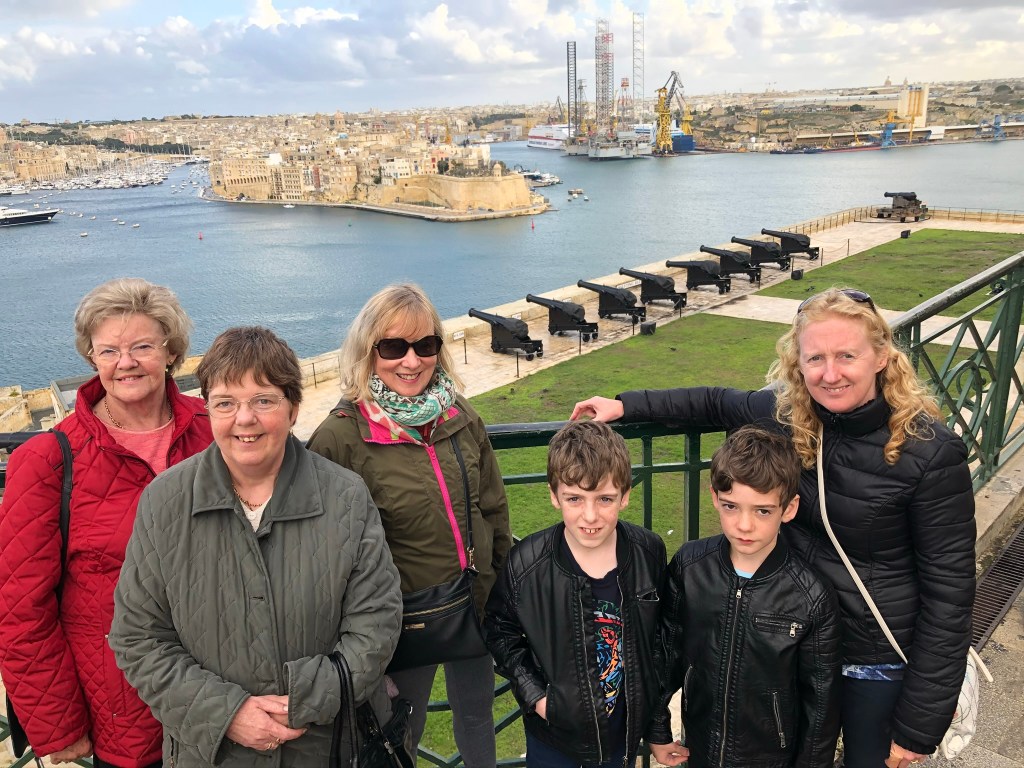
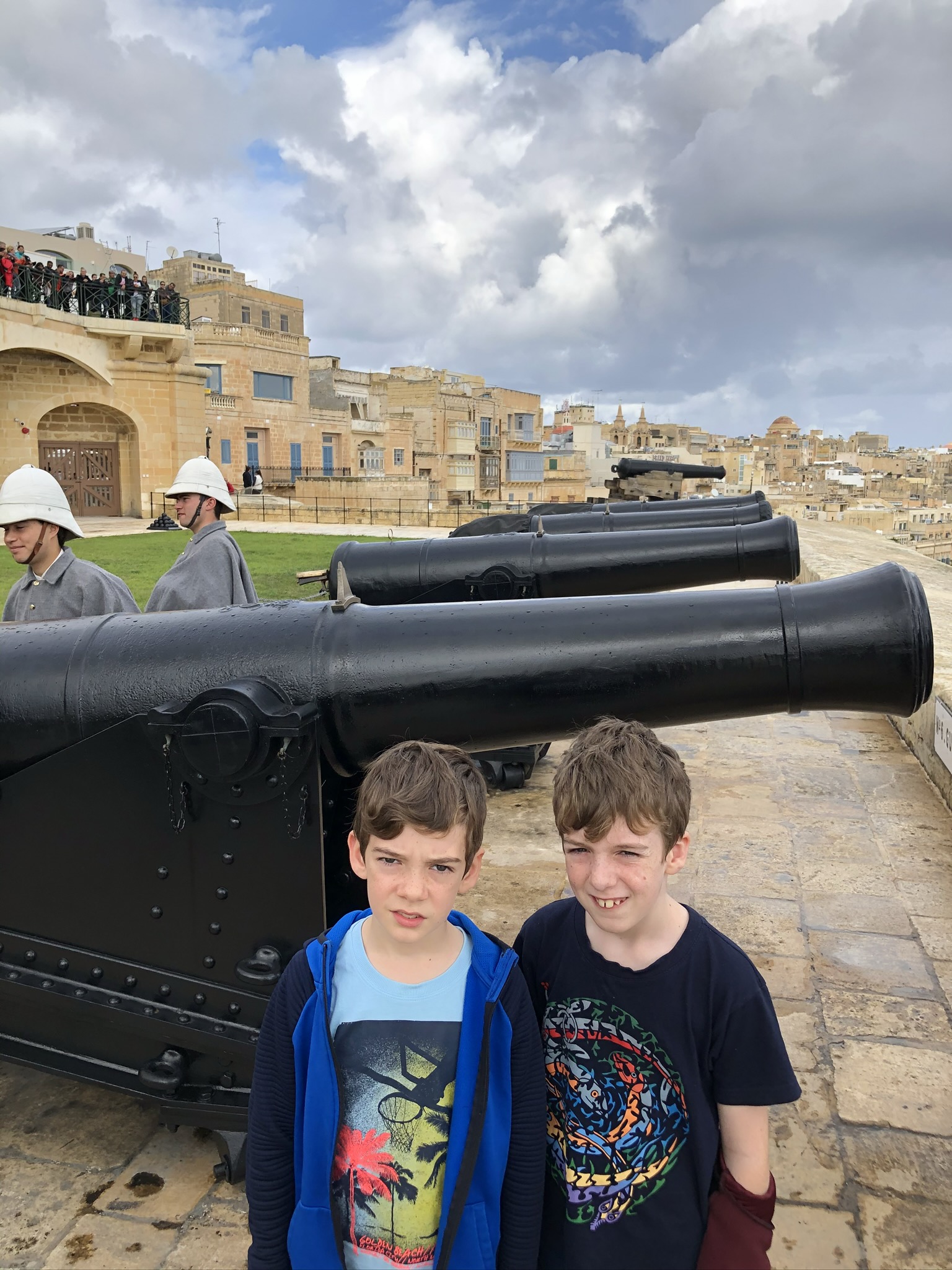
The next morning we walked through the beautiful streets admiring the architecture. The whole city is a dedicated UNESCO world heritage site and at times it feels like walking through an open air museum. We returned to the Upper Barrakka Gardens and paid a small fee to enter the Saluting Battery just before noon. Located high along Valletta’s eastern historic ramparts, it enjoys unrivaled spectacular views of the Grand Harbour and its surrounding fortified towns. It is also perhaps the oldest saluting battery still in operation anywhere in the world. For almost 500 years, its guns protected the harbour against naval assault. A guide explained the gun salute to us before we watched the cannons fire.
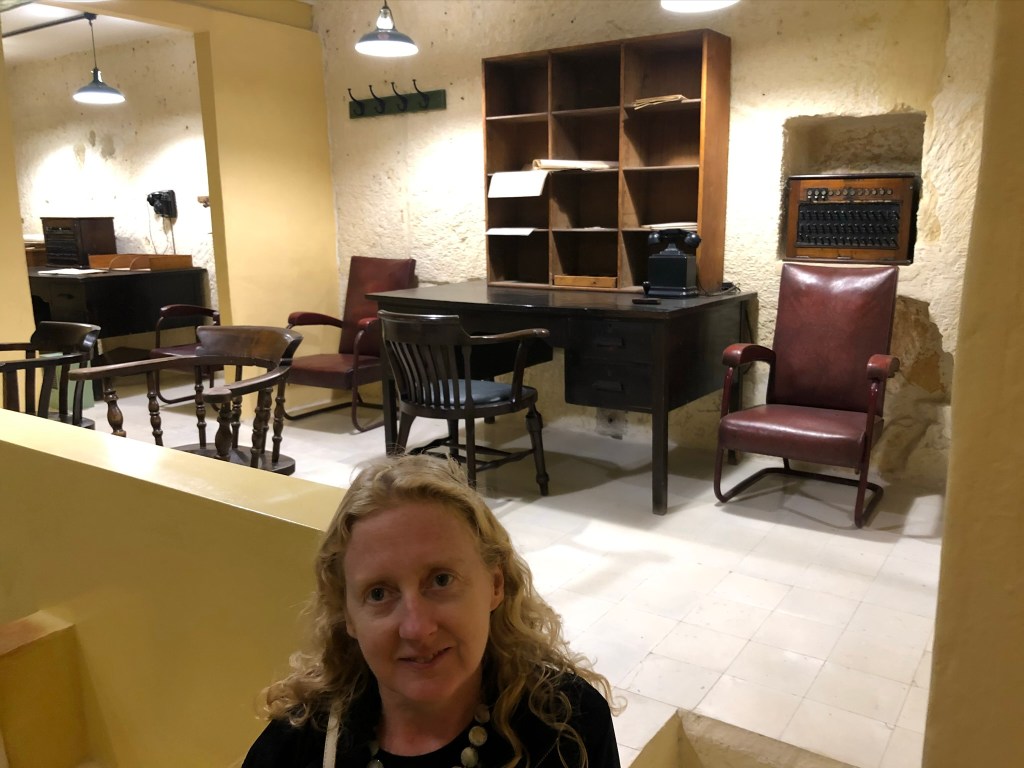
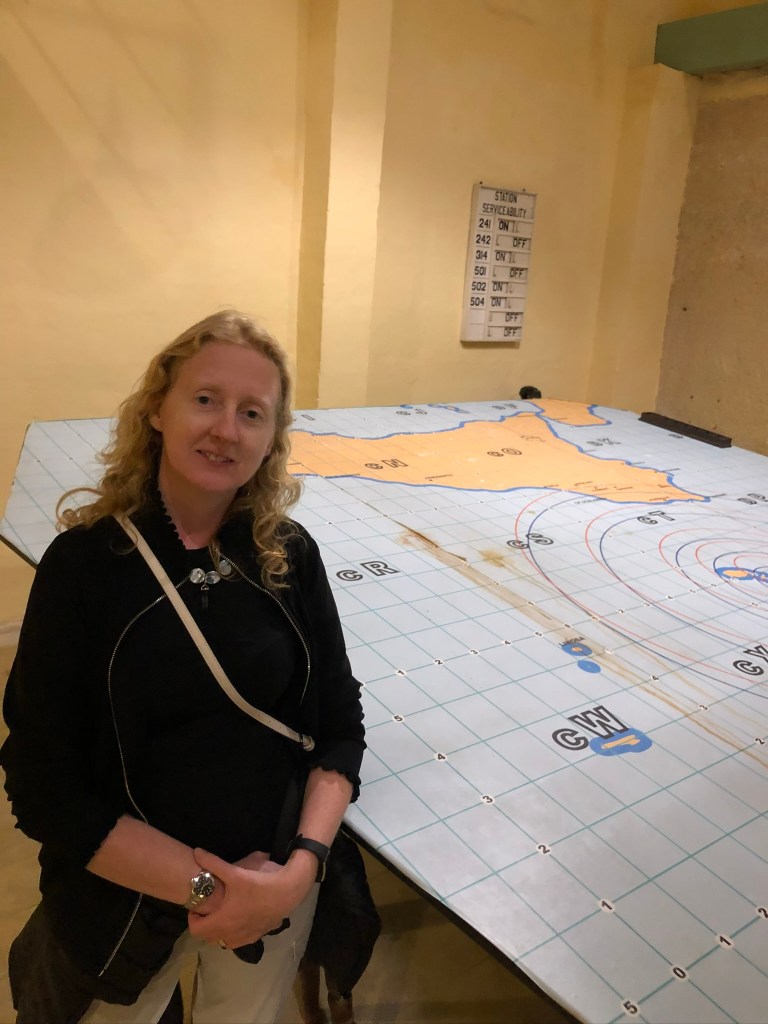
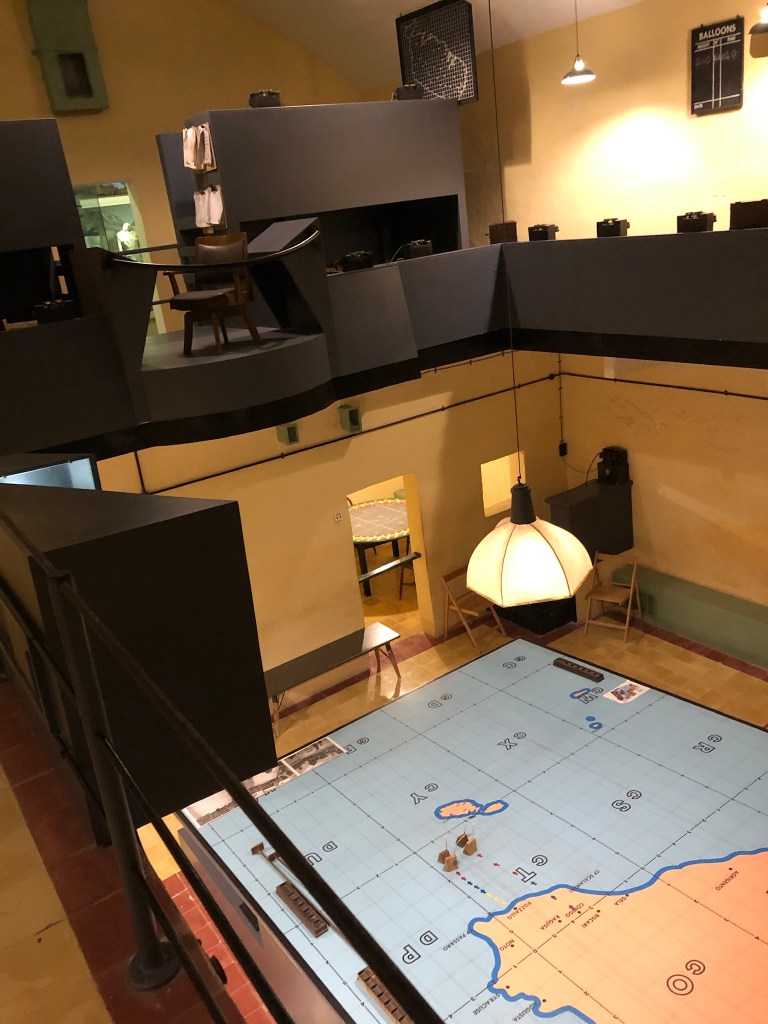
The Order of the Knights of St. John ruled Malta for many years pulling it culturally towards Europe and transforming it into a maritime power. It’s location in the Mediterranean between Sicily and Libya was pertinent, particularly during WW2. It was one of the most heavily bombed places but it’s location also afforded it a vantage point. The British War Headquarters, used to defend the islands, was the base from which many complex military operations were carried out. They were underground, a series of hidden tunnels and caverns. Nowadays referred to as the ‘Lascaris War Rooms’, they offer a glimpse of the important role the location played in keeping Malta out of the hands of the Axis powers during the war. We enjoyed a guided visit of the historical location which remains much the same today as when it was used to overcome the enemy.
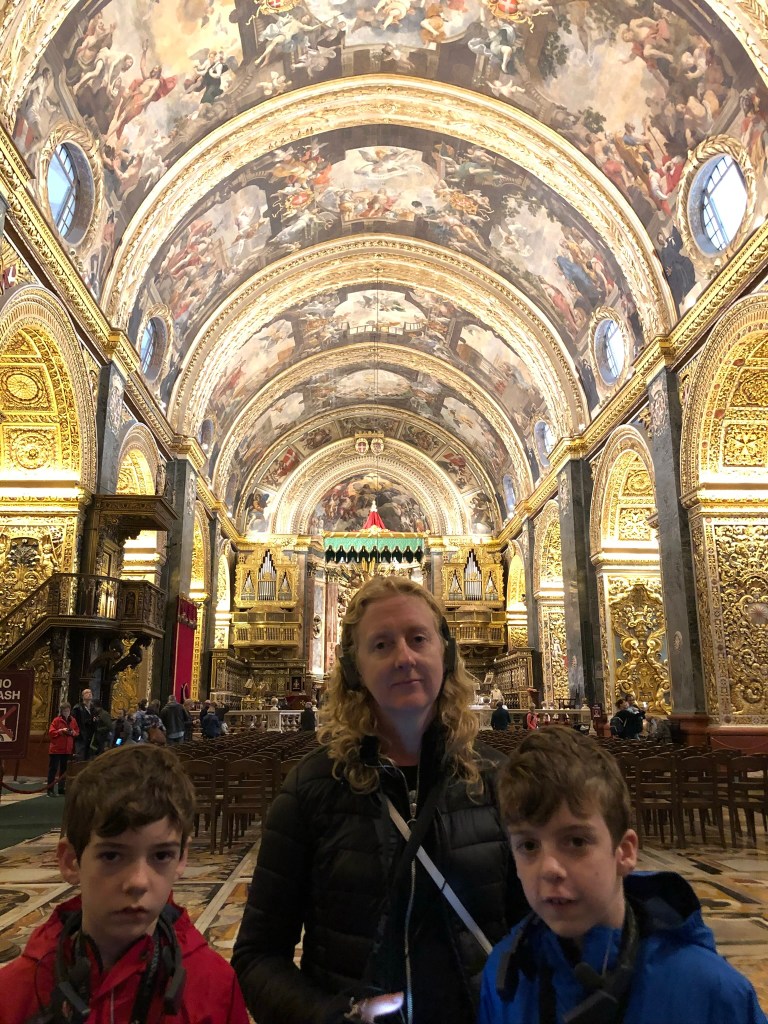
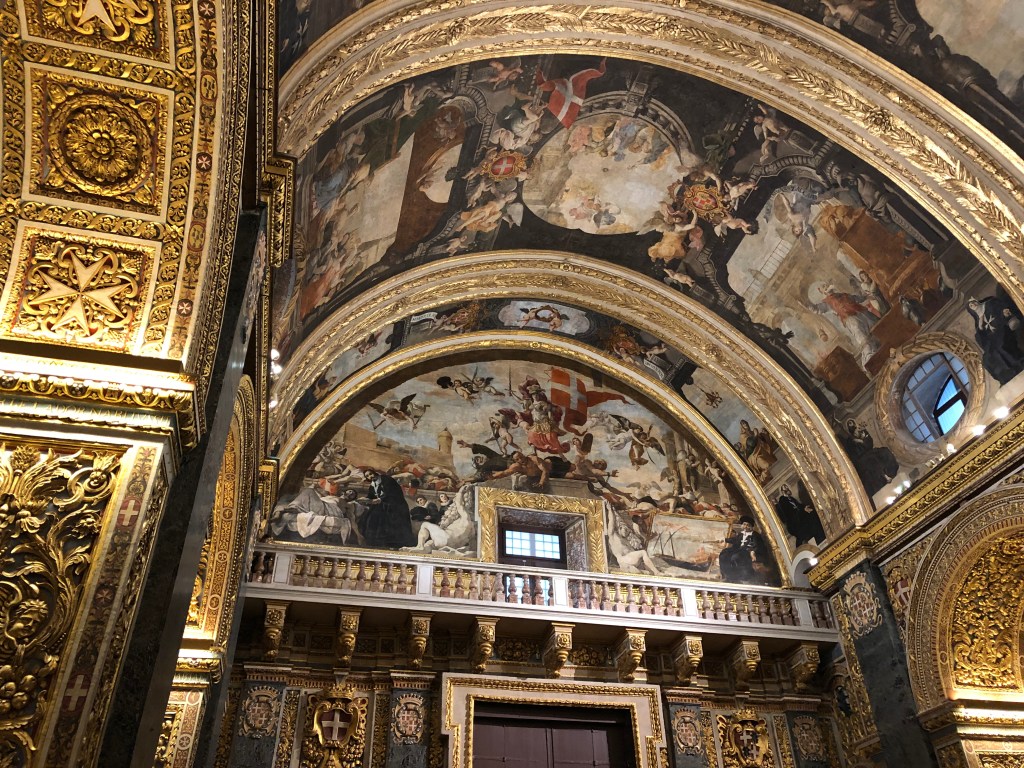
It’s said that Malta has a church for every day of the year. Catholicism is strong here and church attendance is among the highest in Europe. This enthusiasm is reflected both in the number of churches, and their baroque ostentation! St. John’s Cathedral in Valletta is a wonder to behold, and owns two Caravaggios—including his largest and only signed work, ‘The beheading of St. John the Baptist,’ which is proudly displayed in the church’s oratory. With an unassuming exterior, you would never expect to find a place so richly decorated inside and entering the cathedral for the first time was an awe-inspiring experience as we gazed up at the opulent, golden ceilings.
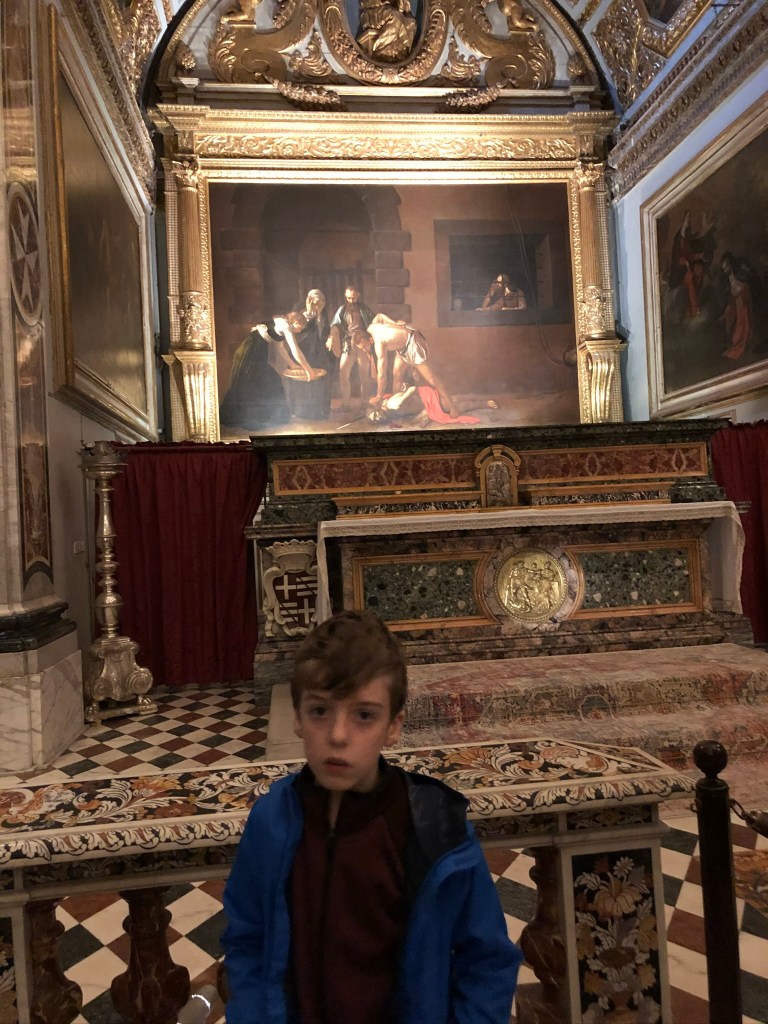
Caravagggio
City Gate, the main entry point to Valletta is located on the city’s southern side that leads straight into the city’s main street (Republic street). After crossing the footbridge overlooking the impressive bastions on both sides of City Gate, the city’s entrance provides an instant glimpse of Valletta. The contrast between the modern Parliament building, (affectionately known as the cheese grater), the older stately buildings and the ruins of the Royal Opera House (a scar left from heavy bombing during World War 2) give a glimpse into the city’s history.
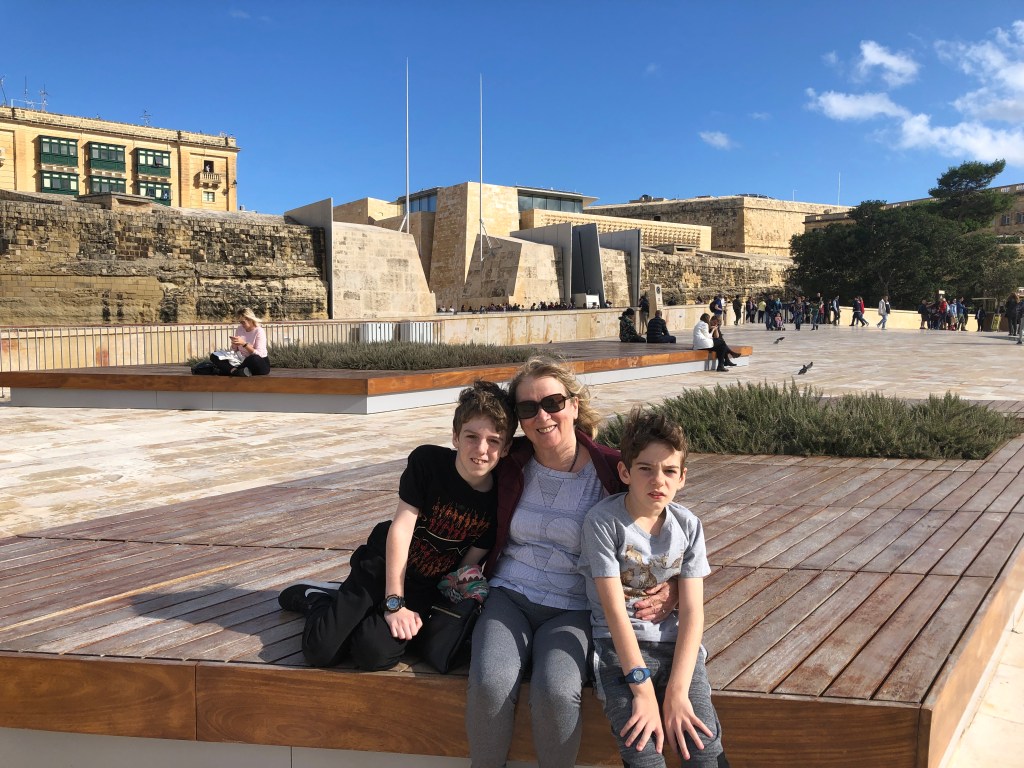
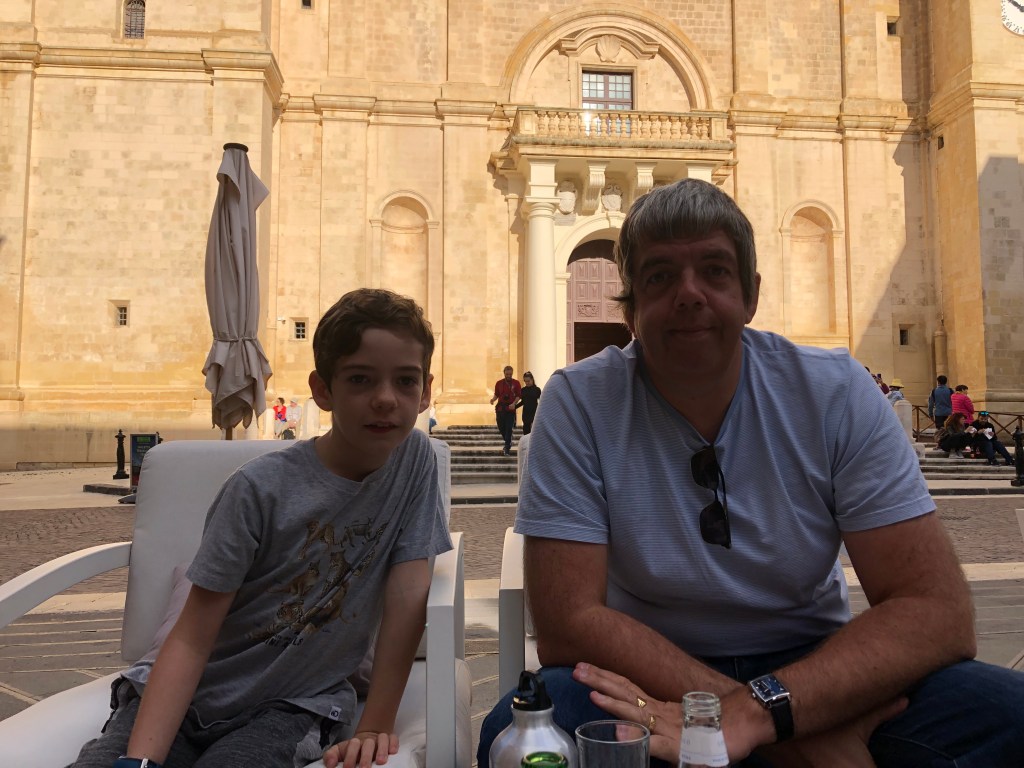
The storm that we had felt approaching while on the ferry hit hard. Strong winds blew, the rain poured down and the streets turned into rivers. After it eased off the city was left in darkness as a power failure affected the entire place. Our hotel had a generator so avoided the misery but the shops tried to operate with the light of mobile phones and without a working till or cash cards for the afternoon.
Marsaskala,
We spent a few days in a nice, big apartment in Marsaskala. There was a great sea view from the balcony and the beach was a few minutes walk away. The town was about a thirty minute walk along a promenade. The town was very pittoresque with lots of colourful fishing boats in the harbour. There was a playground where the boys played football. We ate there twice; once in an Irish bar and a second time in an amazing Thai restaurant where the owner recommended what we should order and then ran into the kitchen to cook! The beach was a nice place to sit and enjoy the sunshine. Mamó and the boys even tested out the cold water for a swim. We got to know some of the locals there over a few days.
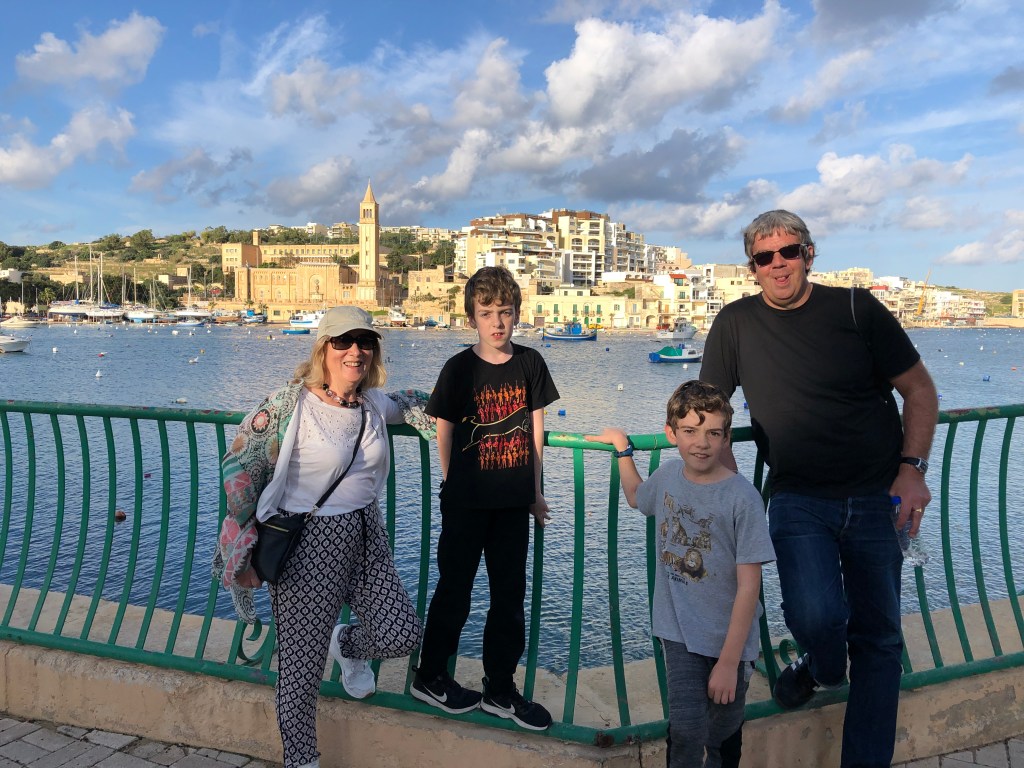
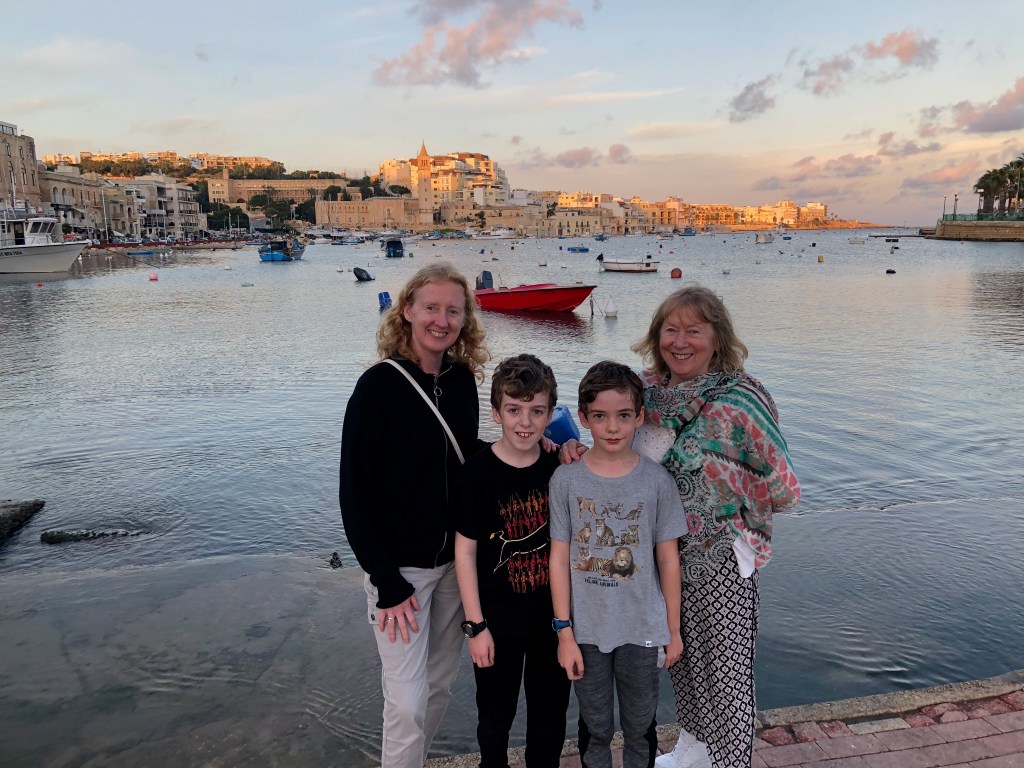
The ancient fishing village of Marsaxlokk
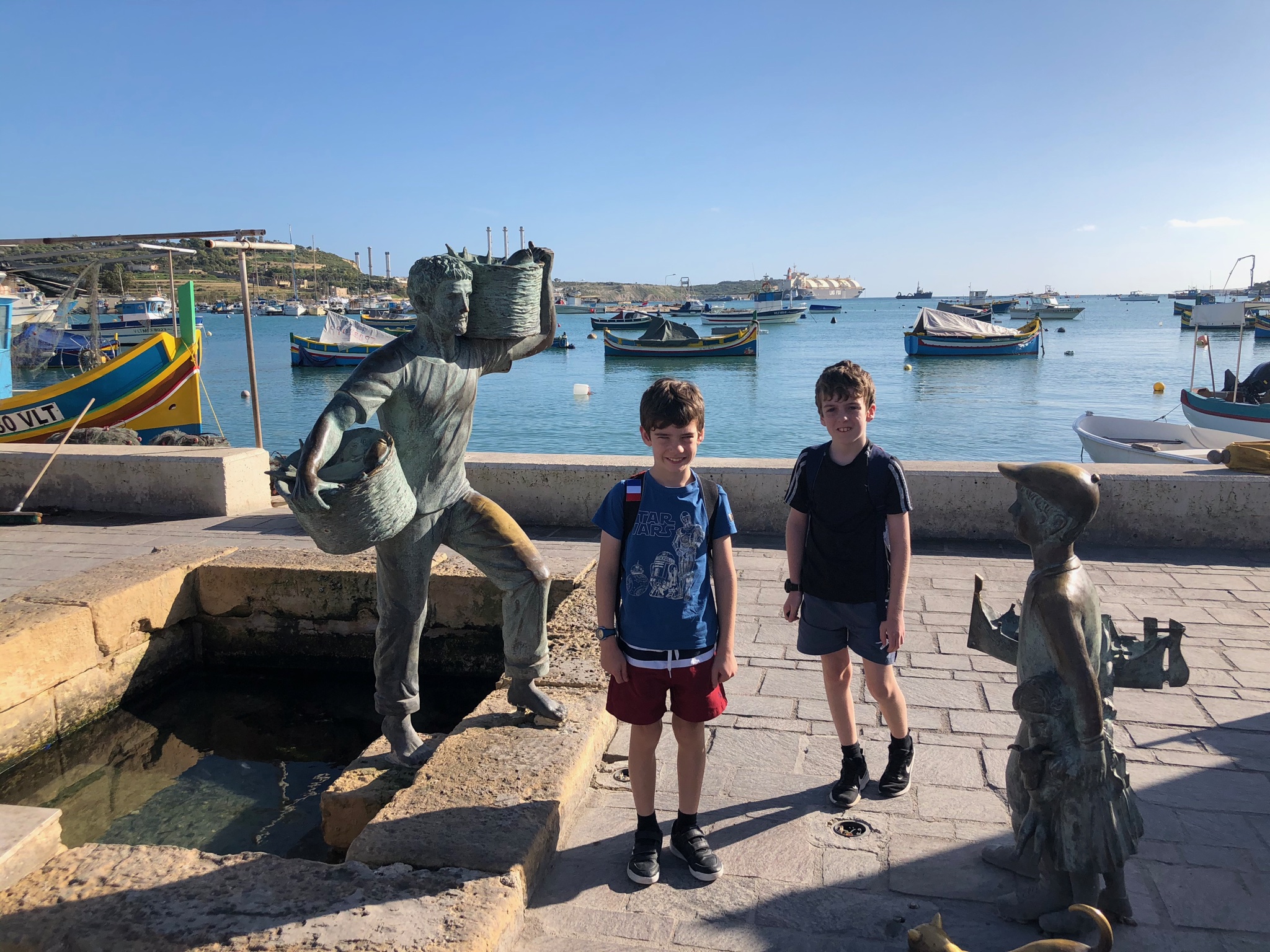
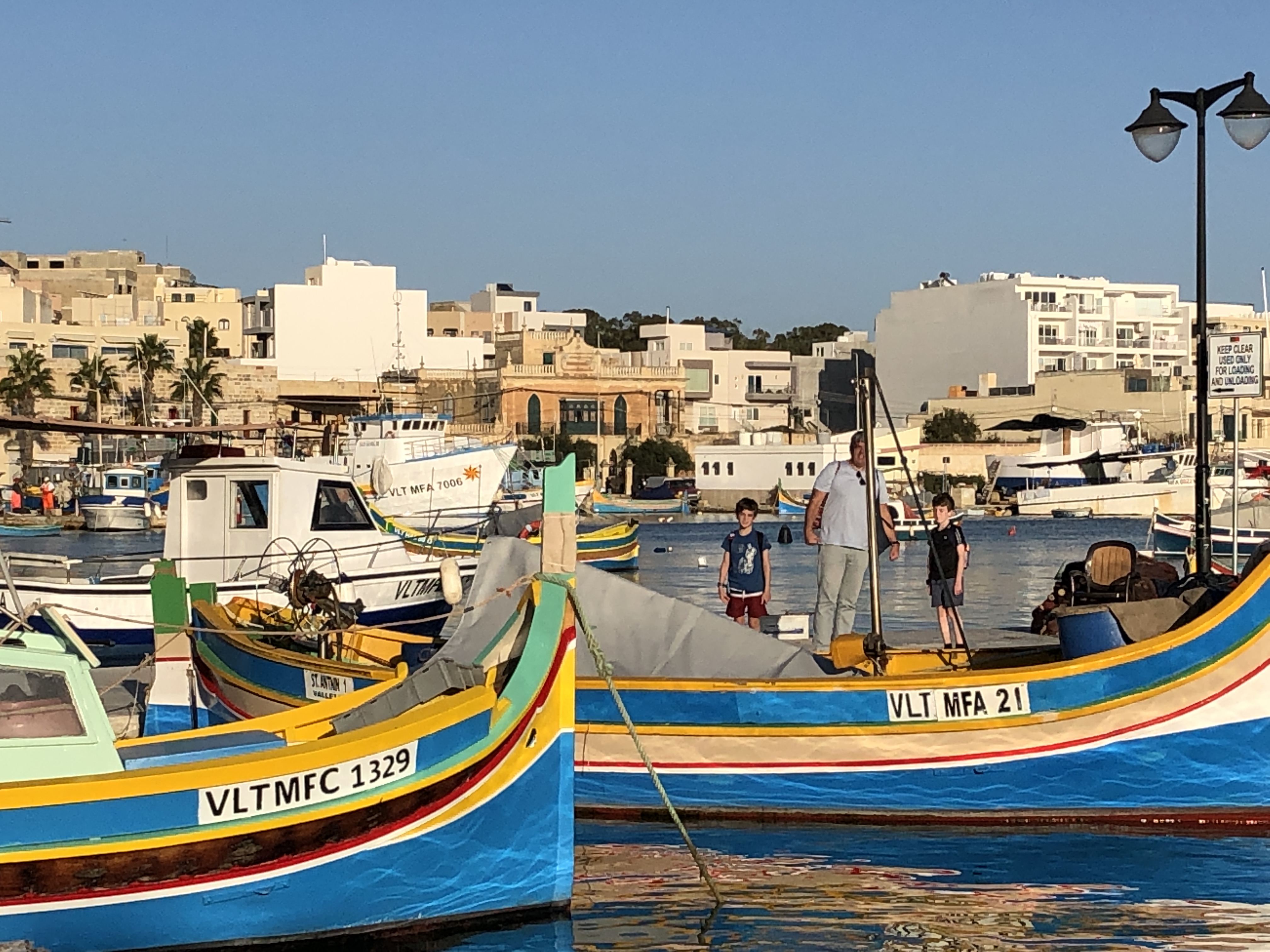
Home of the Luzzus or colourful fishing boats synonymous with the island. Still a working fishing village where boats come and go and fishermen tend to nets along the quays. There’s also a big tourist market there selling local crafts. The waterfront is lined with an array of seafood restaurants. Menus advertising the days specials blow in the breeze. We settled on one and enjoyed some nice fish and a bottle of wine, a relaxing Sunday lunch in the sunshine.
Mdina
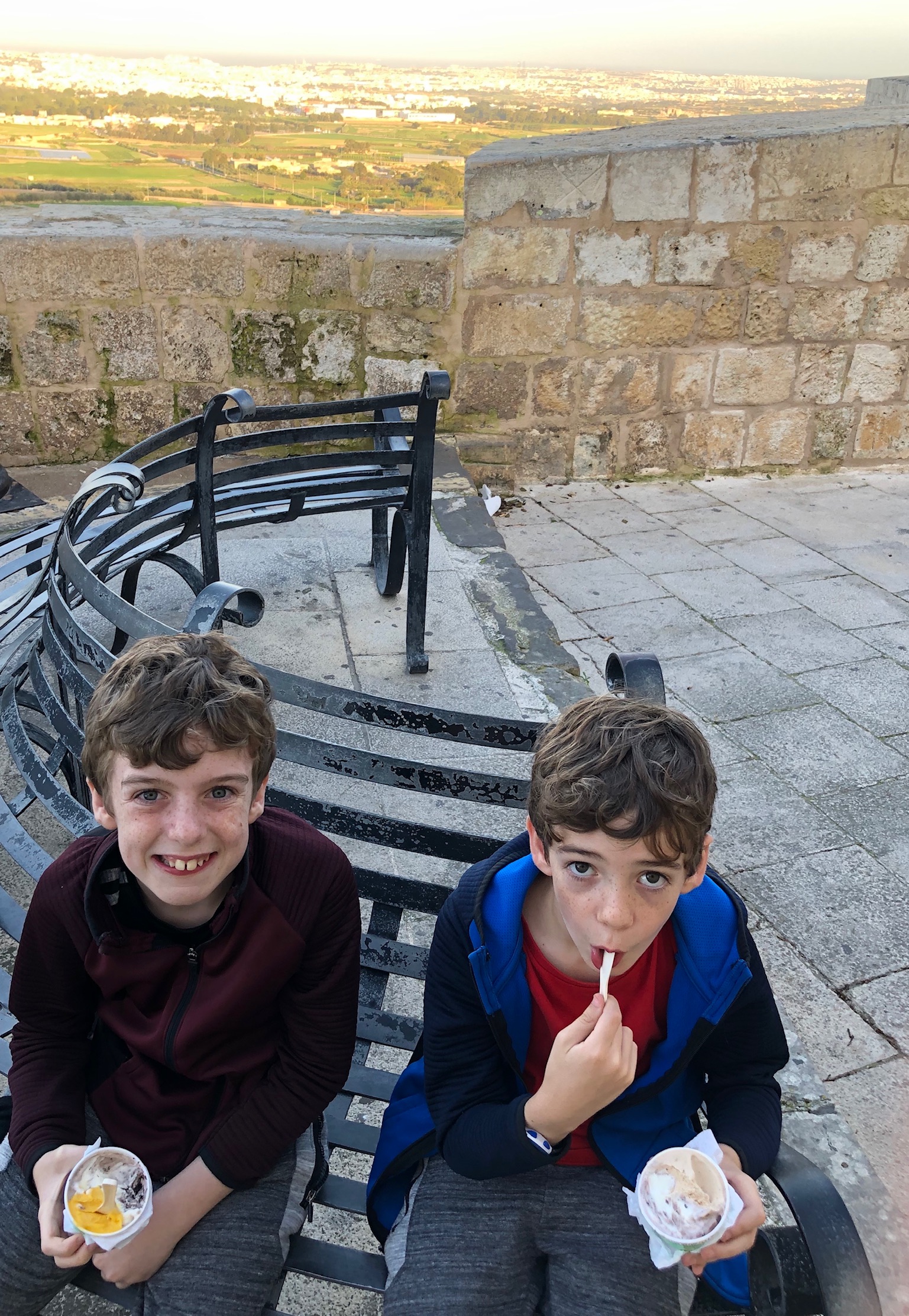
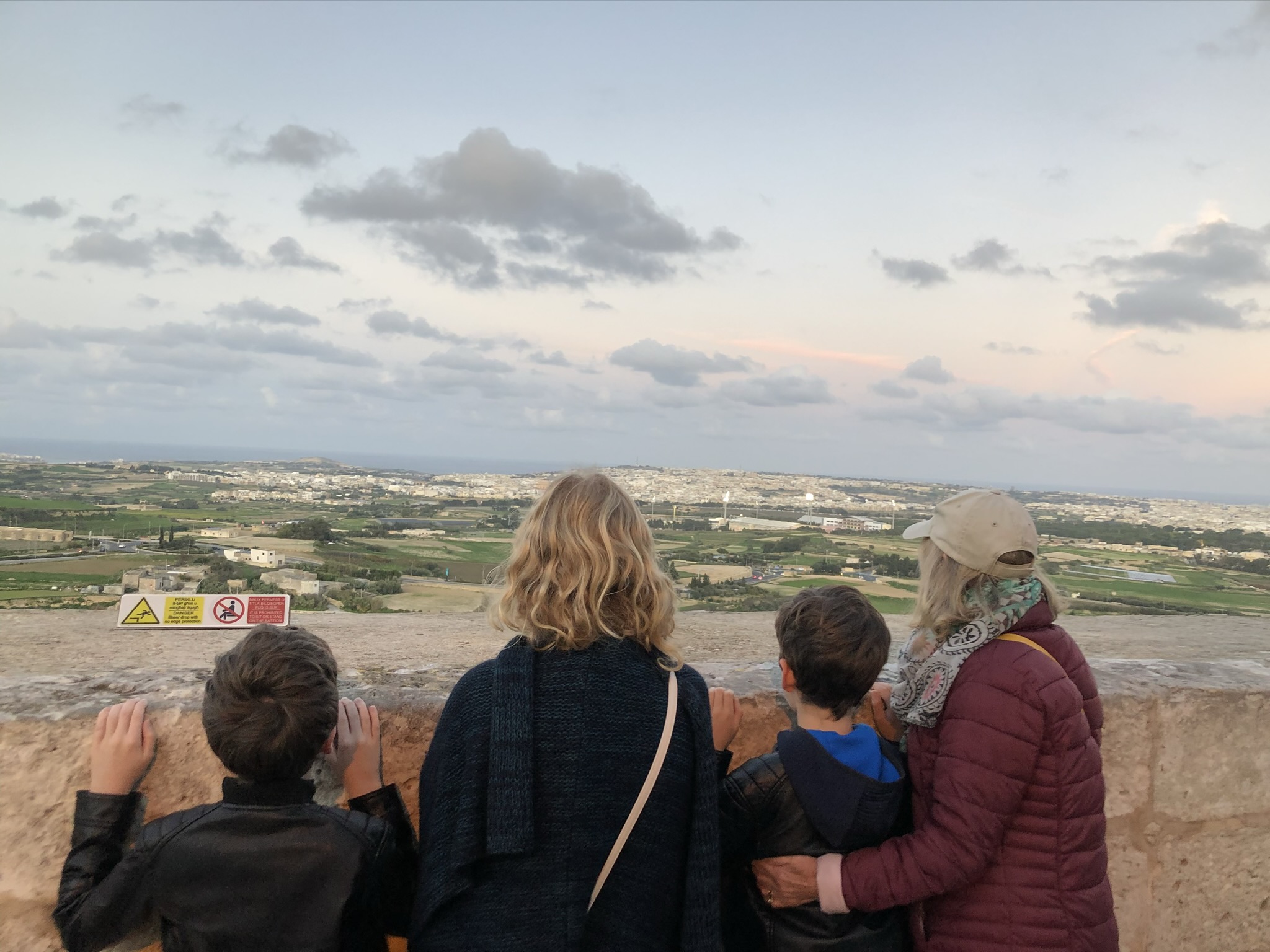
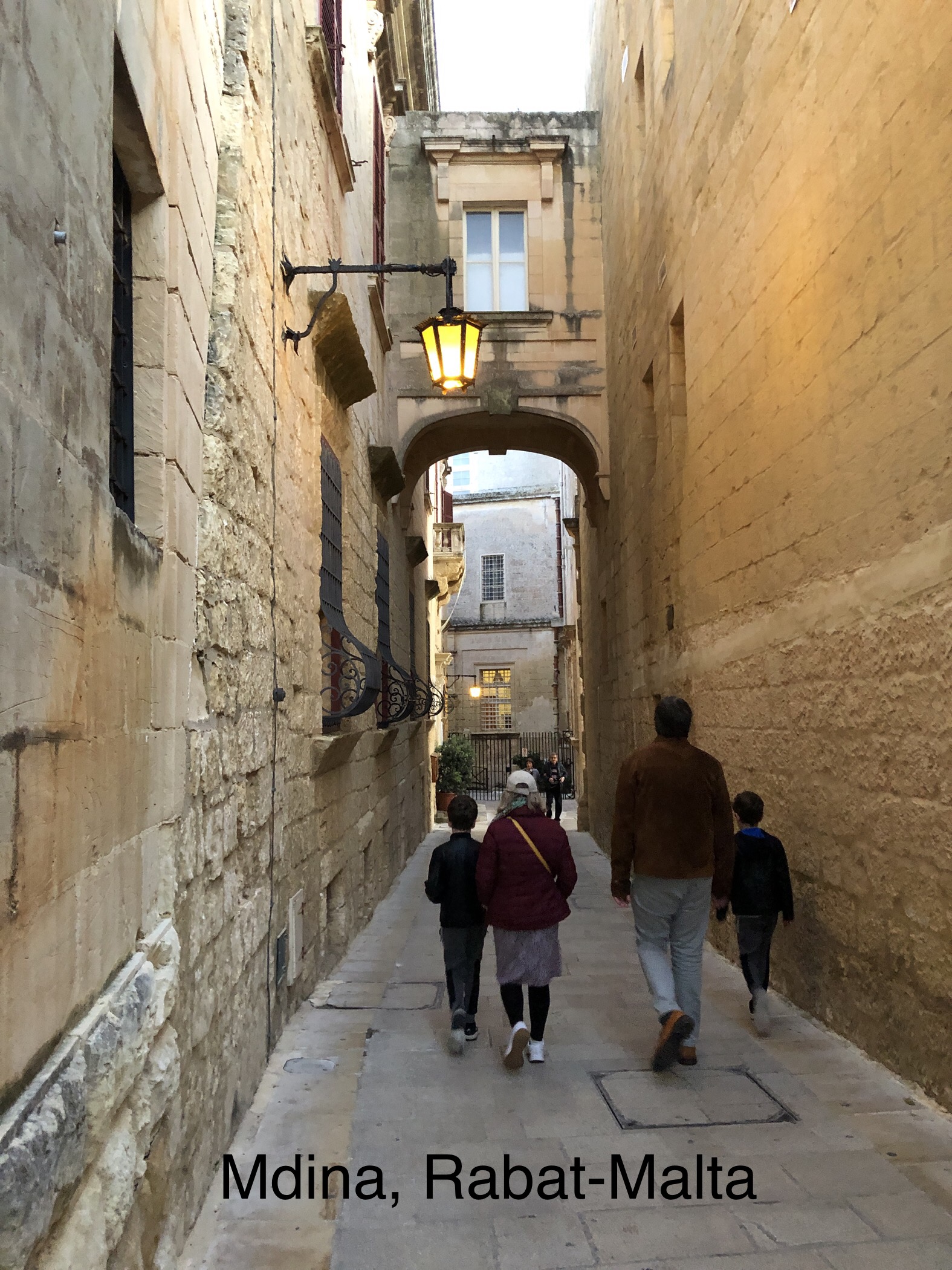
Mdina is located high on a hillside, the highest point on the island and is visible from afar. We booked into the best air bnb ever here. It was located just across the square from the Medina. The owner had the place in immaculate condition and the attention to detail was second to none. There were three bedrooms in subtle tones of red, blue and yellow all with nice details like paintings and blankets. The red room had a picture of a red hippie van, while the yellow room had a picture of someone holding a yellow umbrella, it was classy. There were even colour coded chocolates left on the pillows 😊. And the piece de résistance was the decorated Christmas tree in the living room which was done especially for us!
The former capital is one of Europe’s finest examples of an ancient walled city. Often referred to as ‘the Silent City’, since access to cars and vehicles is restricted within the walls, Mdina is one of the most visited tourist attractions in Malta. Most tourists arrive en masse in tour buses and leave again by nightfall. This makes the evening time quite special. The quiet, narrow, streets and alleyways, lit by lamplight, have a magical feel.
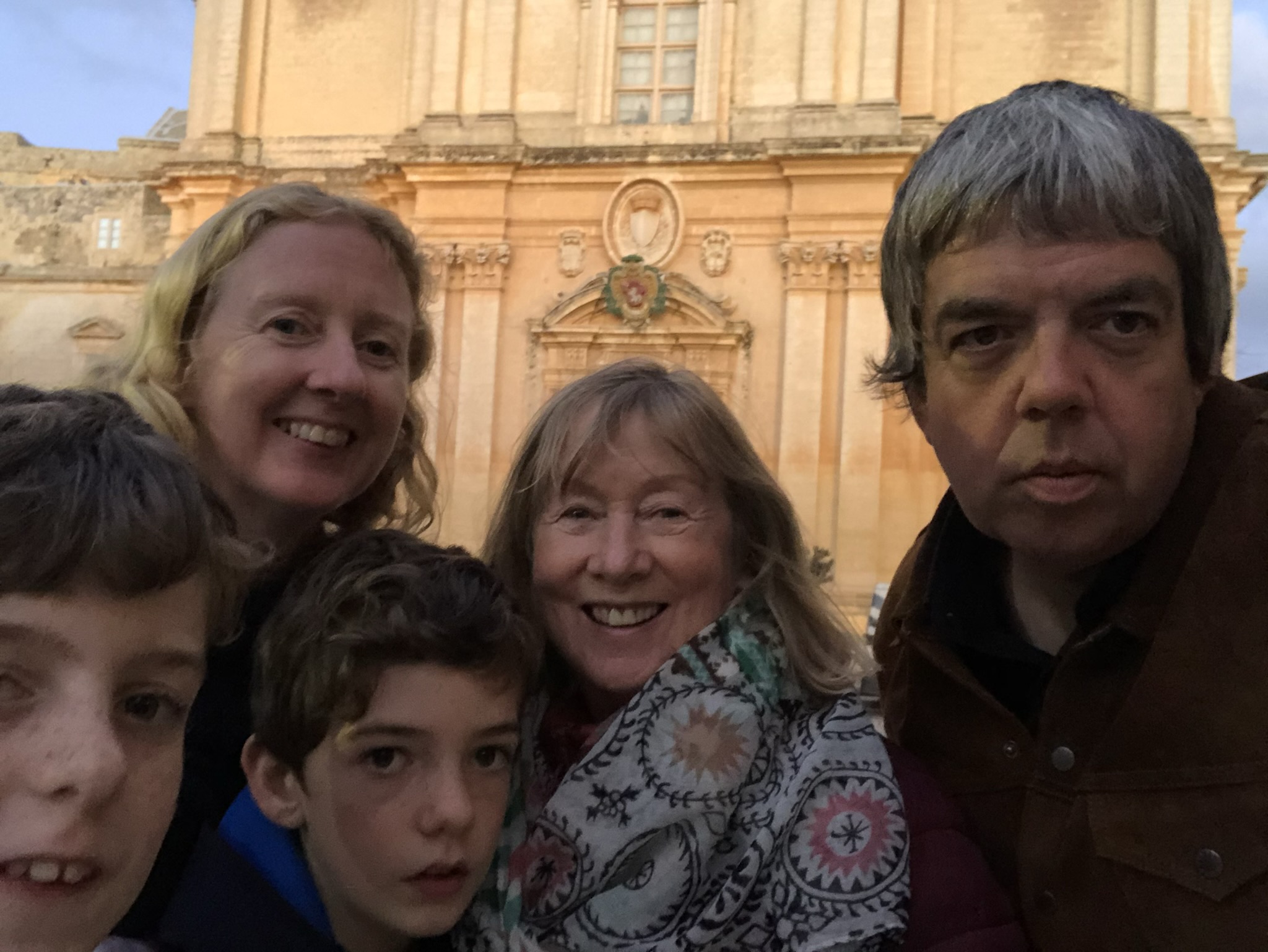
The twin bell towers of St Paul’s Cathedral are visible from all over the Medina. The clocks underneath the bells tell different times in an attempt to confuse the Devil about mass times!
The Fontanella tea rooms, popular for tea and homemade cakes, have spectacular views across the island. A nice place to rest after waking around in the sun.
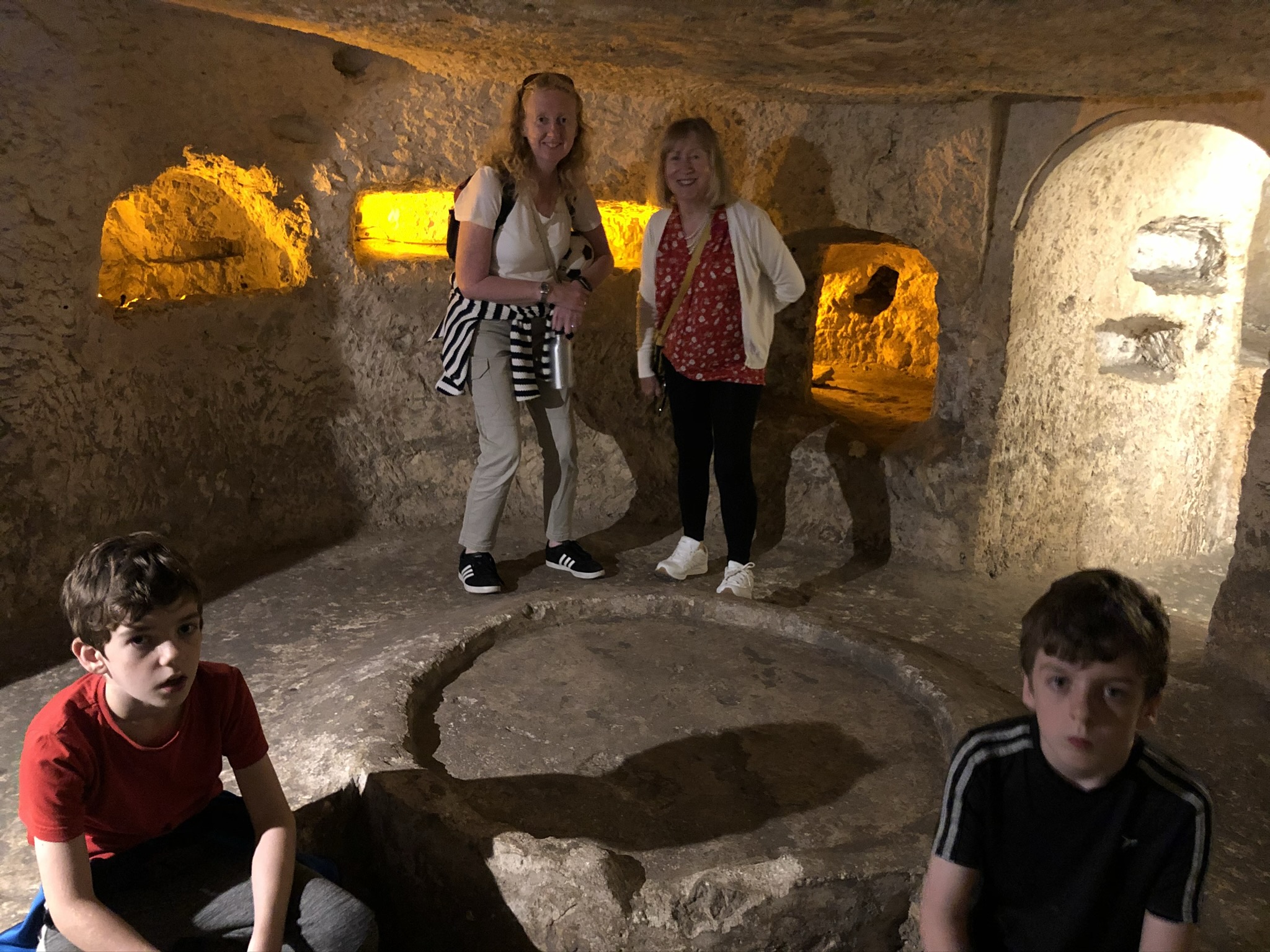
In Rabat, outside the walls of the Mdina, we visited St Paul’s Catacombs. These ancient burial chambers date back to the 8th century and are the first proof of Christianity on the island. The chambers and tunnels house skeletal remains and the original alters remain intact.
Mellieha
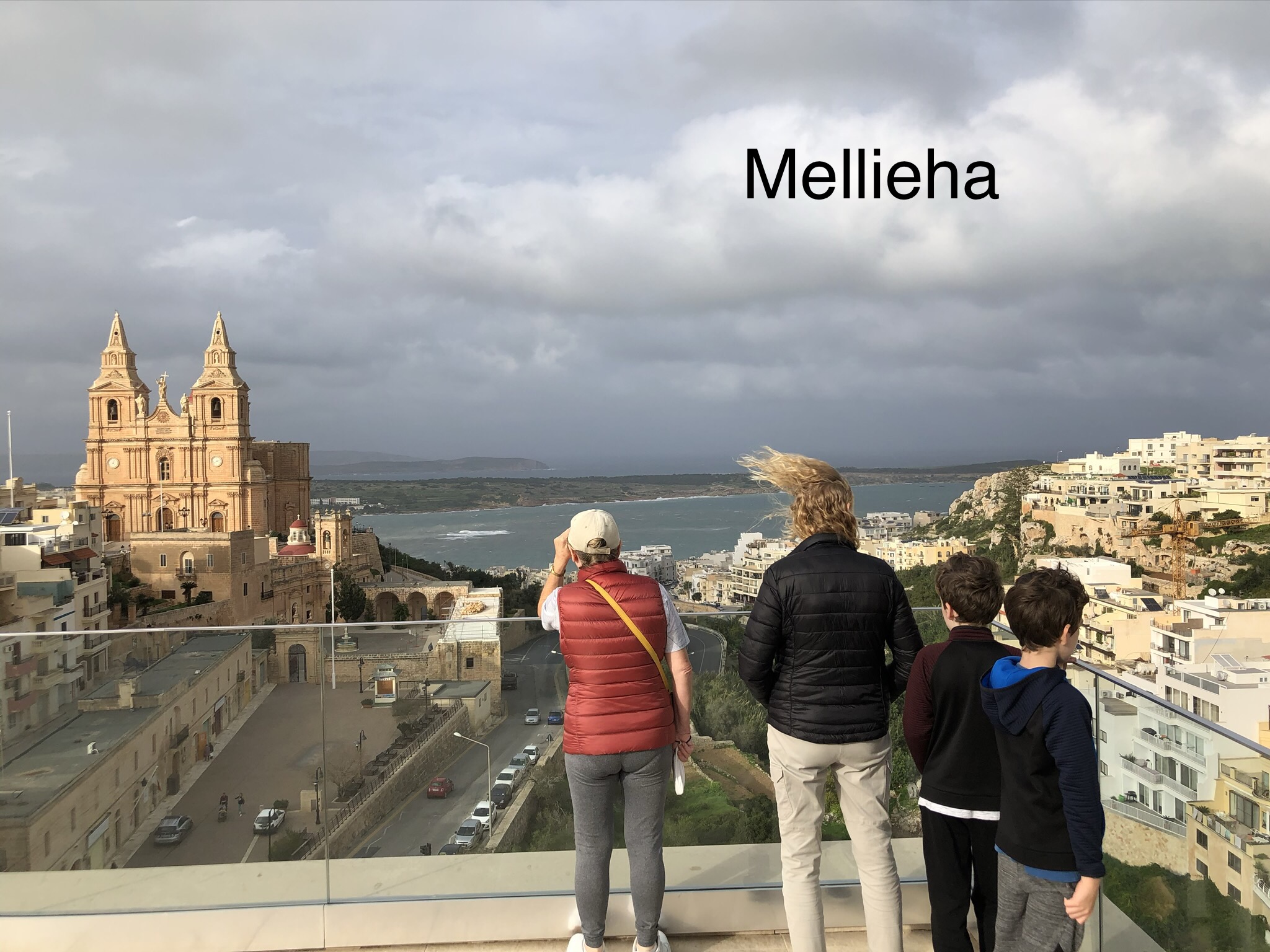
After a wonderful air bnb experience in Mdina perhaps our expectations were raised. Or perhaps consistency is not key in the world of air bnb. We took a taxi to the new place. The Uber driver dropped us at the wrong address. There was lots of construction going on all around us. We contacted Troy, the apt guy and he told us to walk along the promenade and he would come meet us. The walk was nice but dragging luggage along all the way was arduous. We met Troy, a young enterprising guy who looks after empty apts and gets them rented out for a cut of the rental. The views from the apt balcony across the bay were gorgeous. After Troy left it became apparent that corners had been cut regarding the cleanliness of the place. There were most definitely no colour coded chocolates on the pillows. We decided to skip it. We left, got another taxi back along the promenade and booked into the Hotel Valentina in St Julian’s for a night. Mark got us another bargain: $198 for two rooms with breakfast and two complimentary bottles of champagne and he managed to get out money back for the failed stay. Win win.
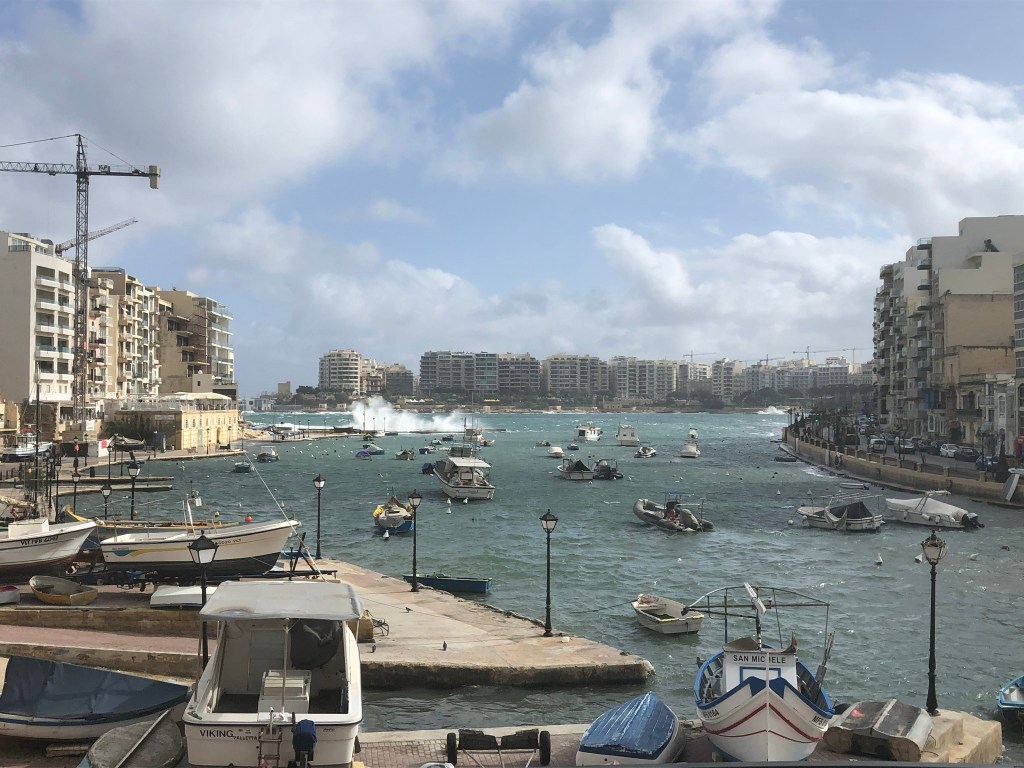
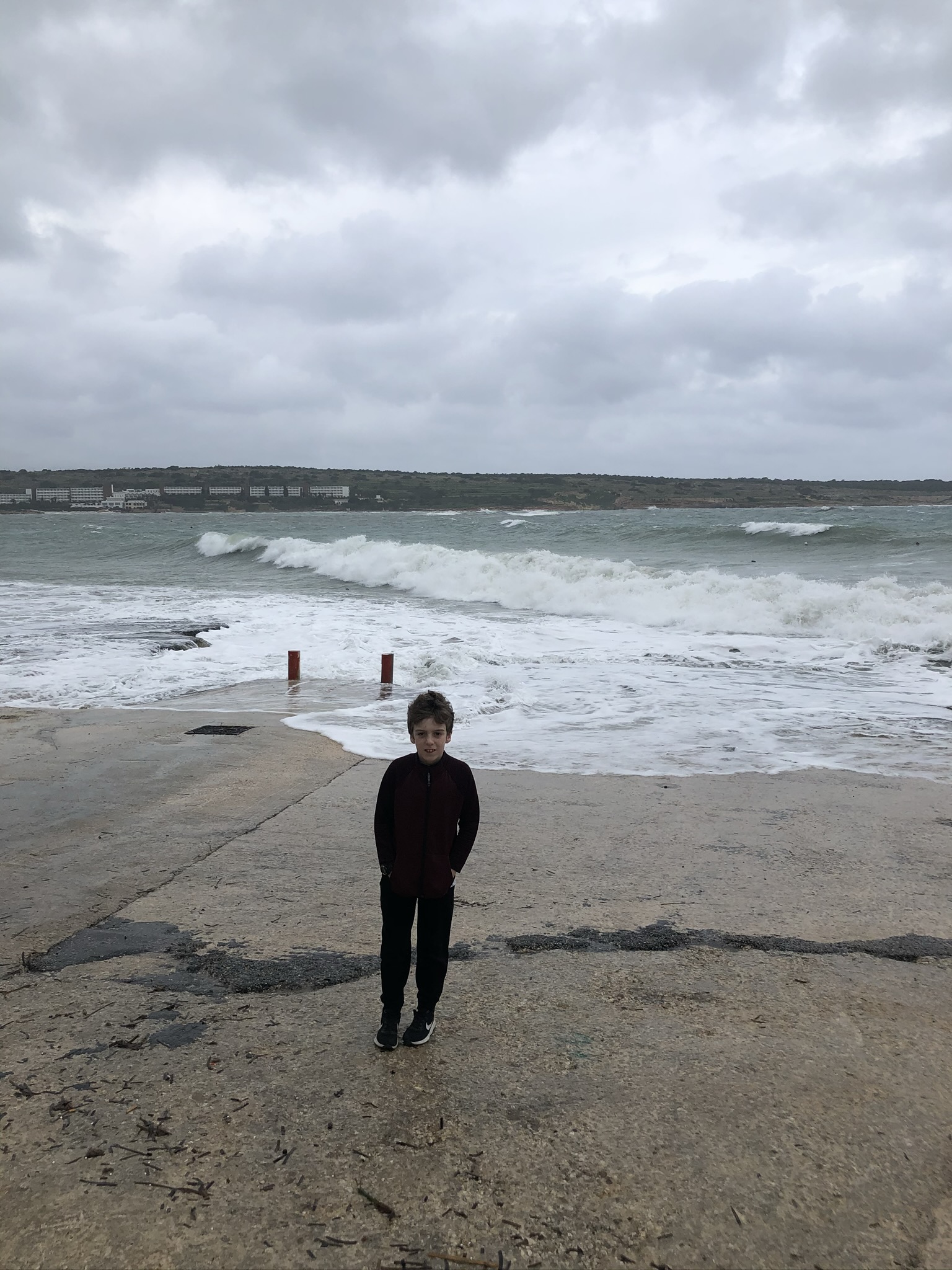
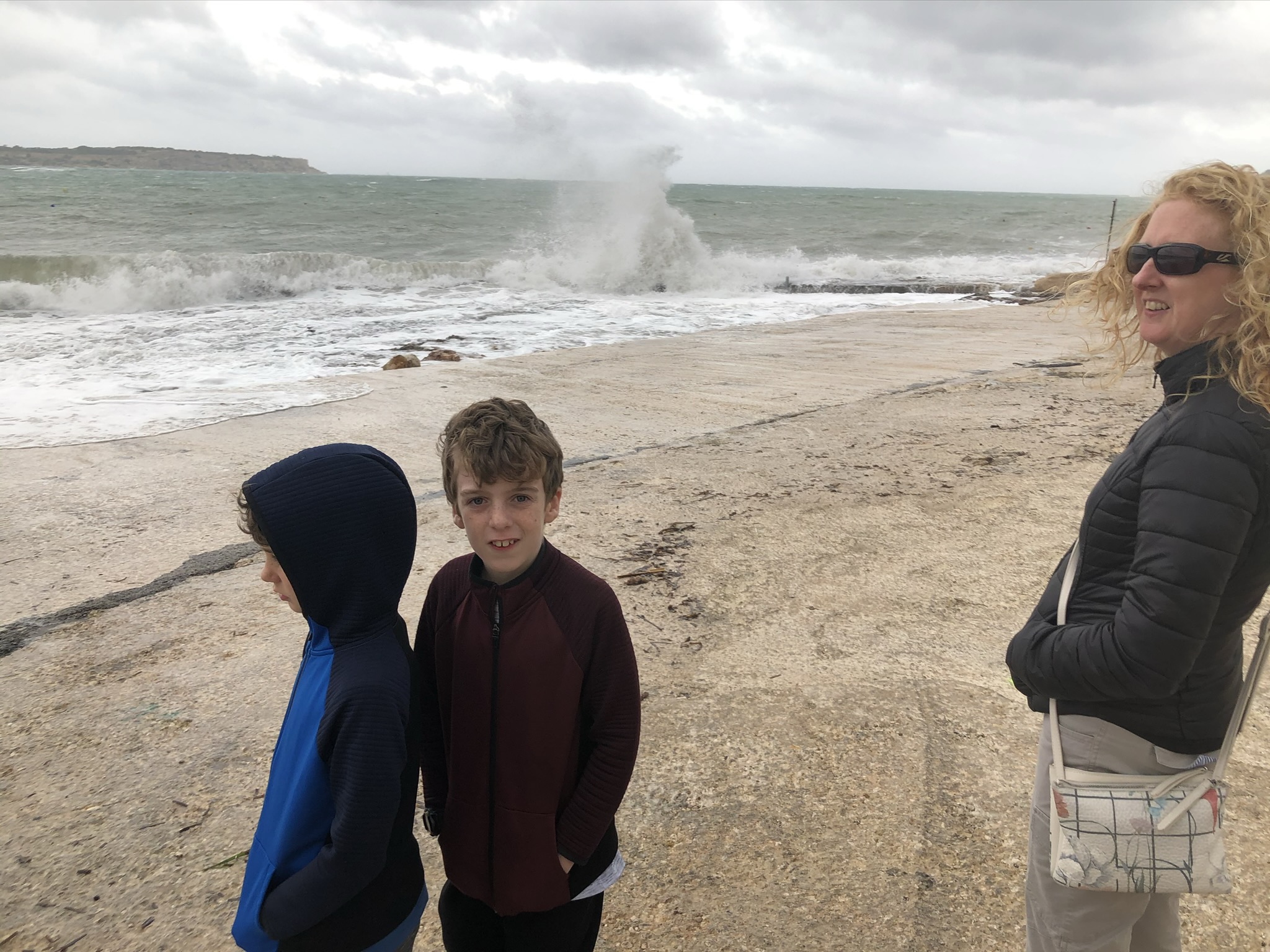
We had a nice lunch sitting in the sunshine in St Julian’s. A Greek restaurant right on the water. V nice and calm. Around the corner were the strip clubs and bars of party town Paceville. The crazier and seedier side of town. Less calm than here on the water’s edge. It was the calm before the storm here too, however, as the photos show the next day the waves were rising over the boats on the harbour!
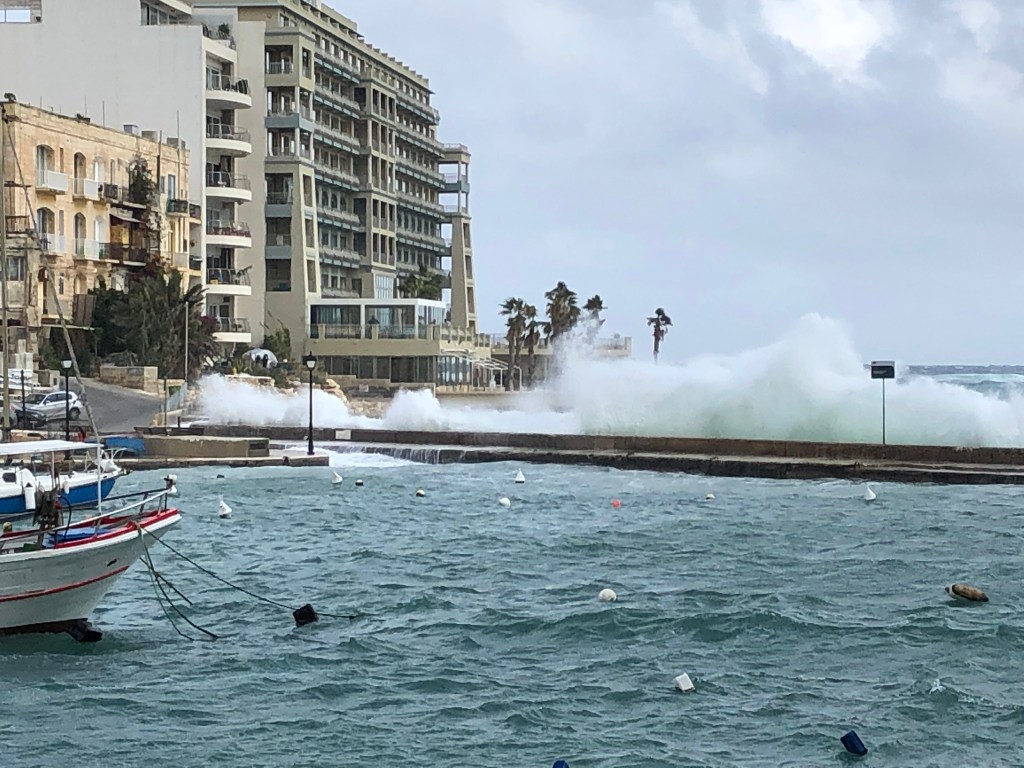
We saw more strong winds and stormy waters at Mellieha Beach. An unexpected stay but a good one nonetheless, thanks Troy! We spent two nights in Hotel Maritim Antonine. The weather wasn’t great but there was a big buffet breakfast, an indoor pool and nightly entertainment so we were fine. Two rooms for two nights for $187 a bargain, the best bargain yet! The walk down to the beach was long but downhill, coming back up was a different story. Mamó and the boys managed to catch the bus. The huge waves washing up over the sea wall were impressive. We also found one of our restaurant highlights of the trip on the way to the beach. It was called 180, we booked a table for the evening as we passed and returned that evening. The food and service were excellent and even though we were the only diners it didn’t feel strange. We drank a toast to Troy for helping us move on from his chaos and finding this lovely spot!
St Julian’s
The last few days of our Malta trip and we were in for a treat. We checked into the beautiful Hilton Malta, a huge resort hotel with panoramic views of the Mediterranean. We had two beautiful sea view rooms with big balconies and access to the club lounge where we got breakfast, afternoon tea & evening drinks and snacks. The big outdoor pool was a bit cold for swimming but we used the lovely indoor pool and spa each evening.
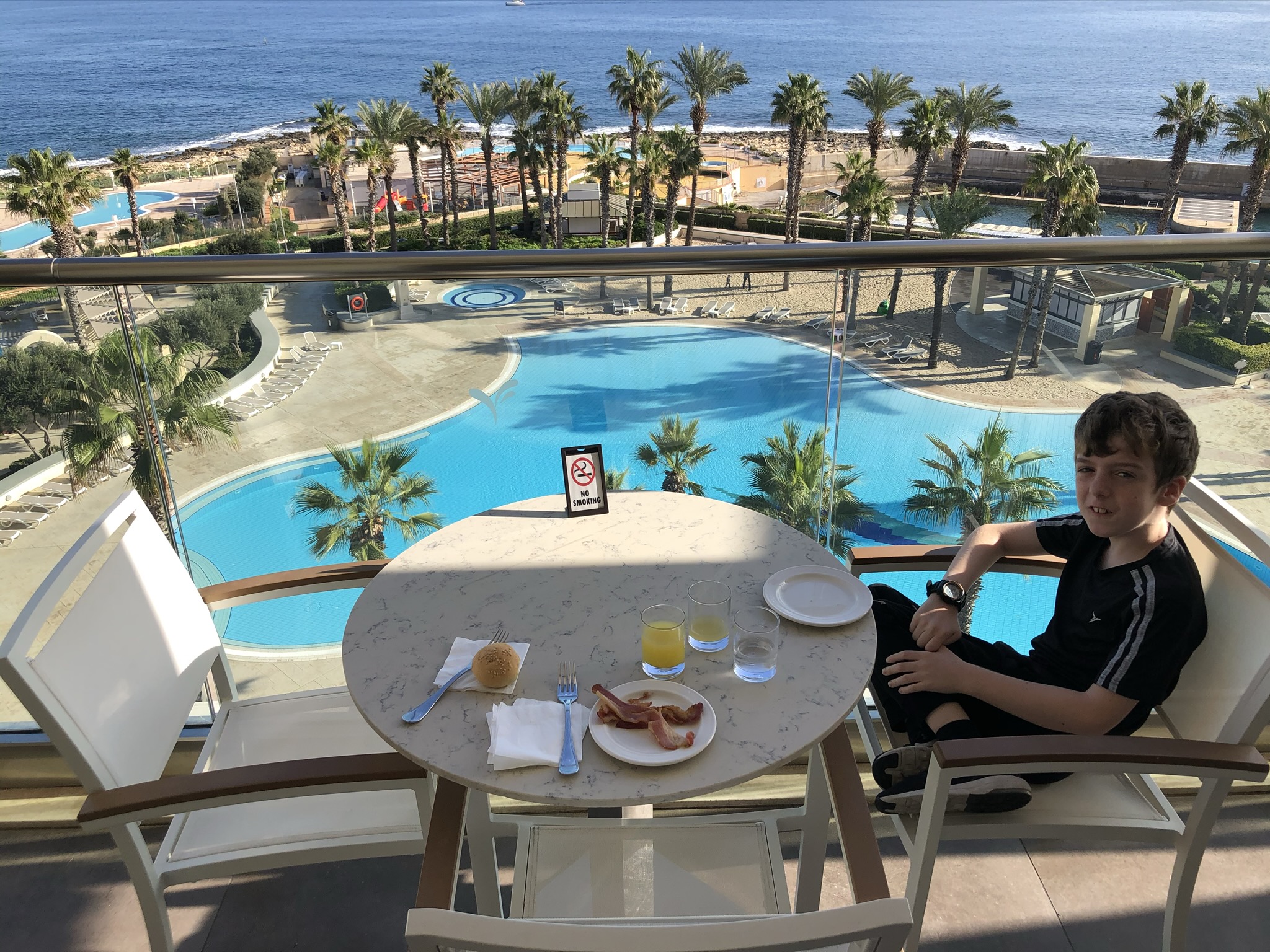
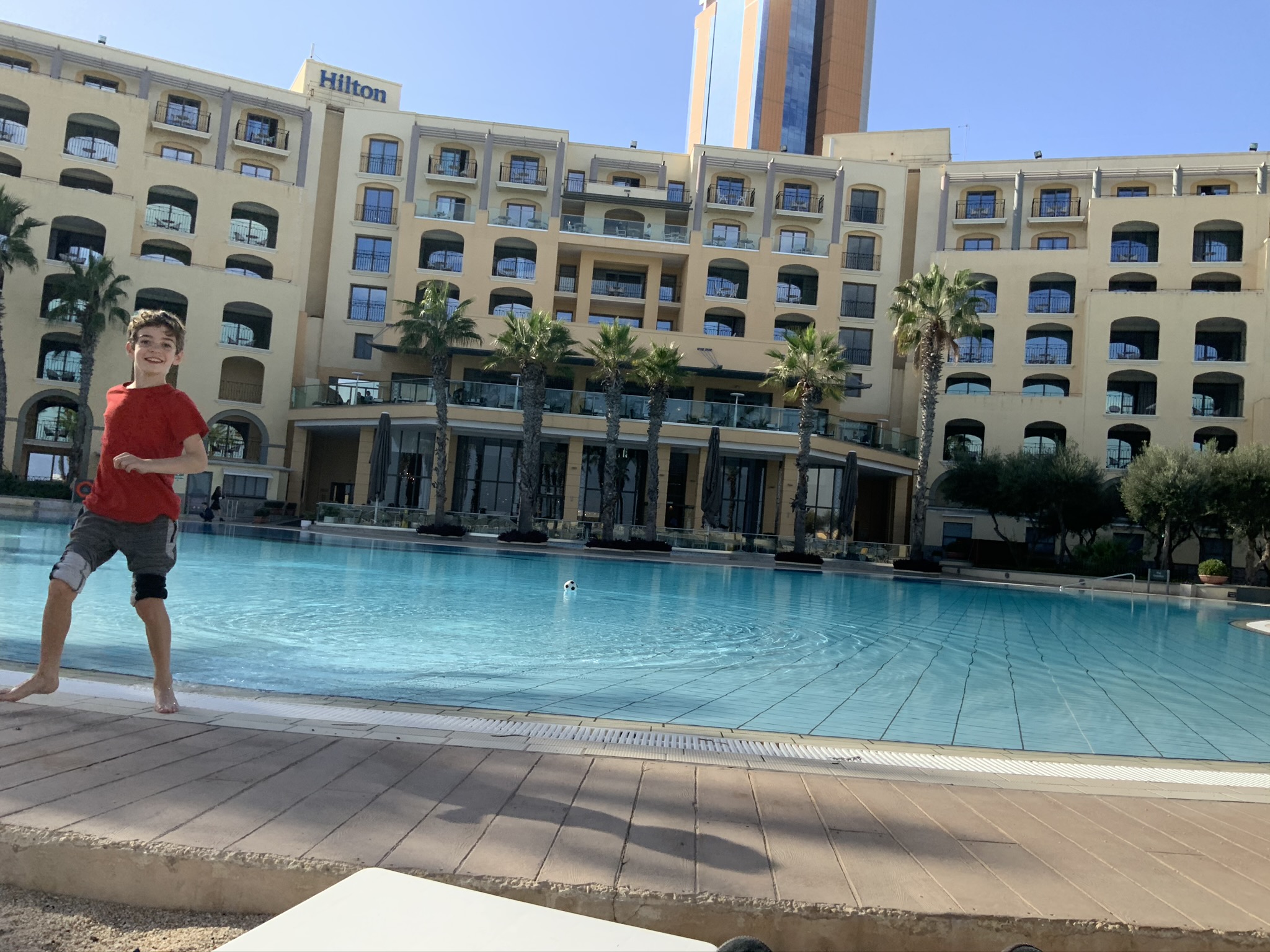
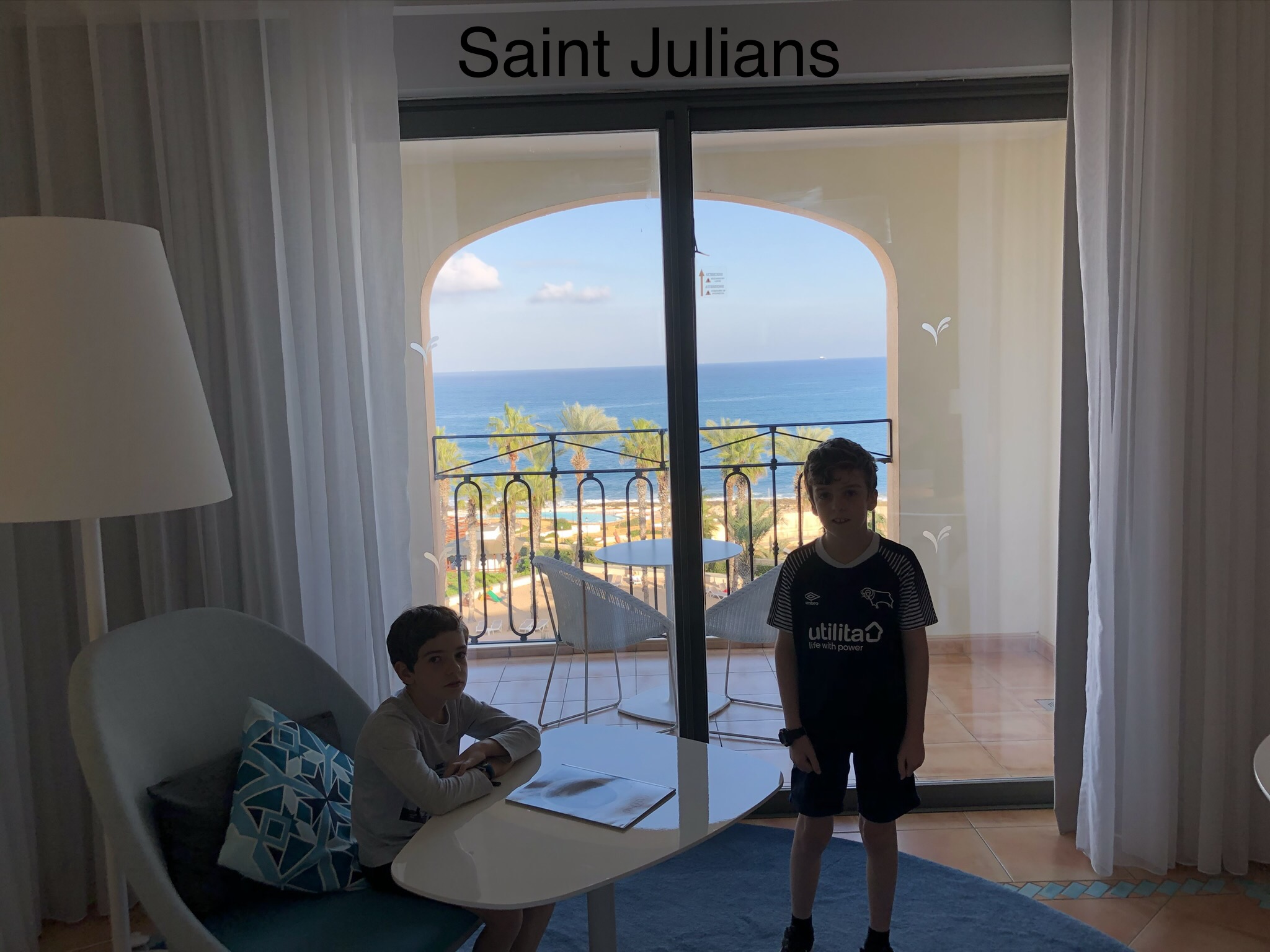
We spent all our time in the hotel relaxing by the pool and having meals in the club lounge. We just left for a few walks along the harbour and a trip to Hal Saflieni Hypogeum. This UNESCO World Heritage Site is one of the things to see on Malta that we had read about before visiting. Visitor numbers are limited and advance booking is recommended. We booked it when we arrived and secured a spot for a few weeks later when we would be back in St Julian’s. This is a popular place.
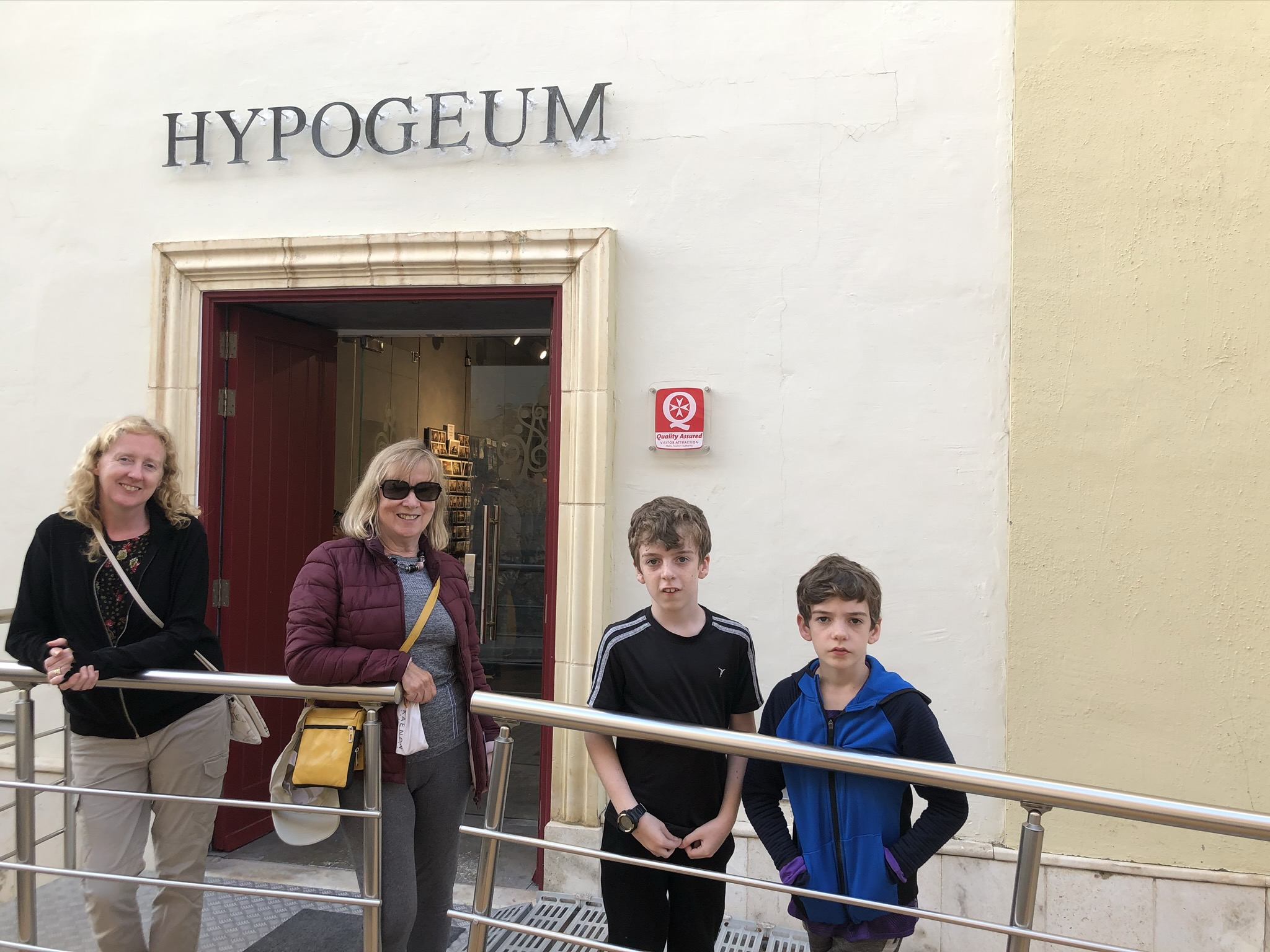
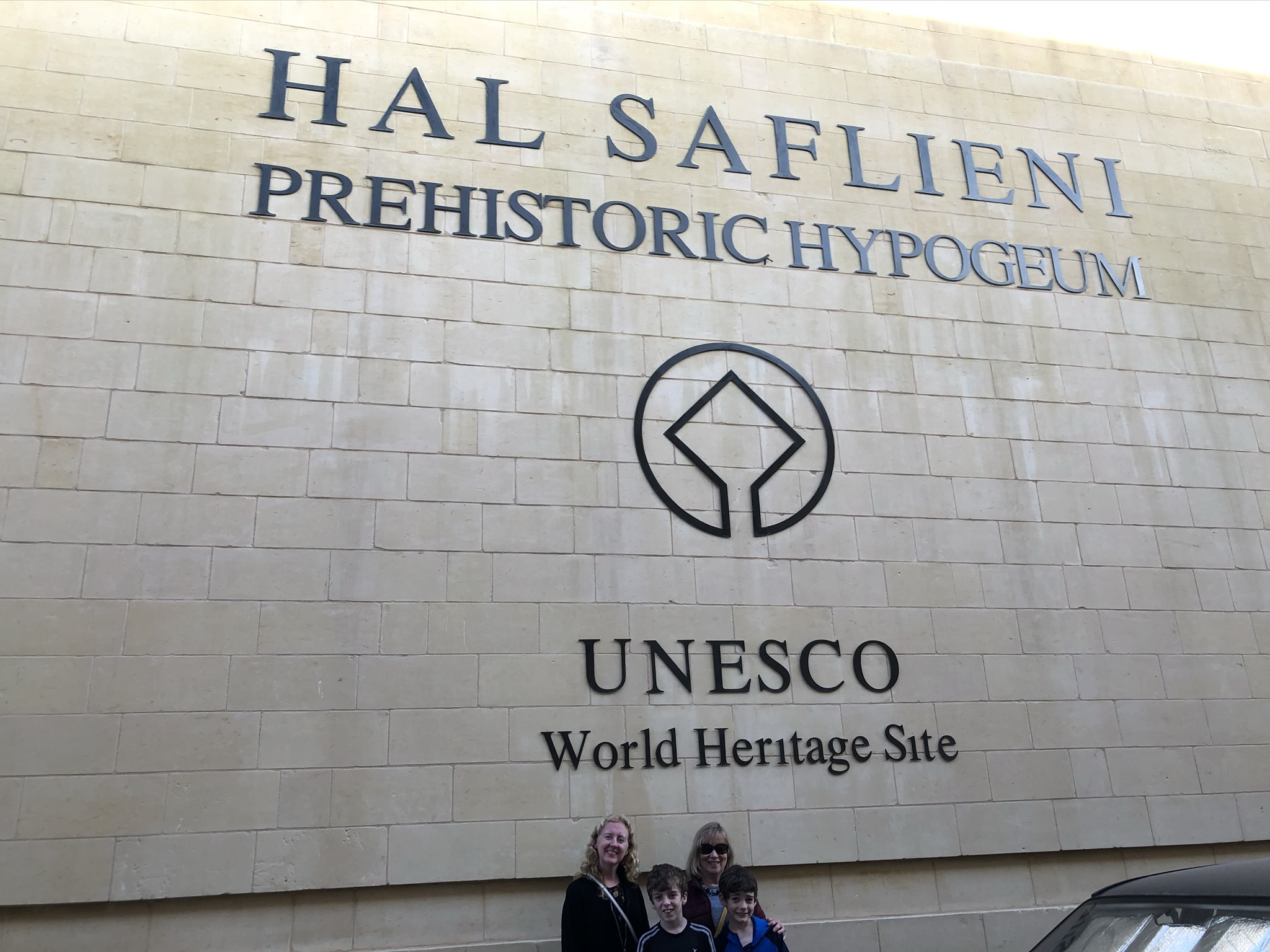
The Hypogeum (from the Greek, meaning ‘underground’) is a subterranean necropolis, discovered during building work in 1902. An estimated 7000 bodies were buried here. An audiovisual display sets the scene upstairs before visitors descend into the necropolis. The micro climate is maintained with low lighting along the passageways. The humidity in the enclosed caves maintains and preserves the alcoves and chambers. It was worth a visit but the entrance fee was a lot higher here than in similar burial chambers we visited on the island.
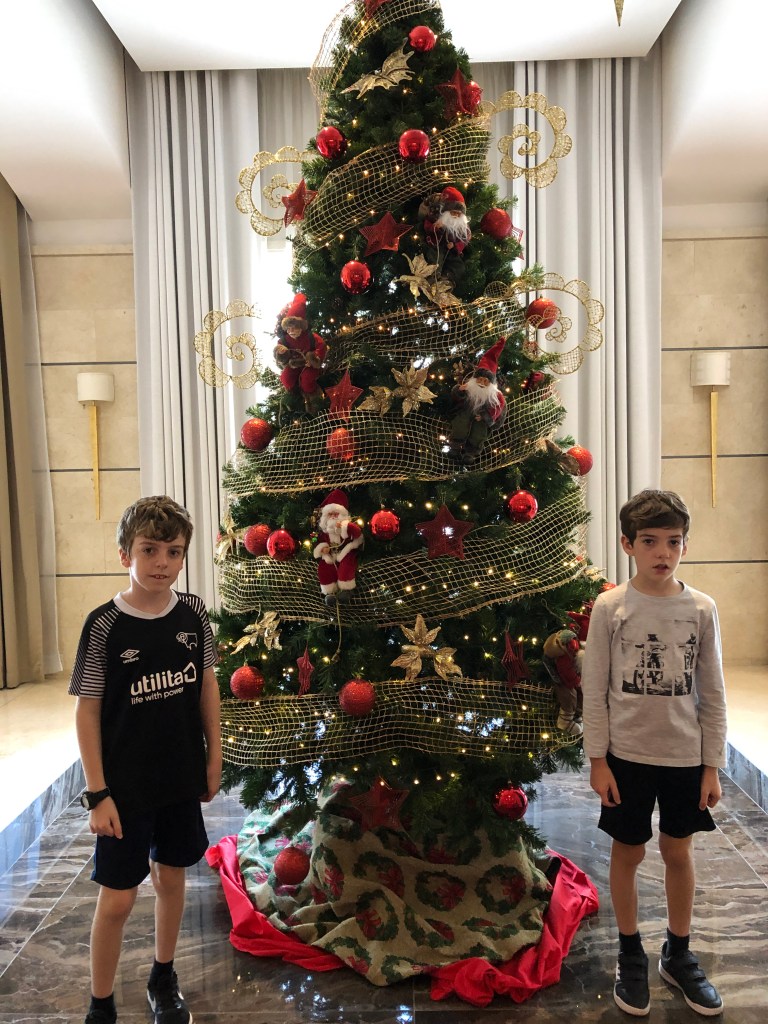
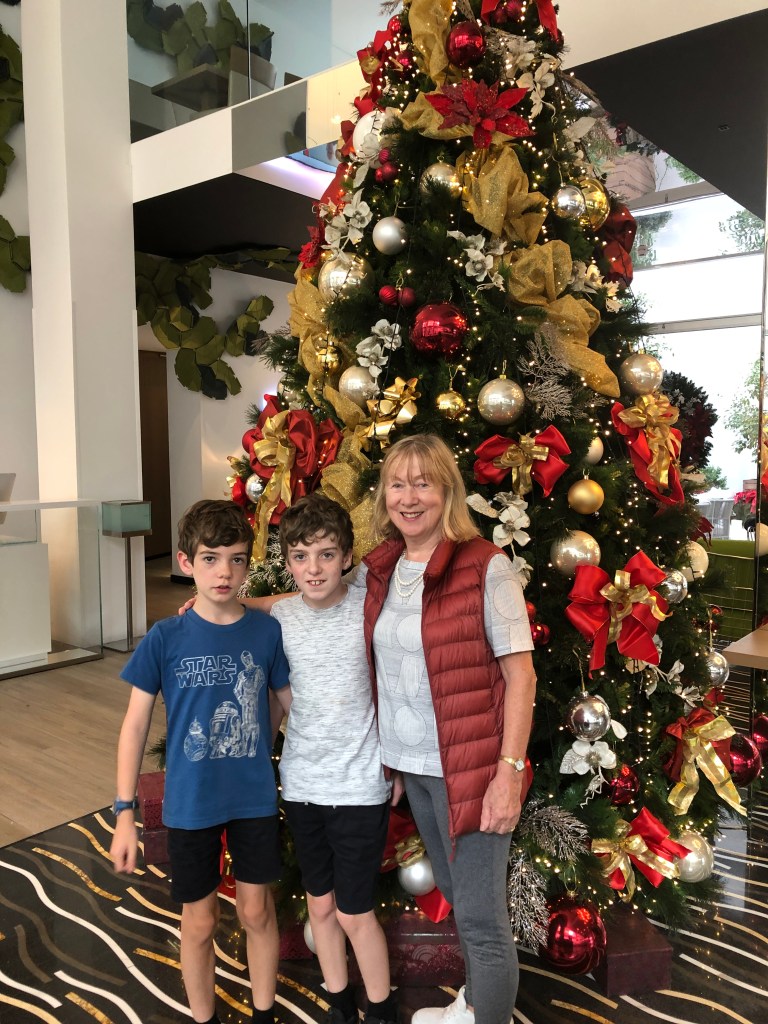
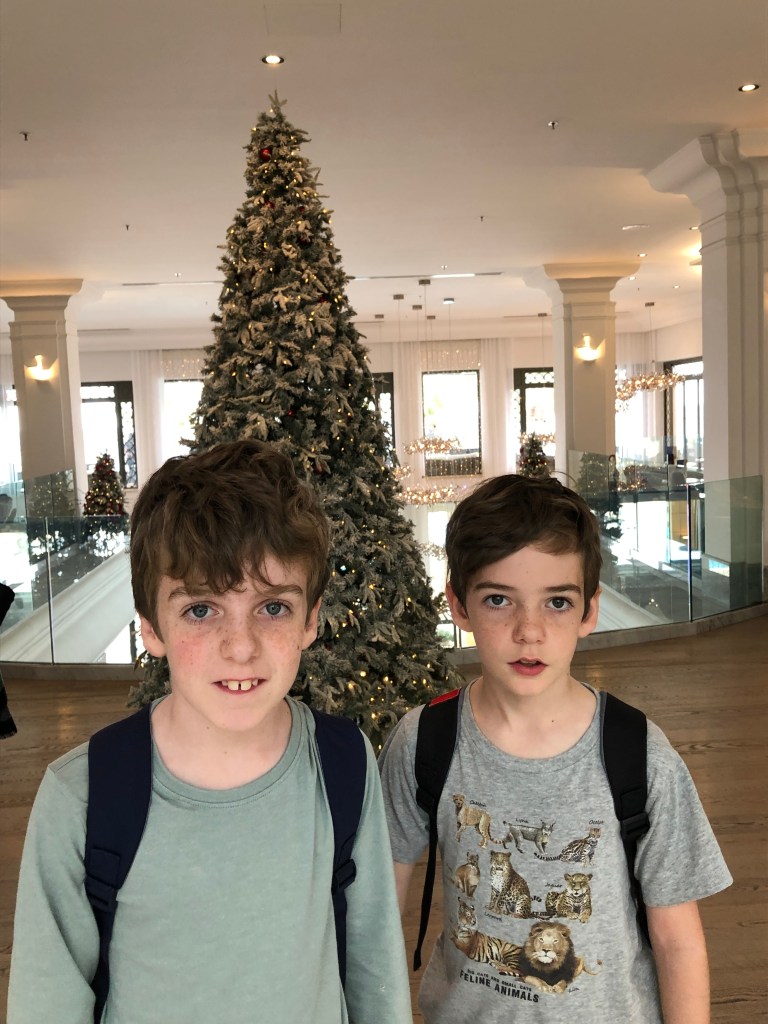
After five lovely weeks exploring nearly every inch of Malta and Gozo it was time to go. Christmas fever was starting to kick in here and it was time to get back to Ireland and start planning our own Christmas. So we took one last photo with the Christmas Tree in the Hilton Lobby and caught a taxi to the airport. Addi Malta 🇲🇹

 Hairylambthewanderyears
Amazing holiday. Great report which brought it all back.
LikeLike